

Google AI


Modern Australian

why people are reluctant to use COVID-19 contact-tracing apps

  • Written by: Farkhondeh Hassandoust, Lecturer, Auckland University of Technology
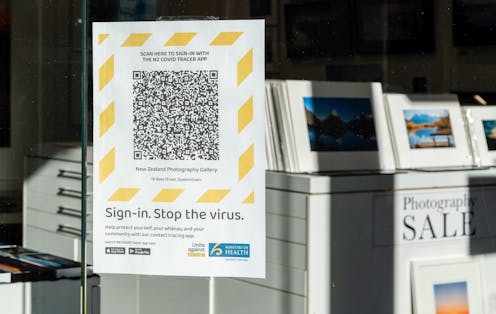
why people are reluctant to use COVID-19 contact-tracing apps

This week’s announcement of two new COVID-19 vaccine pre-purchase deals is encouraging, but doesn’t mean New Zealanders should become complacent about using the NZ COVID Tracer app during the summer holidays.

The immunisation rollout won’t start until the second quarter of 2021, and the government is encouraging New Zealanders to continue using the app, including the recently upgraded bluetooth function, as part of its plan to manage the pandemic during the holiday period.

Read more: How to keep COVID-19 at bay during the summer holidays — and help make travel bubbles a reality in 2021

During the past weeks, the number of daily scans has dropped significantly, down from just over 900,000 scans per day at the end of November to fewer than 400,000 in mid-December.

With no active cases of COVID-19 in the commmunity, complacency might be part of the issue in New Zealand, but as our research in the US shows, worries about privacy and trust continue to make people reluctant to use contact-tracing apps.

Concerns about privacy and surveillance

We surveyed 853 people from every state in the US to identify the factors promoting or inhibiting their use of contact-tracing applications. Our survey reveals two seemingly contradictory findings.

Individuals are highly motivated to use contact-tracing apps, for the sake of their own health and that of society as a whole. But the study also found people are concerned about privacy, social disapproval and surveillance.

The findings suggest people’s trust in the data collectors is dependent on the technology features of these apps (for example, information sensitivity and anonymity) and the privacy protection initiatives instigated by the authorities.

With the holiday season just around the corner — and even though New Zealand is currently free of community transmission — our findings are pertinent. New Zealanders will travel more during the summer period, and it is more important than ever to use contact-tracing apps to improve our chances of getting on top of any potential outbreaks as quickly as possible.

How, then, to overcome concerns about privacy and trust and make sure New Zealanders use the upgraded app during summer?

The benefits of adopting contact-tracing apps are mainly in shared public health, and it is important these societal health benefits are emphasised. In order to quell concerns, data collectors (government and businesses) must also offer assurance that people’s real identity will be concealed.

It is the responsibility of the government and the office of the Privacy Commissioner to ensure all personal information is managed appropriately.

Read more: An Australia–NZ travel bubble needs a unified COVID contact-tracing app. We're not there

Transparency and data security

Our study also found that factors such as peer and social influence, regulatory pressures and previous experiences with privacy loss underlie people’s readiness to adopt contact-tracing apps.

The findings reveal that people expect regulatory protection if they are to use contact-tracing apps. This confirms the need for laws and regulations with strict penalties for those who collect, use, disclose or decrypt collected data for any purpose other than contact tracing.

The New Zealand government is working with third-party developers to complete the integration of other apps by the end of December to enable the exchange of digital contact-tracing information from different apps and technologies.

The Privacy Commissioner has already endorsed the bluetooth upgrade of the official NZ COVID Tracer app because of its focus on users’ privacy. And the Ministry of Health aims to release the source code for the app so New Zealanders can see how their personal data has been managed.

Throughout the summer, the government and ministry should emphasise the importance of using the contact-tracing app and assure New Zealanders about the security and privacy of their personal data.

Adoption of contact-tracing apps is no silver bullet in the battle against COVID-19, but it is a crucial element in New Zealand’s collective public health response to the global pandemic.

Authors: Farkhondeh Hassandoust, Lecturer, Auckland University of Technology

Read more https://theconversation.com/not-just-complacency-why-people-are-reluctant-to-use-covid-19-contact-tracing-apps-152085

What to Do When an Older Car Is No Longer Worth Keeping in Melbourne

Ever looked at another repair quote and wondered whether your old car is still worth the trouble? It is a common turning point for Melbourne motoris...

Your Baby's First Year: A Local Guide to Feeding, Sleep, and When to Get Extra Support

Ask ten parents in a Brisbane mothers' group how their baby is feeding or sleeping, and expect ten different answers.  Someone's baby sleeps throug...

Kitchen and Laundry Makeover Ideas That Don't Require a Full Renovation

Full kitchen renos are expensive — and most people don't actually need one.  They need the kitchen to stop looking like it's stuck in 2009, or they...

How Technology Is Reshaping the Modern Australian Commercial Kitchen

The commercial kitchen has always been shaped by technology. Refrigeration changed how ingredients could be stored, modern ventilation transformed k...

The Number on a Roller Blind Fabric That Nobody Explains

Somewhere in the fabric book, next to the colour name, there is a percentage. Three per cent. Five per cent. Ten per cent. Nobody explains it, most c...

What’s Trending in Men’s Jewellery This Father’s Day!

Finding a Father’s Day gift that feels personal, stylish and genuinely wearable is not always easy. While socks and novelty mugs have traditionally ...

Road Signs: Understanding Their Role in Clear and Effective Signage

Effective signage and display hardware can help businesses communicate information, promote products and organise customer or visitor movement. Road...

Bottle Label Printing: Key Factors to Consider Before Your Next Packaging Run

Effective packaging begins with understanding the product, bottle material, artwork and production requirements when planning bottle label printing. H...

Planning a Long-Distance Move With Interstate Movers Melbourne

Moving between states involves more planning than a typical local relocation. Along with packing and transporting household belongings, you need to...

Understanding the Role of an I/O Controller in Industrial Automation

Modern industrial systems depend on accurate communication between sensors, machines and control systems. An I/O controller can help manage this commu...

How the Right Mining Hose Supports Demanding Operations

Mining environments place considerable demands on equipment used for material transfer, water management and processing. Hoses operating in these co...

Simple Ideas for Making Social Gatherings More Memorable

We have all been to those parties where everyone just stands around the kitchen island, staring at their phones, waiting for someone else to make a mo...

Outdoor Wall Lights: Improving Exterior Lighting Around Your Home

Lighting can influence how a room looks, feels and functions, so the right fitting should be selected according to both appearance and practical req...

Commercial Office Cleaning: Combining Routine Office Cleaning With Melbourne Service

Keeping a workplace clean requires a service that can accommodate everyday tasks as well as the particular needs of the business. Professional comme...

Caravan Sales in Queensland: How to Find the Right Caravan for Sale QLD

Caravan ownership is about more than having somewhere to sleep while travelling. For many Queenslanders, it is one of the best ways to explore regio...

What Sir Walter Buffalo Turf Actually Costs in 2026 (And Why Quotes Vary So Much)

Two quotes landed on a Hills District homeowner's kitchen table last spring for the exact same 80-square-metre backyard. One said $12 a metre. The o...

Nearly 1,300 NSW Hospital Beds Are Occupied By People Who Are Ready To Go Home

1,276 people in NSW hospitals have been medically cleared for discharge but remain in hospital because they're still waiting for NDIS or aged care sup...

National Survey Launched to Measure Operational Impacts of Federal NDIS Policy Reforms

The effects of recent NDIS reforms are beginning to move beyond policy papers and into day to day service delivery. A new national survey is asking ...
















