A COVID-19 vaccine that prevents both the disease and viral transmission is the aim. Until then, here's what we need to do
- Written by Kazi Mizanur Rahman, Clinical Senior Lecturer, University of Sydney
Another day, another announcement about a COVID-19 vaccine. Whether that’s talk of results from clinical trials, emergency approval or plans for countries to prioritise certain groups for vaccination.
But we still don’t know if current vaccines prevent disease and also prevent people transmitting the virus to others.
This not only has implications for vaccines we’ve been hearing about recently, but vaccines still in development.
Here’s why preventing viral transmission is so important. And here’s what we still need to do while we wait for a vaccine that prevents viral transmission.
Read more: A vaccine will be a game-changer for international travel. But it's not everything
Preventing disease vs viral transmission
The Pfizer/BioNTech COVID-19 vaccine has been shown to be safe and effective in late-stage clinical trials at preventing COVID-19, including severe disease, after infection. But we still don’t know if the vaccine prevents transmission of the virus from an infected person to a healthy one.
In fact, according to reports so far, this was not an endpoint or outcome measure of its trial. In other words, the vaccine trial was not designed to find this out.
However, it is not surprising we do not have this information at this stage. It is not feasible to determine whether the vaccine prevents spread in a trial involving about 43,000 participants. This would need routine testing of trial participants, a huge undertaking.
So, for us to get this type of information, drug companies, public health programs and researchers will need to work together to gather data once the vaccines are rolled out into the community.
This can be part of disease surveillance in a population. Alternatively, we could monitor a particular group, or location, containing people at high risk of viral transmission. Either way, this group (or cohort) would need to be monitored over time, and their infection status compared with whether or not they had the vaccine.
Then there’s the Oxford/AstraZeneca vaccine trials. There is early indication this vaccine may reduce person-to-person transmission of the virus. The investigators pointed to the observed reduction in asymptomatic infections among the vaccine recipients.
Although, it is still not certain to what extent asymptomatic people can transmit the virus and how much of a reduction in person-to-person transmission could be attributed to the vaccine. We need further analysis to know for sure.
Read more: We may have to accept a 'good enough' COVID-19 vaccine, at least in 2021
We still don’t know if herd immunity is possible
We still do not know whether the COVID-19 vaccines are suitable for all community members including those with certain health conditions or who are pregnant. However, the theory is that if we vaccinate a critical proportion of the population, we can protect the unvaccinated, via herd immunity.
But we cannot tell, at this point, whether herd immunity in a particular community is achievable through COVID-19 vaccination, given we have not seen robust evidence current vaccine candidates are halting transmission of the virus.
It is also too early to know how well the COVID-19 vaccines work in different populations — such as the elderly, children, pregnant women, and in some racially and ethnically diverse populations — as these groups were not a major part of or even involved in the clinical trials we’re now getting results from.
Finally, we still do not know how long the immunity developed from the COVID-19 vaccines will last.
What are the implications?
The distinction between vaccines that prevent the development of the disease and those that also prevent viral transmission has many implications.
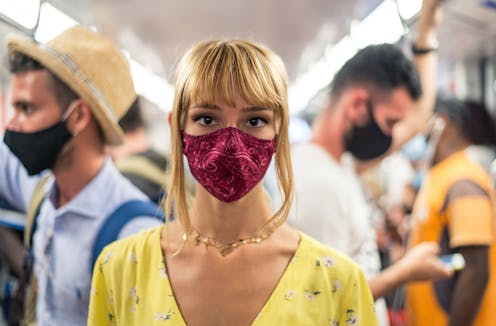
For instance, because we have yet to see robust evidence current vaccine candidates reduce viral transmission, there’s a risk vaccinated people may think a vaccine offers more protection than it does, and may spread the virus to unvaccinated people, perhaps by not maintaining proper hygiene, socially distancing or wearing masks where needed.
There’s also a risk people who are unvaccinated may develop a false sense of security. They may think vaccinated people around them have developed immunity via vaccination to prevent transmission, or think they are protected via herd immunity.
So future COVID-19 vaccines should focus more on the prevention of the transmission of the virus plus preventing development of the disease.
One example is the Novavax vaccine, which Australia has signed an agreement for, should it prove safe and effective after late-stage clinical trials are completed.
In preclinical, and early-stage clinical trials, the vaccine has shown a high level of immune response, providing protection from infection and disease. However, further analysis is needed to know the details.
Read more: What do we know about the Novavax and Pfizer COVID vaccines that Australia just signed up for?
Our lives won’t ‘return to normal’ just yet
With all this uncertainty, it is important we are realistic when thinking about what 2021 will look like.
Even with the release of the vaccine, we are only half-way back to normal. Hygiene, physical distancing, the need for COVID-19 testing and other public health measures will continue to be critical.
Read more: Vaccines alone won't keep Australia safe in 2021. Here's what else we need to do
Authors: Kazi Mizanur Rahman, Clinical Senior Lecturer, University of Sydney