

The Wind in the Willows — a tale of wanderlust, male bonding, and timeless delight
- Written by: Kate Cantrell, Lecturer - Creative Writing & English Literature, University of Southern Queensland
Like several classics penned during the golden age of children’s literature, The Wind in the Willows was written with a particular child in mind.
Alastair Grahame was four years old when his father Kenneth — then a secretary at the Bank of England — began inventing bedtime stories about the reckless ruffian, Mr Toad, and his long-suffering friends: Badger, Rat, and Mole.
Alastair, born premature and partially blind, was nicknamed “Mouse”. Small, squinty, and beset by health problems, he was bullied at school. His rapture in the fantastic was later confirmed by his nurse, who recalled hearing Kenneth “up in the night-nursery, telling Master Mouse some ditty or other about a toad”.
The Wind in the Willows evolved from Alastair’s bedtime tales into a series of letters Grahame later sent his son while on holiday in Littlehampton. In the story, a quartet of anthropomorphised male animals wander freely in a pastoral land of leisure and pleasure — closely resembling the waterside haven of Cookham Dean where Grahame himself grew up.
In peaceful retreat from “The Wide World”, Rat, Mole, Badger, and Toad spend their days chatting, philosophising, pottering, and ruminating on the latest fashions and fads. But when the daredevil, Toad, takes up motoring, he becomes entranced by wild fantasies of the road. His concerned friends must intervene to restrain his whims, teaching him “to be a sensible toad”.
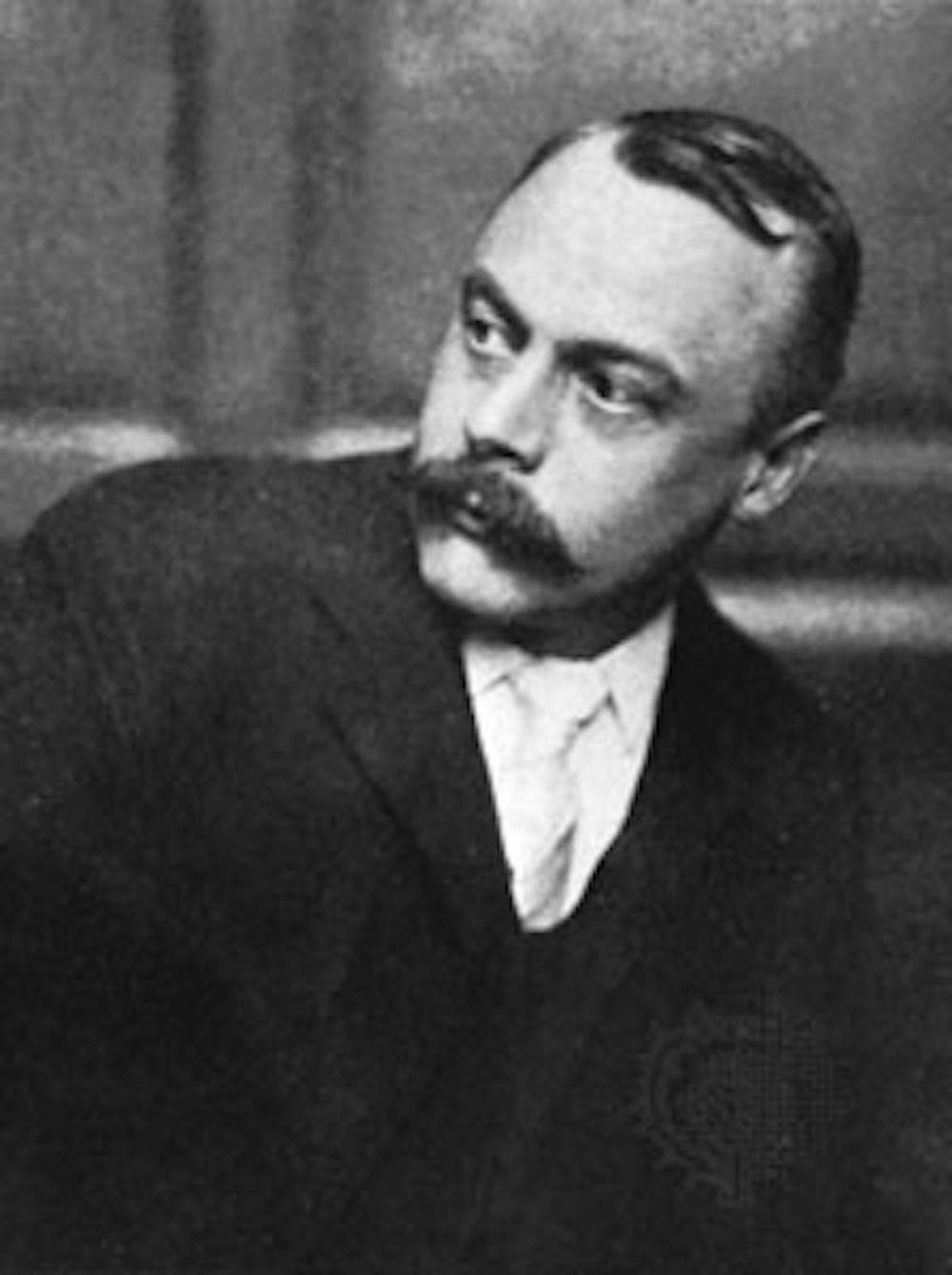 Kenneth Grahame, circa 1910.
Wikimedia Commons
Kenneth Grahame, circa 1910.
Wikimedia Commons
Unlike Toad’s recuperative ending, however, Alastair’s story did not end happily. In the spring of 1920, while a student at Oxford, he downed a glass of port before taking a late night stroll. The next morning, railway workers found his decapitated body on tracks near the university. An inquest determined his death a likely suicide but out of respect for his father, it was recorded as an accident.
Kenneth Grahame, by all accounts, never recovered from the loss of his only child. He became increasingly reclusive, eventually abandoning writing altogether.
In his will, he gifted the original manuscript of Willows to the Bodleian Library, along with the copyrights and all his royalties. Upon his death in 1932, he was buried in Oxford next to his first reader, Mouse.
Read more: Guide to the Classics: The Secret Garden and the healing power of nature
A ‘gay manifesto’?
Biographical readings are a staple in children’s literature, and the criticism surrounding The Wind in the Willows is no exception. First published in 1908 — the same year as Anne of Green Gables and Dorothy and the Wizard of Oz — the novel was initially titled The Mole and the Water-Rat. After back and forth correspondence with Grahame, his publisher Sir Algernon Methuen wrote to say he had settled on The Wind in the Willows because of its “charming and wet sound”.
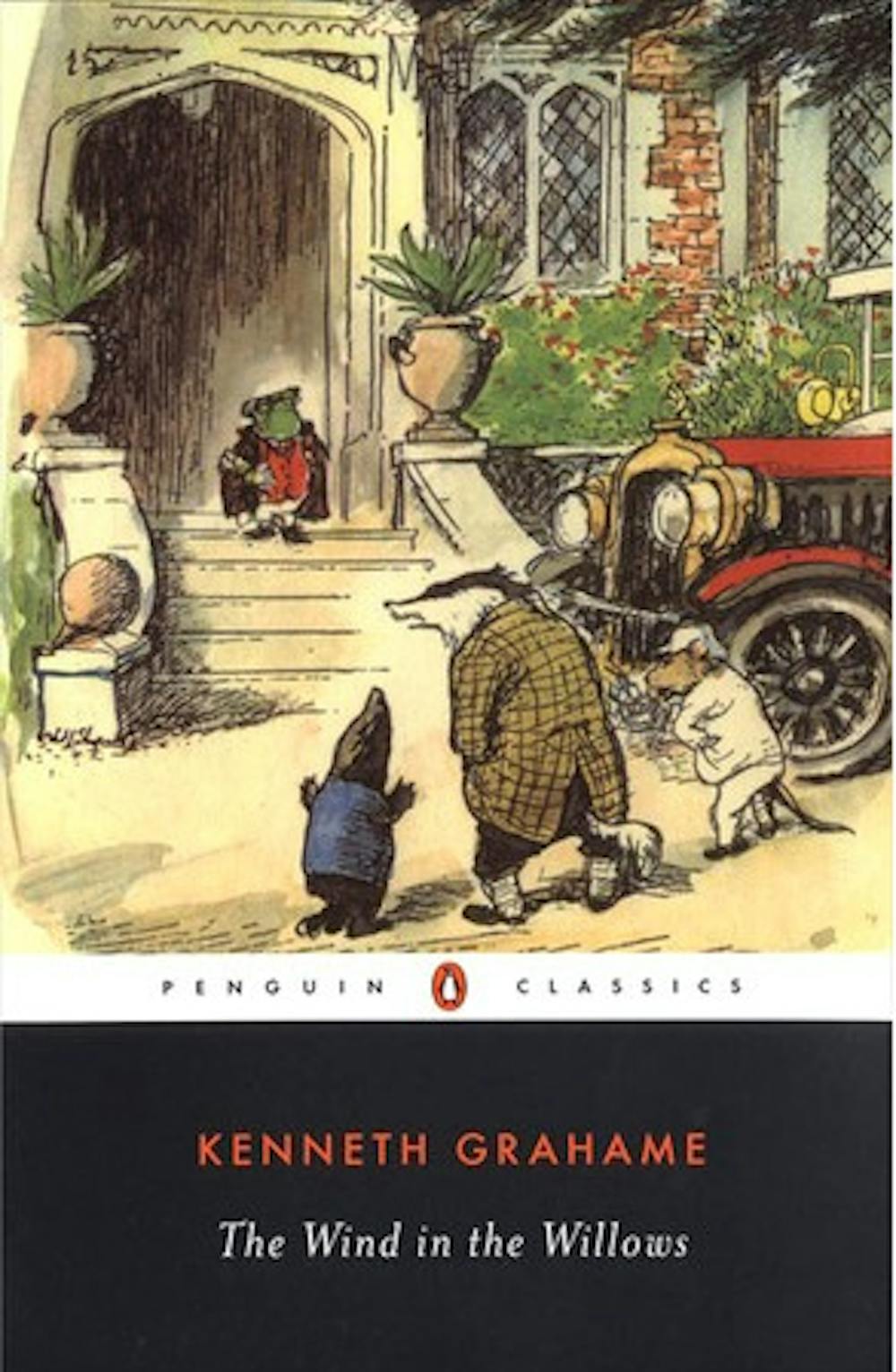 Today, one of the mysteries surrounding the novel is the meaning of the title. The word “willows” does not appear anywhere in the book; the single form “willow” appears just twice.
When Willows was first released in Britain it was marketed as an allegory — “a fantastic and whimsical satire upon life”, featuring a cast of woodland and riverside creatures who were closer to an Edwardian gentlemen’s club than a crowd of animals. Indeed, the adventures structuring the novel are the meanderings of old English chaps nostalgic for another time.
The four friends, though different in disposition, are bound by their “divine discontent and longing”.
Restless enough to be easily bewitched, they are rich enough to fill their days with long picnics and strolls. Most chapters are sequenced in chronological order, but the action revolves around different types of wandering – pottering around the garden, messing about in boats, rambling along country lanes.
Today, one of the mysteries surrounding the novel is the meaning of the title. The word “willows” does not appear anywhere in the book; the single form “willow” appears just twice.
When Willows was first released in Britain it was marketed as an allegory — “a fantastic and whimsical satire upon life”, featuring a cast of woodland and riverside creatures who were closer to an Edwardian gentlemen’s club than a crowd of animals. Indeed, the adventures structuring the novel are the meanderings of old English chaps nostalgic for another time.
The four friends, though different in disposition, are bound by their “divine discontent and longing”.
Restless enough to be easily bewitched, they are rich enough to fill their days with long picnics and strolls. Most chapters are sequenced in chronological order, but the action revolves around different types of wandering – pottering around the garden, messing about in boats, rambling along country lanes.
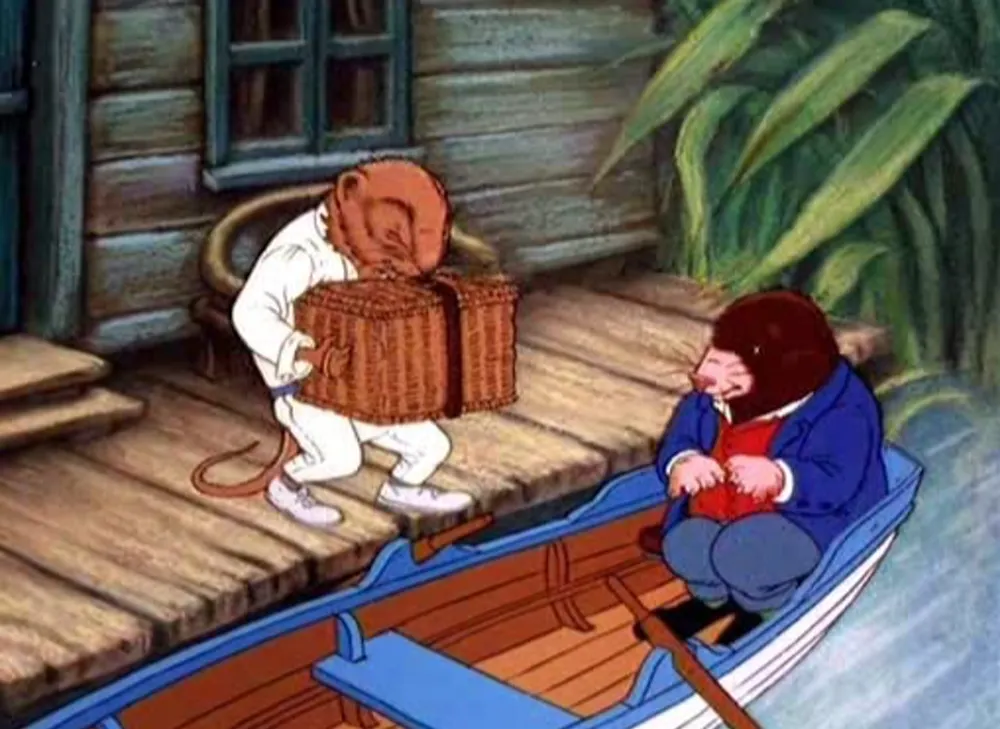 Messing about in boats: an image from a 1995 film version of the book.
TVC London, Carlton UK Productions, HIT Entertainment
With the exception of a brief encounter with a jailer’s daughter, an overweight barge woman, and a careless mother hedgehog, there are no women in Willows. And excluding a pair of young hedgehogs and a group of field mice, all male, there are no children either.
Given the novel’s strong homosocial subtext and absence of female characters, the story is often read as an escapist fantasy from Grahame’s unhappy marriage to Elspeth Thomson. Peter Hunt, an eminent scholar of Willows, describes the couple’s relationship as “sexually arid” and suggests Grahame’s sudden resignation from the bank in 1908 was due to bullying on the basis of his sexuality.
Messing about in boats: an image from a 1995 film version of the book.
TVC London, Carlton UK Productions, HIT Entertainment
With the exception of a brief encounter with a jailer’s daughter, an overweight barge woman, and a careless mother hedgehog, there are no women in Willows. And excluding a pair of young hedgehogs and a group of field mice, all male, there are no children either.
Given the novel’s strong homosocial subtext and absence of female characters, the story is often read as an escapist fantasy from Grahame’s unhappy marriage to Elspeth Thomson. Peter Hunt, an eminent scholar of Willows, describes the couple’s relationship as “sexually arid” and suggests Grahame’s sudden resignation from the bank in 1908 was due to bullying on the basis of his sexuality.
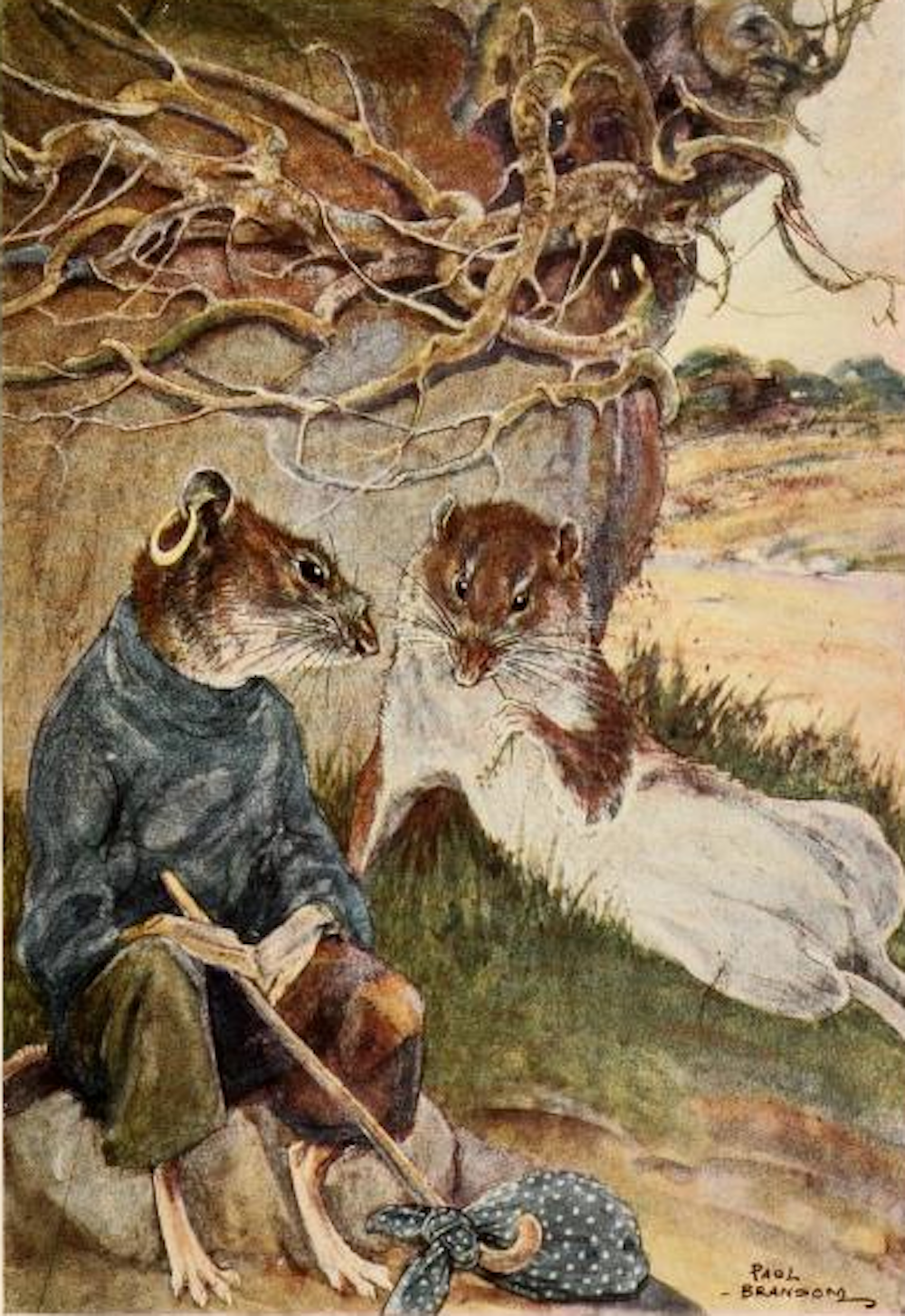 A retouched illustration from a 1913 edition of the book.
Wikimedia Commons
Indeed, Hunt ventures to call the book “a gay manifesto”, reading it as a gay allegory heavy with suppressed desire and latent homoeroticism. In one scene, for example, Mole and Rat “shake off their garments” and “tumble in-between the sheets in great joy and contentment”.
Earlier, while sharing a bed in the open air, Mole “reaches out from under his blanket, feels for the Rat’s paw in the darkness, and gives it a squeeze.” “I’ll do whatever you like, Ratty,” he whispers.
For this reason, and others, some critics suggest that Willows is not a children’s book at all, but a novel for adults that can be enjoyed by children.
Read more:
Guide to the classics: Petronius’s Satyricon – sex, satire and naughty boys
Conservatism
Whether we read Willows as a simple animal story or a social satire, the narrative reinforces the status quo. Badger, for instance, resembles a gruff headmaster whose paternal concern for his friends extends to an earnest attempt to reform the inebriate Toad.
Toad is a recognisable type of schoolboy, charming and impulsive but wildly arrogant and lacking self-control. In the end, he is punished for his foolish behaviour and forced to forgo his flamboyant egotism in humble resignation at Toad Hall. Similarly, Mole and Ratty are afflicted by wanderlust, but inevitably retreat to their cosy, subterranean homes. All of Grahame’s animals return to their “proper” place.
A retouched illustration from a 1913 edition of the book.
Wikimedia Commons
Indeed, Hunt ventures to call the book “a gay manifesto”, reading it as a gay allegory heavy with suppressed desire and latent homoeroticism. In one scene, for example, Mole and Rat “shake off their garments” and “tumble in-between the sheets in great joy and contentment”.
Earlier, while sharing a bed in the open air, Mole “reaches out from under his blanket, feels for the Rat’s paw in the darkness, and gives it a squeeze.” “I’ll do whatever you like, Ratty,” he whispers.
For this reason, and others, some critics suggest that Willows is not a children’s book at all, but a novel for adults that can be enjoyed by children.
Read more:
Guide to the classics: Petronius’s Satyricon – sex, satire and naughty boys
Conservatism
Whether we read Willows as a simple animal story or a social satire, the narrative reinforces the status quo. Badger, for instance, resembles a gruff headmaster whose paternal concern for his friends extends to an earnest attempt to reform the inebriate Toad.
Toad is a recognisable type of schoolboy, charming and impulsive but wildly arrogant and lacking self-control. In the end, he is punished for his foolish behaviour and forced to forgo his flamboyant egotism in humble resignation at Toad Hall. Similarly, Mole and Ratty are afflicted by wanderlust, but inevitably retreat to their cosy, subterranean homes. All of Grahame’s animals return to their “proper” place.
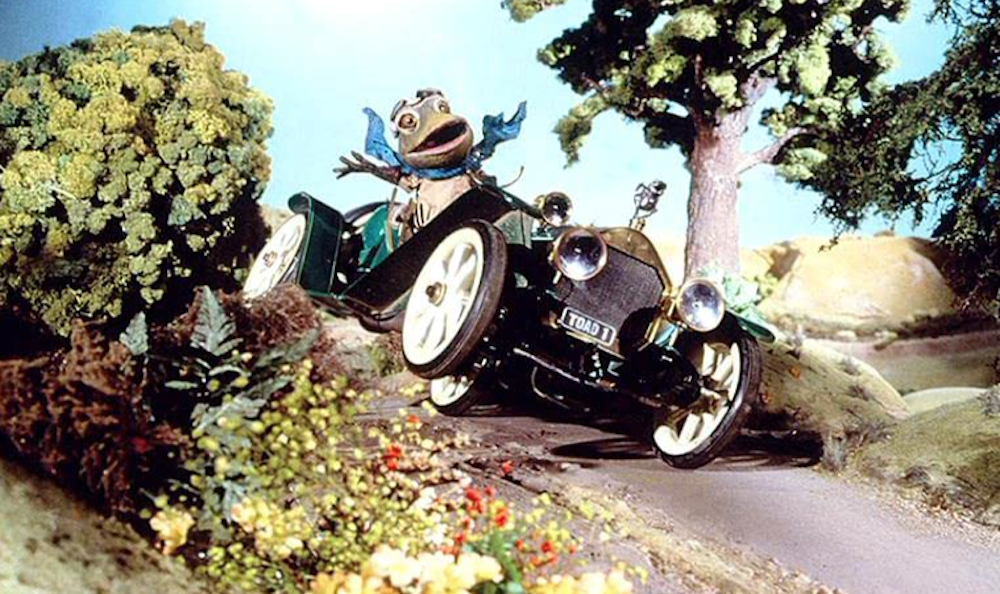 Toad: charming and impulsive but wildly arrogant and lacking self-control.
Cosgrove Hall Films, Thames Television
This return to civility and quiet domesticity exemplifies a criticism often levelled at children’s literature: that such stories are more about the fears and desires of adults than those of children. (Alice in Wonderland, for instance, emphasises the importance of curiosity and imagination, but is also an attempt to socialise children into responsible citizenship.)
Willows is a story about homecoming and friendship, but also a psychodrama about uncontrolled behaviour and addiction in Edwardian England.
Creatures of habit
Perhaps the most famous scene in Willows — now also a popular ride at Disneyland — is Mr Toad’s Wild Ride. In the novel, the incautious Toad, who is oddly large enough to drive a human-sized car, is frequently in trouble with the law and even imprisoned due to his addiction to joyriding.
At times delusional, the self-proclaimed “terror of the highway” writes off several vehicles before spiralling into a cycle of car theft, dangerous driving, and disorderly behaviour.
‘Messing Around in Cars’. Scene from the 1985 animated musical film version of The Wind in The Willows, directed by Arthur Rankin Jr and Jules Bass.Eventually, Toad’s motorcar mania becomes so unmanageable that his exasperated friends are forced to stage “a mission of mercy” – a “work of rescue” that contemporary readers might recognise as an intervention. This subtext of addiction underpins the arc of recovery, and is crucial for understanding the novel’s key themes: the limits of friendship, the loss of pastoral security, and the temptations of city life.
Interestingly, in Badger’s attempt to help Toad break the cycle of withdrawal and recovery, and in Toad’s temporary abatement and relapse, the text points to another form of addiction: to alcohol.
Toad: charming and impulsive but wildly arrogant and lacking self-control.
Cosgrove Hall Films, Thames Television
This return to civility and quiet domesticity exemplifies a criticism often levelled at children’s literature: that such stories are more about the fears and desires of adults than those of children. (Alice in Wonderland, for instance, emphasises the importance of curiosity and imagination, but is also an attempt to socialise children into responsible citizenship.)
Willows is a story about homecoming and friendship, but also a psychodrama about uncontrolled behaviour and addiction in Edwardian England.
Creatures of habit
Perhaps the most famous scene in Willows — now also a popular ride at Disneyland — is Mr Toad’s Wild Ride. In the novel, the incautious Toad, who is oddly large enough to drive a human-sized car, is frequently in trouble with the law and even imprisoned due to his addiction to joyriding.
At times delusional, the self-proclaimed “terror of the highway” writes off several vehicles before spiralling into a cycle of car theft, dangerous driving, and disorderly behaviour.
‘Messing Around in Cars’. Scene from the 1985 animated musical film version of The Wind in The Willows, directed by Arthur Rankin Jr and Jules Bass.Eventually, Toad’s motorcar mania becomes so unmanageable that his exasperated friends are forced to stage “a mission of mercy” – a “work of rescue” that contemporary readers might recognise as an intervention. This subtext of addiction underpins the arc of recovery, and is crucial for understanding the novel’s key themes: the limits of friendship, the loss of pastoral security, and the temptations of city life.
Interestingly, in Badger’s attempt to help Toad break the cycle of withdrawal and recovery, and in Toad’s temporary abatement and relapse, the text points to another form of addiction: to alcohol.
 A British postage stamp featuring the Willows gang.
shutterstock
When Toad is banished to his country retreat — a typical “cure” for upper-class alcoholism at the time — Badger stresses he will remain in enforced confinement “until the poison has worked itself out of his system” and his “violent paroxysms” have passed.
Again, the biographical foundation of the work is clear. Grahame’s father, Cunningham, was an alcoholic whose heavy drinking resulted, like Toad’s intoxication, in social exile, financial strain, and the loss of the family home.
In The Wind in the Willows, Grahame employs animals to render all the ups and downs of human experience. In doing so, he captures the conflict and consonance between freedom and captivity, tradition and modernity.
Productions of The Wind in the Willows will be held in Melbourne’s Royal Botanic Gardens and Sydney’s Royal Botanic Gardens until January 24.
A British postage stamp featuring the Willows gang.
shutterstock
When Toad is banished to his country retreat — a typical “cure” for upper-class alcoholism at the time — Badger stresses he will remain in enforced confinement “until the poison has worked itself out of his system” and his “violent paroxysms” have passed.
Again, the biographical foundation of the work is clear. Grahame’s father, Cunningham, was an alcoholic whose heavy drinking resulted, like Toad’s intoxication, in social exile, financial strain, and the loss of the family home.
In The Wind in the Willows, Grahame employs animals to render all the ups and downs of human experience. In doing so, he captures the conflict and consonance between freedom and captivity, tradition and modernity.
Productions of The Wind in the Willows will be held in Melbourne’s Royal Botanic Gardens and Sydney’s Royal Botanic Gardens until January 24.
Authors: Kate Cantrell, Lecturer - Creative Writing & English Literature, University of Southern Queensland


















