
3 things we can do now to help people with disability prepare for disaster
- Written by: Michelle Villeneuve, Associate Professor, University of Sydney
People with disability are disproportionately affected by disasters, but have fewer choices when emergencies unfold. Our previous research showed how, for people with disability, natural hazard disasters can mean:
loss of power for life-sustaining equipment
transportation challenges meaning people have to evacuate without equipment they need
-
nowhere to go because warning information and environments (such as the homes of friends or family, or evacuation facilities) are inaccessible.
Disaster planning for people with disability matters. We perpetuate inequality with every step we don’t take, and risk entrenching disadvantage. And if you make things inclusive for people with disability, you tend to make it inclusive for large swathes of groups also at risk in emergencies, including older people, socially disconnected people and others. Many birds, one stone.
Here are three things that must be done to expand opportunity, choice and control for people with disability when disaster strikes.
1. Listen to and learn from people with disability
It is astonishing how little this happens.
But we will never properly understand, much less remove, barriers that put people with disability at heightened risk during disaster unless we centre on their experience and expertise.
Disabled People’s Organisations can play a significant role in disaster policy, planning and interventions by representing their members and allowing their voices to be heard. These organisations already have in-depth understanding of the factors that increase risk for people with disability in emergencies.
We worked with the Queenslanders with Disability Network representatives from their Peer Leaders program to co-design a disaster preparedness planning guide for people with disability. It’s called the Person-Centred Emergency Preparedness (P-CEP) Workbook.
The guide helps people plan for their own support needs and work with government and emergency managers. This approach is already yielding fruitful new partnerships.
For example, after meeting Queenslanders with Disability Network Peer Leader Peter Tully, an emergency manager at Ipswich Council told us:
We have a lot of work to do with the disaster management team of council to make the emergency relief centres accessible. We want to break down barriers to improve disability-inclusive disaster management.
In partnership with VALID (the Victorian Advocacy League For Individuals With Disability) and Gippsland Disability Advocacy Inc, we are now replicating the Person-Centred Emergency Preparedness Peer Leadership Program in Victoria.
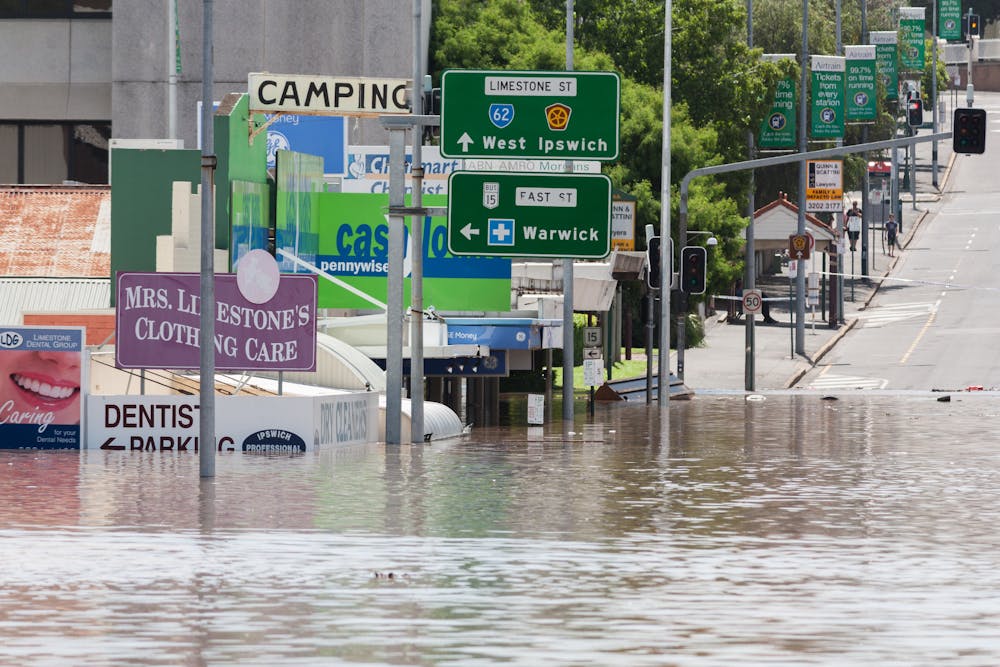 Disaster planning means people and organisations are not left scrambling when disaster strikes.
Shutterstock
Disaster planning means people and organisations are not left scrambling when disaster strikes.
Shutterstock
2. Bring community, health and disability support workers to the table
For people who rely on them, community, health and disability support workers can be a crucial asset. In emergencies, they often increase safety and well-being for people with disability.
Through their routine interactions in the community, these service providers know who needs what kind of support. They know the accessible places and spaces. They know what services are available and how people with disability can access them during and after disaster.
Too often, however, community and disability organisations are not adequately prepared for disaster themselves, nor are they integrated into emergency planning.
Government and emergency services can tap into the expertise of local service providers by:
This will develop capability of providers in emergency preparedness, improve service continuity and increase options for people with disability when disasters strike.
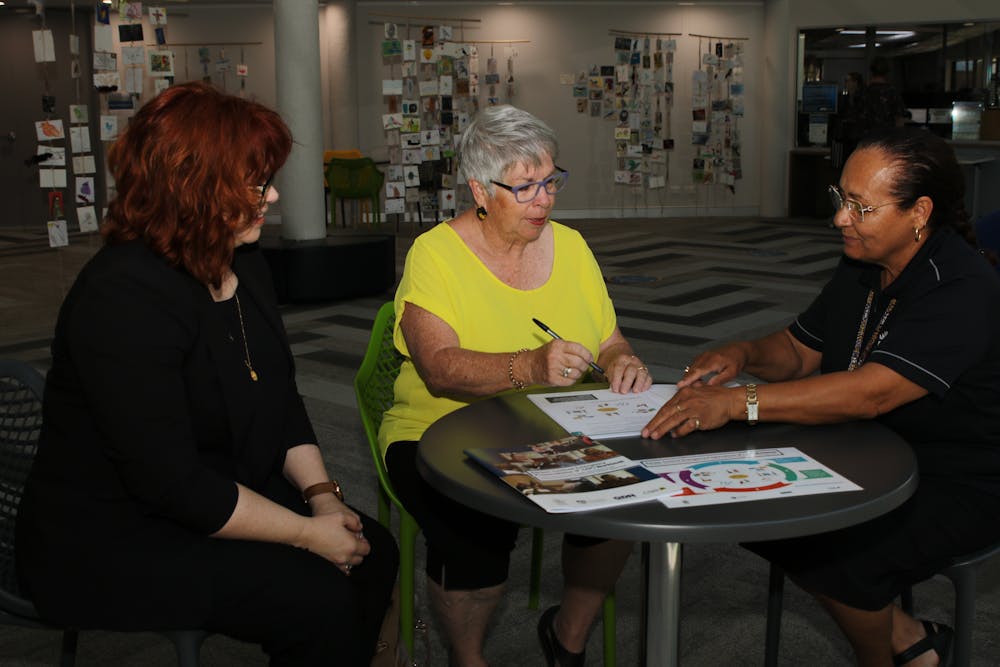 Government and emergency services can tap into the expertise of people with disability and local service providers.
www.collaborating4inclusion.org, Author provided
Government and emergency services can tap into the expertise of people with disability and local service providers.
www.collaborating4inclusion.org, Author provided
3. Local councils need to take a bigger role
Councils have excellent links to community groups that are crucial to building resilience for people with disability before, during and after disaster.
This year, Mackay Regional Council partnered with our research team, including a Queenslanders with Disability Network Peer Leader. Together, we introduced the Person-Centred Emergency Preparedness toolkit to community, health and disability service providers.
Read more: Bushfire planning leaves behind people with disabilities
Through this project, we identified three ways councils can better collaborate with people with disability and supporting services:
create opportunities to learn from groups who have traditionally been left out of emergency management and disaster recovery planning. That means holding workshops and meetings where the aim is to listen to people with disabilities and their support networks.
apply for grants to fund inclusive emergency management efforts. Councils often have on staff people who are expert at applying for and getting grants. Use the money to host training, or print and distribute Person-Centred Emergency Preparedness Workbooks. Mackay Regional Council libraries hosted regular events for people to learn about Person-Centred Emergency Preparedness. Council officers were on hand to assist people to make their emergency plan
lead by example and use relationships with community groups, sports, schools, churches, and businesses to help residents learn about Person-Centred Emergency Preparedness. The Person-Centred Emergency Preparedness resources can also help people who are ageing at home, have a mental health conditions, a chronic health concern, and/or other support needs.
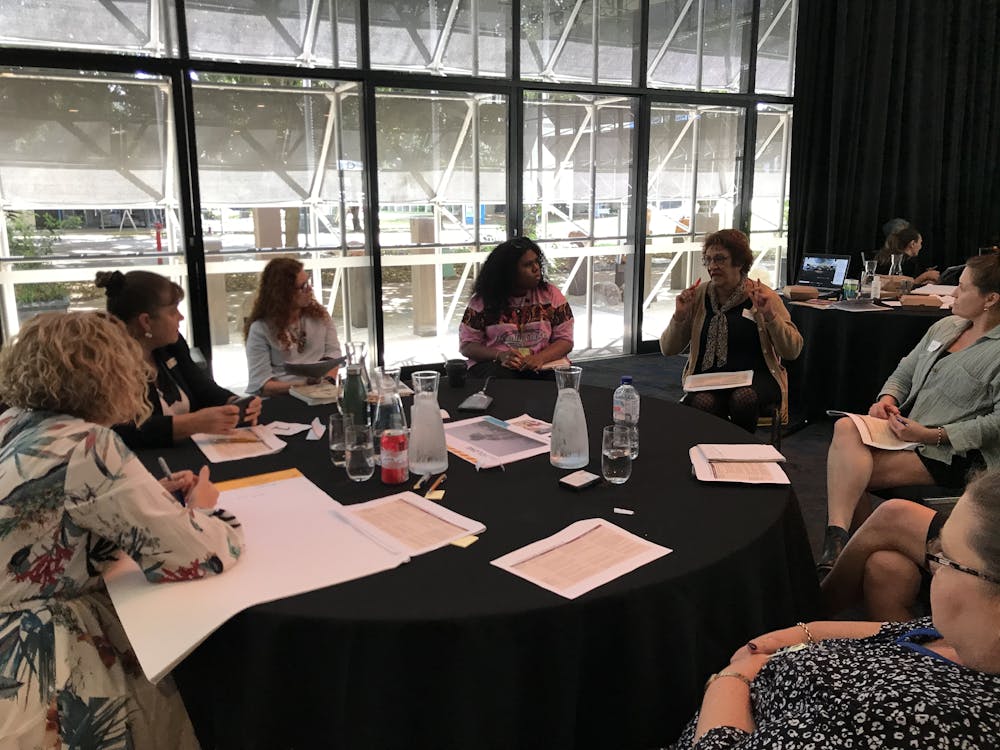 This year, Mackay Regional Council partnered with our research team, including a Queenslanders with Disability Network Peer Leader.
www.collaborating4inclusion.org, Author provided
This year, Mackay Regional Council partnered with our research team, including a Queenslanders with Disability Network Peer Leader.
www.collaborating4inclusion.org, Author provided
By adopting the Person-Centred Emergency Preparedness process, Mackay councillors and staff have embraced an inclusive way to build resilience.
Community-level emergency planning is now focused on working together with people with disability and the services that support them. This approach can only help address gaps in preparedness that put people at greater risk in emergencies.
Better systems for disability-inclusive disaster planning not only ensures people get support matched to their needs. It has the added bonus of freeing up the emergency services to focus on responding to the hazard. This keeps the whole community safe.
It increases disaster resilience for everyone.
This article was co-authored by Helen Styles, Resilience and Recovery Officer, Emergency Management at Mackay Regional Council.
Authors: Michelle Villeneuve, Associate Professor, University of Sydney


















