

The crisis in Yemen demands an independent review of NZ's military links with Saudi Arabia
- Written by: Alexander Gillespie, Professor of Law, University of Waikato
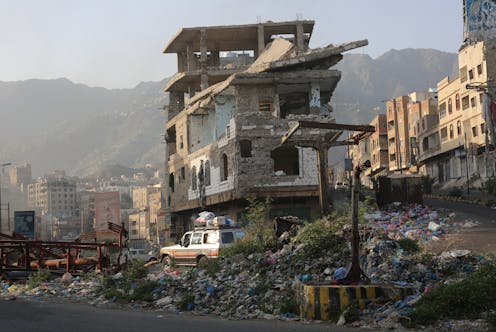
The revelation that Air New Zealand had been silently contracting services to the Saudi Arabian navy was apparently not the only instance of New Zealand’s connection to the murderous war in Yemen.
A week after Air New Zealand apologised to the government, it emerged the Ministry of Foreign Affairs (MFAT) had approved exports of military equipment to Saudi Arabia in 2016 and 2018.
Both cases involved a startling lack of transparency and direct inconsistencies with both corporate and country commitments to upholding international human rights obligations.
The conflict in Yemen is currently the world’s worst humanitarian crisis. From indiscriminate targeting of civilians to torture, sexual violence and starvation, the situation reads like a textbook case of war crimes.
Since 2014, there have been an estimated 233,000 deaths, including 131,000 from indirect causes such as lack of food, health services and infrastructure. More than 20 million experience food insecurity, and 10 million are at risk of famine.
The war is complex, fed by opposing regional, national and religious ambitions. While all sides justify their involvement, none have clean hands. All have been increasingly brutal in pursuit of their goals.
The first step towards calming the conflict will involve a halt to providing weapons to those forces not fighting in accordance with international humanitarian law — Saudi Arabia included.
Selective embargoes
Despite being on record supporting calls for all parties in the Yemen conflict to abide by international law, New Zealand can no longer deny any potential complicity in this humanitarian abyss.
Efforts to control the situation stretch back to 2014. As well as various peace initiatives, the UN Security Council has mandated a limited arms embargo, which New Zealand complies with. But these are targeted primarily at the Houthi rebels and associated terror groups, not the Saudi-led coalition fighting them.
Read more: Yemen: Understanding the conflict
The inconsistency reflects the power of veto in the Security Council, but a UN panel of experts agreed all parties to the conflict have committed egregious violations of international humanitarian law and international human rights law.
Theory and practice
In theory, the 2013 Arms Trade Treaty should help curtail the trade in weapons to this disastrous conflict. Its signatories (including New Zealand) agree not to authorise any transfer of conventional arms, ammunition, parts and components, if they know such material could contribute to war crimes being committed.
In practice, this meant countries like New Zealand amended export laws to ensure all military and dual-use equipment was strictly controlled and not destined for the wrong places.
Read more: Arab Spring: after a decade of conflict, the same old problems remain
All military-related exports must be explicitly permitted. Permits will be refused if the export violates UN Security Council arms embargoes, contravenes New Zealand’s other international obligations, or if it is known such materials would be used in the commission of genocide, crimes against humanity or war crimes.
Reasonably, there should now be no military trade with the Saudi-led coalition (or the other belligerents). No country can seriously claim not to be aware of the extreme violations of international humanitarian law in Yemen.
Profit over principle
Unfortunately, it seems the excessive profits to be made from a soaring arms trade have pushed aside evidence of war crimes or assassinations (in the case of the extrajudicial killing of Jamal Khashoggi).
Along with the United Kingdom, Canada, Australia and the US (although the Biden administration is reportedly reconsidering its policy), it now appears New Zealand is included in this company.
Initially, New Zealand’s involvement was confined to humanitarian aid, providing millions in assistance. But if the latest reports are correct, the government must end any further military or dual-use engagement and ask how such decisions were justified in the past.
New Zealand’s involvement is comparatively small, but the scale of the trade matters less than its legal and ethical basis.
Read more: Arab Spring: when the US needed to step up, it stood back – now, all eyes are on Biden
Transparency and accountability
The government must also require full transparency from Air New Zealand as its majority shareholder.
The airline has come a long way since it was famously accused of “an orchestrated litany of lies” over the 1979 Erebus disaster. As a putatively responsible corporate citizen it upholds social and environmental sustainability as part of its core values and code of conduct.
Air New Zealand takes these responsibilities seriously enough to have pledged itself to the ten principles of the Global Compact. This UN initiative encourages businesses to adopt sustainable and socially responsible policies, and to report on their implementation.
Principle 2 requires that a company should not be complicit in human rights abuses. Air New Zealand said in its 2020 report to the compact:
We take legal advice in the local jurisdictions we operate in about human rights compliance and require managers across the organisation to comply with all company policies.
So far, none of this adds up — for MFAT, Air New Zealand or the government. An independent review of New Zealand’s involvement in the Yemen crisis — its scale, justification and status under existing laws and principles — is now called for.
Authors: Alexander Gillespie, Professor of Law, University of Waikato


















