

5 lessons for 2021 and beyond
- Written by Michael Baker, Professor of Public Health, University of Otago
Exactly one year ago tomorrow (February 26) the first confirmed case of COVID-19 arrived in Aotearoa New Zealand. Identified only as “a person in their 60s recently returned from Iran”, the case marked the beginning of an extraordinary period in the life of the country.
A year on, what are some of the lessons we have learned about this pandemic? And what are the implications for improving our response in future?
One of the main reasons for asking these questions lies in the legacy value of any improvements we make. That is, the potential for using this crisis as the catalyst for an urgently-needed upgrade to the country’s public health infrastructure, to enhance health, equity, prosperity and sustainability in the long term.
Elimination is the right strategy
Arguably, New Zealand’s greatest lesson is that an elimination strategy is the optimal response for a moderate to severe pandemic like COVID-19. The strategy provides a vivid example of how protecting public health also protects the economy when compared with mitigation or suppression strategies.
This successful approach has required decisive science-backed government action and outstanding communication to create the social licence needed for an effective response.
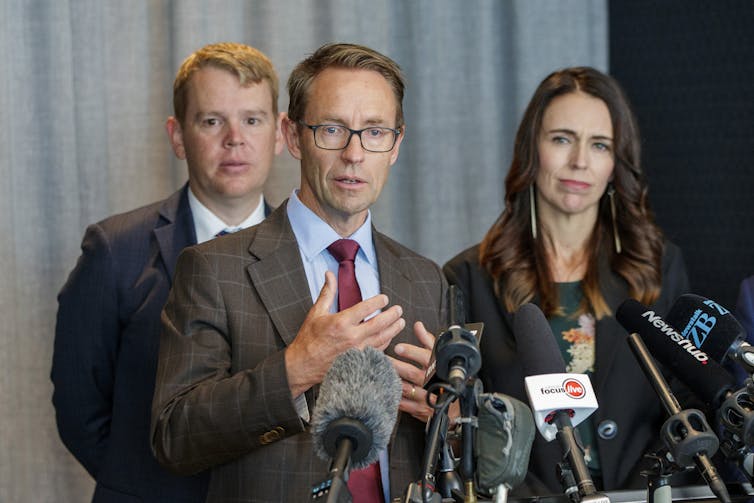 Communication is key: Minister for Covid-19 Response Chris Hipkins, Director-General of Health Ashley Bloomfield and Prime Minister Jacinda Ardern announce the arrival of the Pfizer/BioNTech vaccine on February 12.
GettyImages
Communication is key: Minister for Covid-19 Response Chris Hipkins, Director-General of Health Ashley Bloomfield and Prime Minister Jacinda Ardern announce the arrival of the Pfizer/BioNTech vaccine on February 12.
GettyImages
Prevention remains a fundamental strategy. At a technical level, we have learned COVID-19 transmission is mainly through airborne spread indoors, often from pre-symptomatic people. This highlights the value of mask use and good ventilation.
The risk from contaminated surfaces has been overemphasised. The virus shows large “transmission heterogeneity” (only about 20% of infected cases are responsible for most of the transmission), further underlining the importance of preventing super-spreading events.
Ongoing vaccination challenges
Another key lesson was how quickly the world developed highly effective, safe vaccines. The new messenger RNA (mRNA) vaccines are performing particularly well.
But the COVID-19 endgame remains uncertain. Plausible global scenarios range from endemic infection (like seasonal influenza) to eradication (like SARS, smallpox, rinderpest and two of the three serotypes of poliovirus).
Newly emerging SARS-CoV-2 variants increase transmission risk and will probably reduce vaccine effectiveness over time, requiring vaccine reformulation.
A co-ordinated international effort to ensure equitable distribution of vaccines will not only protect the most vulnerable, it will also provide the best hope of containing the pandemic.
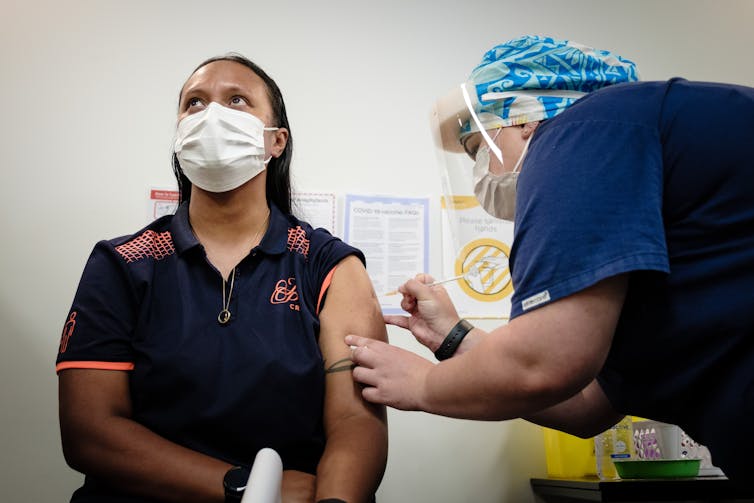 Essential workers first: a border worker receives the COVID-19 vaccine in Auckland on February 20.
GettyImages
Essential workers first: a border worker receives the COVID-19 vaccine in Auckland on February 20.
GettyImages
5 challenges for 2021 and beyond
Aotearoa faces five key challenges over the next year to weather the pandemic and deliver a valuable and lasting public health legacy.
1. Improving border biosecurity
Preventing the re-introduction of COVID-19 into the country remains the single most important short- to medium-term challenge to sustained elimination of the virus.
There are obvious benefits in taking a highly systematic approach to this process by considering the entire journey of travellers: from their week prior to departure, their flight to New Zealand (during which they can become infected), their two-week stay in MIQ facilities (where again they can become infected), and the period after leaving MIQ when they remain at elevated risk of being infectious.
Read more: How the coronavirus mutates and what this means for the future of COVID-19
The goal of having no infected people arriving in the country should become increasingly realistic. This should allow for the careful introduction of quarantine-free travel with other parts of the world that have also achieved elimination.
Investing in a purpose-built but versatile quarantine facility offers important short- and long-term benefits.
2. Enhancing outbreak detection and management
For the foreseeable future, New Zealand will need to maintain and enhance its systems for rapid detection and control of COVID-19 outbreaks as a backup measure for border failures.
Promising enhancements include the use of daily saliva testing of border workers and wastewater testing to detect community transmission sooner, as well as continuing improvements to contact tracing.
Read more: CDC says masks must fit tightly – and two are better than one
New Zealand has relatively high voluntary uptake of its COVID Tracer app, but routine use is poor. An obvious improvement would be to make use of the app mandatory when entering high-risk venues (nightclubs, indoor bars and restaurants, gyms, churches, entertainment venues) and by MIQ workers and recently returned travellers.
The alert level system needs revision to reflect new knowledge about transmission. There needs to be a greater focus on limiting crowding in high-risk indoor environments, promoting mask use (which is effective at reducing transmission) and using more geographically targeted and less disruptive “circuit-breaker lockdowns”.
3. Delivering vaccinations effectively and equitably
Vaccination strategies must prioritise effective border control, protect the most vulnerable and promote health equity. Achieving high coverage will depend on social engagement, community networks, and high-quality, comprehensive information systems such as the upgraded national immunisation register.
4. Establishing an effective public health agency
The pandemic provides a vivid illustration of the need to invest in effective public health infrastructure. A dedicated national agency is needed to create the critical mass of expertise in strategy and delivery that was missing at the start of the pandemic in New Zealand.
Such agencies are increasingly common in high-income countries. It was a key feature in the highly effective COVID response in Taiwan. This agency could provide the critical mass needed to put disease prevention and preparedness at the centre of government activities.
5. Establishing optimal emergency decision-making processes
The effective New Zealand pandemic response benefited from having a government that considered scientific advice and was concerned with well-being. However, the government has been slow to innovate in some areas.
An opportunity to reset the system
One of the greatest legacies from this pandemic could be to institutionalise an improved set of processes for decision-making in emergencies that do more to foster learning, innovation, continuous quality improvement and transparency. Key changes would be:
political processes that enable highly informed debate and scrutiny while aiming for cross-party support of key response strategies (such as an ongoing epidemic response committee of parliamentarians)
advisory processes that ensure high-level, multidisciplinary science input into the all-of-government response (e.g. the formation of a COVID-19 science council/rōpu).
a well-resourced research and development strategy to ensure a high level of scientific evidence to shape the response and its evaluation
commitment to, and a timetable for, an official inquiry to assess the pandemic response and drive wider system improvements.
In summary, the COVID-19 pandemic has provided a profound opportunity for reassessing health, social and economic functioning in Aotearoa New Zealand. It has demonstrated the value of proactive government decision-making to manage threats to population health.
The COVID-19 response provides a model for responding to a wide range of tough societal challenges, including the climate change emergency and growing social inequities.
Authors: Michael Baker, Professor of Public Health, University of Otago

















