

Spending time in nature has always been important, but now it's an essential part of coping with the pandemic
- Written by Catherine Knight, Senior Research Associate, Institute for Governance and Policy Studies, Te Herenga Waka — Victoria University of Wellington
 Time spent in green spaces has been shown to mental and physical well-being.
Shutterstock/vsop, CC BY-SA
Time spent in green spaces has been shown to mental and physical well-being.
Shutterstock/vsop, CC BY-SA
The COVID-19 pandemic has highlighted the importance of green spaces and urban parks, especially during periods of lockdown.
Even a short walk, an ocean view or a picnic by a river can leave us feeling invigorated and restored. There is now a growing body of evidence establishing the link between such nature encounters and our mental and physical well-being.
In my new book, I explore these nature benefits and put out a challenge to urban planners and decision makers to include more green spaces in our towns and cities.
Nature’s fix
One of the earliest studies to draw a conclusive link between time spent in nature and well-being was published in 1991. It found a 40-minute walk in nature, compared with walking in an urban space or reading a magazine, led to significant improvements in mood, reduced anger and aggression, and better recovery from mental fatigue.
In more recent studies, exposure to nature or urban green space has been associated with lower levels of stress, reduced symptoms of depression and anxiety, and improved cognition in children with attention deficits and individuals with depression.
Research also suggests the benefits of growing up with access to lots of green space has a lasting effect into adulthood. A Danish study in 2019 found children who grow up surrounded by green spaces are less likely to develop mental disorders as adults.
Read more: 'I need nature, I need space': high-rise families rely on child-friendly neighbourhoods
Nature exposure has also been shown to boost immunity. Studies found that forest excursions boost the activity of natural killer cells (a type of white blood cell that plays a vital role in the body’s defence system, attacking infections and tumours) and elevate hormones that may be protective against heart disease, obesity and diabetes, at least over the short term.
No exercise required
Researchers have been careful to factor out the beneficial effects of energetic physical activity when designing their studies of nature exposure. They asked participants to sit quietly or take a gentle walk.
This is good news for those of us who prefer a stroll to strenuous exercise. What’s more, researchers have found that just 20-30 minutes in nature delivers optimal benefits. After that, they continue to accrue, but at a slower rate.
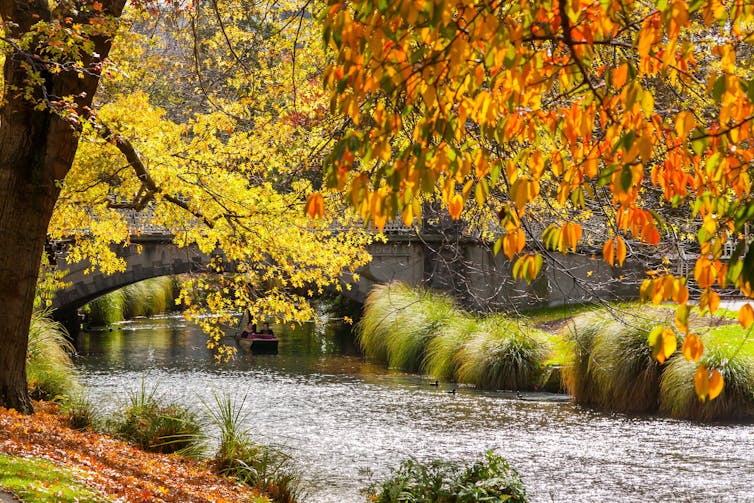 Even a gentle stroll delivers health benefits.
Shutterstock/Ian Woolcock, CC BY-SA
Even a gentle stroll delivers health benefits.
Shutterstock/Ian Woolcock, CC BY-SA
There’s even better news. To provide these benefits, nature does not need to be remote or pristine. A leafy park, a stream-side walkway, or even a quiet, tree-lined avenue can provide this nature fix.
New Zealand’s lockdowns have made more people appreciate the importance of green spaces for walking, cycling or just getting some fresh, tree-filtered air. During the strictest lockdown in April 2020, citizen science apps such as iNaturalist reported an upsurge in usage, indicating people were getting out into nature in their neighbourhoods.
The nature destruction paradox
Our appreciation of nature at this time of crisis is not without irony, given the destruction of pristine forests, rapid urbanisation and population growth are all at the root of the pandemic, bringing wildlife and people into close contact and making animal-to-human transmission of new diseases increasingly likely.
Read more: UN report says up to 850,000 animal viruses could be caught by humans, unless we protect nature
A recent World Wildlife Fund report describes COVID-19 as a clear warning signal of an environment out of balance.
The report presents strong evidence of the link between humanity’s impacts on ecosystems and biodiversity and the spread of certain diseases:
Along with maintaining our natural systems, action is needed to restore those that have been destroyed or degraded, in a way that benefits people and restores the fundamental functions that biomes such as forests provide.
In Aotearoa New Zealand, we think of ourselves as a country rich in nature, but here too we have managed to destroy large swathes of indigenous forests and ecosystems since the first Polynesian navigators and then European settlers arrived.
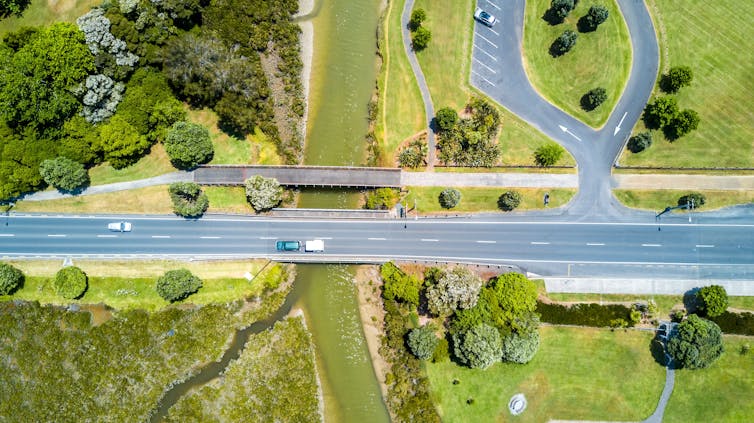 Most people live in cities, which often lack green spaces.
Shutterstock/krug, CC BY-SA
Most people live in cities, which often lack green spaces.
Shutterstock/krug, CC BY-SA
Most of our surviving forests and pristine waterways are concentrated in our mountains and hill country, preserved not as a result of careful stewardship, but rather an accident of history: it was too hard to develop and economically exploit these rugged, inaccessible places. Our lowland landscapes are largely bereft of any forests, wetlands or any nature in its original form.
Read more: 3 ways nature in the city can do you good, even in self-isolation
Yet, 86% of us live in cities and towns, which are in coastal and lowland areas. So if we are going to ensure that everyone is able to benefit from spending time in nature, we need more nature spaces in our cities.
This does not necessarily mean more parks. With the right care and investment, neglected stream corridors, weed-infested gullies, flood-prone areas unfit for development and even road verges can provide valuable green spaces for people. As an added benefit, they create a network of habitat for insects, birds and reptiles that keep our natural ecosystems functioning.
In my book, I put out a challenge to all New Zealanders, especially urban planners and our decision makers, to strive for a more nature-rich future – an Aotearoa where every New Zealander can benefit from being in nature, every day of their life.
Authors: Catherine Knight, Senior Research Associate, Institute for Governance and Policy Studies, Te Herenga Waka — Victoria University of Wellington

















