

Many New Zealand species are already at risk because of predators and habitat loss. Climate change makes things worse
- Written by Cate Macinnis-Ng, Associate Professor, University of Auckland
Islands are biodiversity hotspots. They are home to 20% of the world’s plants and animals yet cover only 5% of the global landmass. But island ecosystems are highly vulnerable, threatened by habitat fragmentation and introduced invasive weeds and predators.
Climate change adds to all these stresses. In our recent paper, we use Aotearoa New Zealand as a case study to show how climate change accelerates biodiversity decline on islands by exacerbating existing conservation threats.
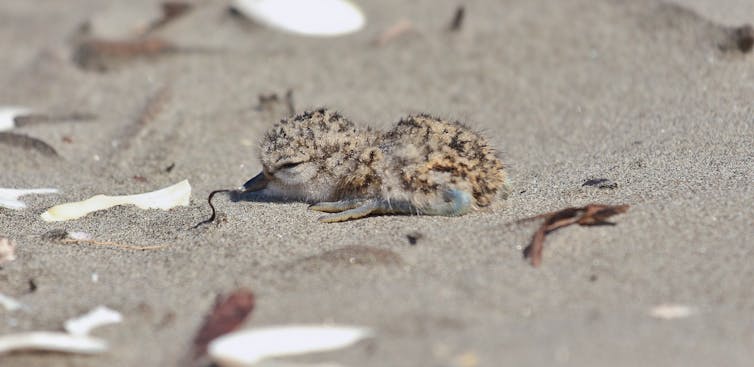 Many native birds are threatened by introduced predators such as rats, possums and cats.
Shutterstock/Imogen Warren
Many native birds are threatened by introduced predators such as rats, possums and cats.
Shutterstock/Imogen Warren
Aotearoa is one of the world’s biodiversity hotspots, with 80% of vascular plants, 81% of arthropods and 60% of land vertebrate animals found nowhere else.
Its evolutionary history is dominated by birds. Before the arrival of people, the only native land mammals were bats. But now, introduced predators threaten the survival of many species.
Complex interplay between many threats
Conservation efforts have rightly concentrated on the eradication of introduced predators, with world-leading success in the eradication of rats in particular.
Potential climate change impacts have been mostly ignored. Successive assessments by the Intergovernmental Panel on Climate Change (IPCC) highlight the lack of information for Aotearoa. This could be due to insufficient research, system complexity or a lack of impacts.
In the past, some researchers even dismissed climate change as an issue for biodiversity in Aotearoa. Our maritime climate is comparatively mild and already variable. As a result, organisms are expected to be well adapted to changing conditions.
Read more: Despite its green image, NZ has world's highest proportion of species at risk
Palaeo-ecological records suggest few species extinctions despite abrupt environmental change during the Quaternary period (from 2.5 million years ago to present). But past climate change provides an incomplete picture of contemporary change because it did not include human-induced threats.
Habitat loss and fragmentation, land‐use change and complex interactions between native species and introduced predators or invasive weeds all contribute to these threats.
How climate change affects biodiversity
Species respond to climate change by evolving physiological adjustments, moving to new habitats or, in the worst cases, becoming extinct. These responses then change ecosystem processes, including species interactions and ecosystem functions (such as carbon uptake and storage).
Methods for identifying climate change impacts are either empirical and observational (field studies and manipulative experiments) or mechanistic (ecophysiological models). Mechanistic approaches allow predictions of impacts under future climate scenarios. But linking species and ecosystem change directly to climate can be challenging in a complex world where multiple stressors are at play.
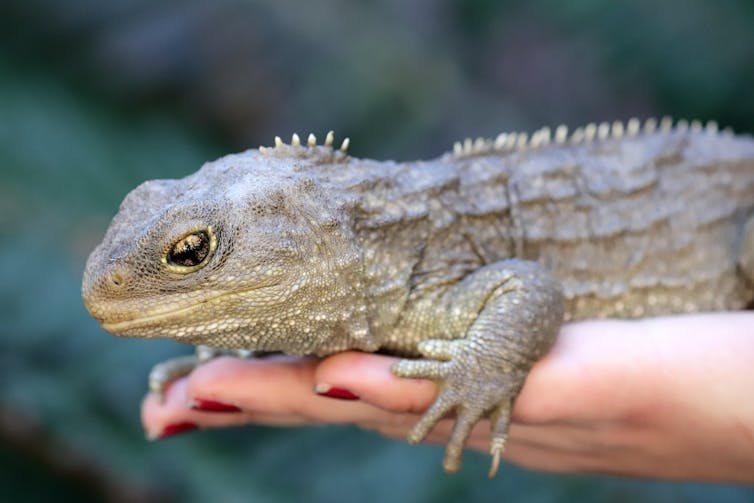 Tuatara survive only on a few offshore islands and in sanctuaries.
Shutterstock/Ken Griffiths
Tuatara survive only on a few offshore islands and in sanctuaries.
Shutterstock/Ken Griffiths
There are several well-known examples of climate change impacts on species endemic to Aotearoa. First, warming of tuatara eggs changes the sex ratio of hatchlings. Hotter conditions produce more males, potentially threatening long-term survival of small, isolated populations.
Second, mast seeding (years of unusually high production of seed) is highly responsive to temperature and mast events are likely to increase under future climate change. During mast years, the seeds provide more food for invasive species like rats or mice, their populations explode in response to the abundant food and then, when the seed resource is used up, they turn to other food sources such as invertebrates and bird eggs. This has major impacts on native ecosystems.
How masting plants respond to climate change is complex and depends on the species. The full influence of climate is still emerging.
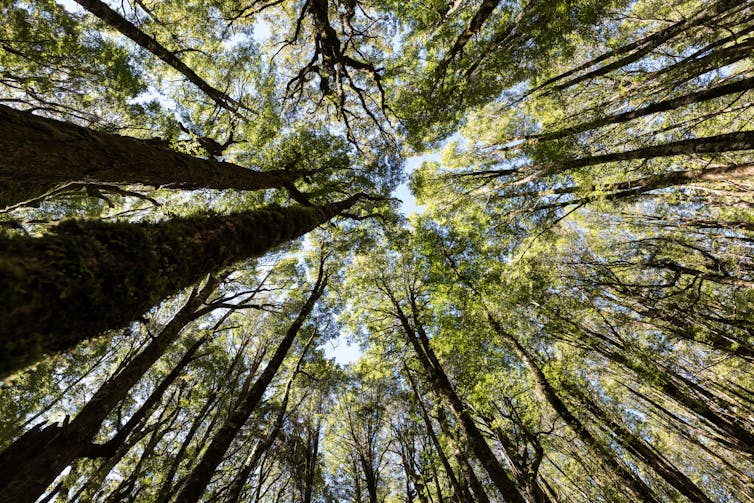 Every few years, beech trees produce significantly higher amounts of seed.
Shutterstock/sljones
Every few years, beech trees produce significantly higher amounts of seed.
Shutterstock/sljones
Indirect effects of climate change
We identified a range of known and potential complex impacts of climate change in several ecosystems. The alpine zone is particularly vulnerable. Warming experiments showed rising temperatures extend the overlap between the flowering seasons of native alpine plants and invasive plants. This potentially increases competition for pollinators and could result in lower seed production.
Some large alpine birds, including the alpine parrot kea, will have fewer cool places to take refuge from invasive predators. This will cause local extinctions in a process know as “thermal squeeze”.
Small alpine lakes, known as tarns, are not well understood but are also likely to suffer from thermal squeeze and increased drought periods. Warmer temperatures may also allow Australian brown tree frogs to invade further into these sensitive systems.
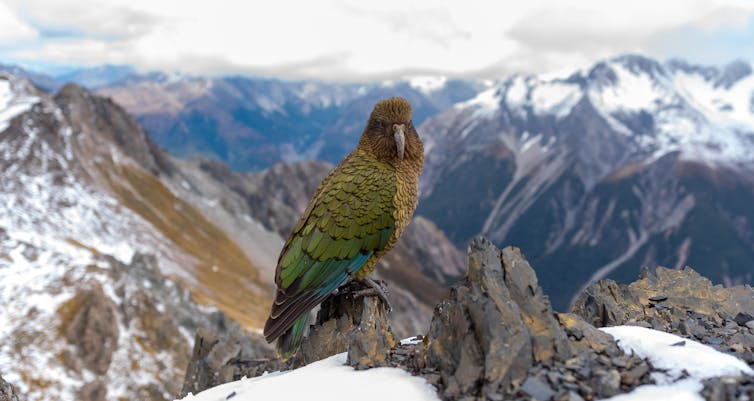 The alpine parrot kea lives in New Zealand’s mountain ranges.
Shutterstock/Peter Nordbaek Hansen
The alpine parrot kea lives in New Zealand’s mountain ranges.
Shutterstock/Peter Nordbaek Hansen
Climate change disproportionately affects Indigenous people worldwide. In Aotearoa, culturally significant species such as tītī (sooty shearwater) and harakeke (flax) will be influenced by climate change.
The breeding success of tītī, which are harvested traditionally, is strongly influenced by the El Niño Southern Oscillation (ENSO) cycle. As ENSO intensifies under climate change, numbers of young surviving are decreasing. For harakeke, future climate projections predict changes in plant distribution, potentially making weaving materials unavailable to some hapū (subtribes).
Read more: Traditional knowledge helps Indigenous people adapt to climate crisis, research shows
Mātauranga, the Indigenous knowledge of Māori, provides insights on climate change that haven’t been captured in western science. For instance, the Māori calendar, maramataka, has been developed over centuries of observations.
Maramataka for each hāpu (subtribe) provide guidance for the timing of gathering mahinga kai (traditional food sources). This includes the gathering of fish and other seafood, planting of crops and harvesting food. Because this calendar is based on knowledge that has accrued over generations, some changes in timing and distributions due to environmental or climate change may be captured in these oral histories.
Climate change is here now
Future projections of climate change are complicated in Aotearoa — but it is clear the climate is already changing.
Last year was the seventh hottest on record for Aotearoa. Many parts of the country suffered severe summer drought. NASA captured images of browned landscapes across the country.
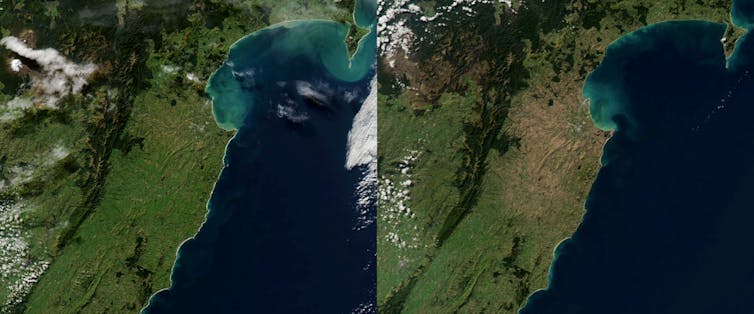 These images show how the Hawke’s Bay dried out between the summer (December to February) periods of 2019 (left) and 2020 (right).
NASA, CC BY-SA
These images show how the Hawke’s Bay dried out between the summer (December to February) periods of 2019 (left) and 2020 (right).
NASA, CC BY-SA
Much of the focus of climate change research has been in agricultural and other human landscapes but we need more effort to quantify the threat for our endemic systems.
On islands across the world, rising sea levels and more severe extreme weather events are threatening the survival of endemic species and ecosystems. We need to understand the complicated processes through which climate change interacts with other threats to ensure the success of conservation projects.
While we focused on terrestrial and freshwater systems, marine and near-shore ecosystems are also suffering because of ocean acidification, rising sea levels and marine heatwaves. These processes threaten marine productivity, fisheries and mahinga kai resources.
And for long-term conservation success, we need to consider both direct and indirect impacts of climate change on our unique species and ecosystems.
Authors: Cate Macinnis-Ng, Associate Professor, University of Auckland

















