

We know hand dryers can circulate germs through the air. Why are they still used everywhere?
- Written by: Christian Moro, Associate Professor of Science & Medicine, Bond University
Airborne contaminants, dirty toilet seats, mould and mildew: long before the coronavirus pandemic came around, the hygiene-focused among us knew public washrooms are grimy places.
Most adults visit the bathroom around 8-10 times a day. With an average hand-drying time of 30 seconds, we can expect between 4-5 minutes of daily dryer use per person (and more for people with an overactive bladder or similar disorders).
In an attempt to facilitate the hand washing process, are hand dryers adding to the filth by blowing contaminants around? And if so, why are they still common?
The need to dry
Drying hands is an essential part of the hand washing process. Wet hands can further the spread of microbes, since moisture facilitates their transfer from the skin to other surfaces.
Compared to shaking your hands dry after a wash, using an air dryer or paper towel greatly reduces the number of surface bacteria that remain.
Warm air dryers remove moisture from the hands through evaporation, while jet air dryers remove it by using sheer force to disperse the droplets into the air.
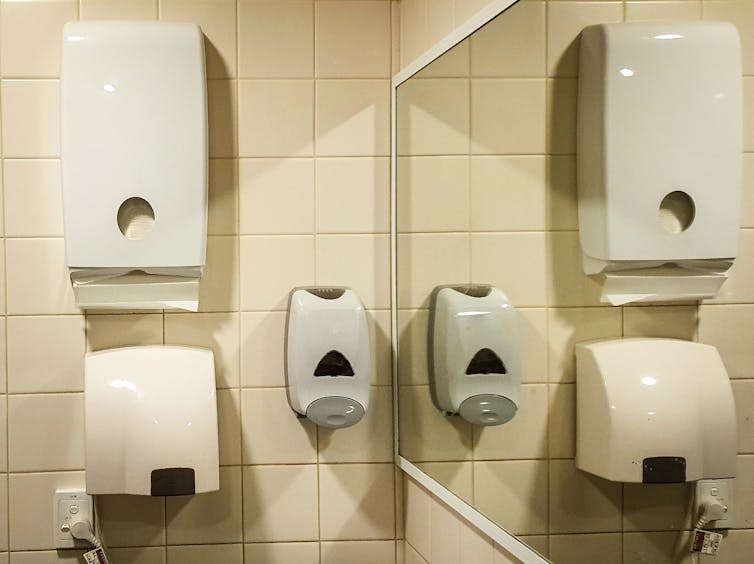 Some bathrooms offer both paper towels and air dryers. Should you prioritise one of them?
Christian Moro
It’s worth remembering hand dryers don’t create microbes and there’s usually only minimal bacteria on their nozzles, too. In many cases air dryers can even be fitted with filters that help clean and remove contaminants from the air.
Put a lid on it!
Nonetheless, while dryers themselves aren’t necessarily unclean, their forced air can help circulate bacteria around the space. This is why the main focus should be on preventing bacteria from surfaces ever becoming aerosolised (entering the air) in the first place.
If a toilet’s lid is left open when it’s flushed, a fine aerosolised mist of microbes enters the air. And this cloud of faecal matter can spread over an area of up to six square metres.
Research has shown even after flushing many times, a toilet can continue to emit contaminants into the air. In other words, a person infected with a virus could be spreading these germs for several hours after visiting the bathroom.
Public washrooms can therefore act as reservoirs for especially nasty bacteria, such as those which are resistant to antibiotics.
So are paper towels the solution?
Read more: Coronavirus and handwashing: research shows proper hand drying is also vital
Problems with paper
Paper towels remove water by absorption and take contaminants with them when they’re binned. However, they can cause plumbing problems if flushed down the toilet, which require time and money to fix.
Additionally, paper towels need to be continuously purchased, restocked and disposed of as waste — all of which leads to increased costs. In a worst-case scenario towels may run out, prompting people to exit without drying their hands at all.
Granted, in a hospital setting a dryer’s forced air may move microbes onto items handled by health professionals and patients, such as phones or stethoscopes. So paper towels may be a more suitable option here.
But they still don’t provide an entirely sterile environment and can be contaminated by microbes circulating in the area.
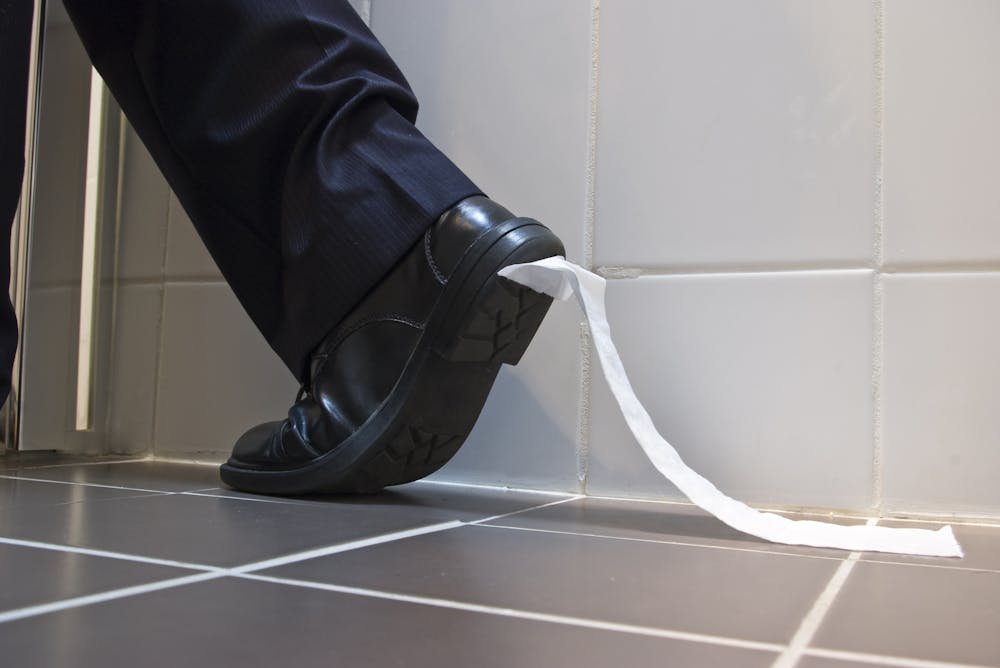 If contaminated paper towels are discarded on the floor, people stepping on them can transfer germs via their shoes to outside areas.
Shutterstock
Weighing the environmental impact
Although hand dryers do produce carbon emissions, studies have shown warm air dryers (which rely on evaporation) generate up to 70% more emissions than newer, fast jet dryers (which force out a rush of cold air).
Environmentally speaking, warm air dryers and paper towels perform roughly the same, on average.
Using recycled paper towels doesn’t seem to help much, either. This is because they can’t be recycled further, due to chemicals added to increase their absorptive properties as well as the overall energy required to manufacture them.
In the US, around six million tonnes of paper towels end up in landfill each year.
The dry debate continues
Some research has concluded paper towels make a more hygienic method for drying hands. Meanwhile, aggressive jet hand dryers seem to have shown the greatest potential for dispersing bacteria and particles over wider distances.
But there isn’t a clear winner in practise. A recent critical review concluded there wasn’t enough research weighing up both options and that until more robust studies were conducted, evidence-based public policy recommendations couldn’t be made.
This echoes both the World Health Organisation’s and Centre for Disease Control’s hesitance to offer recommendations for whether drying hands with air dryers is more or less effective than using paper towels.
Read more: The great bathroom debate: paper towel or hand dryer?
Tips for a healthy bathroom regimen
While hand dryers can circulate contaminants around a space, the aim should be to stop germs from becoming aerolised in the first place. If the contaminants aren’t in the air to begin with, their dispersion from hand dryers is less of a worry.
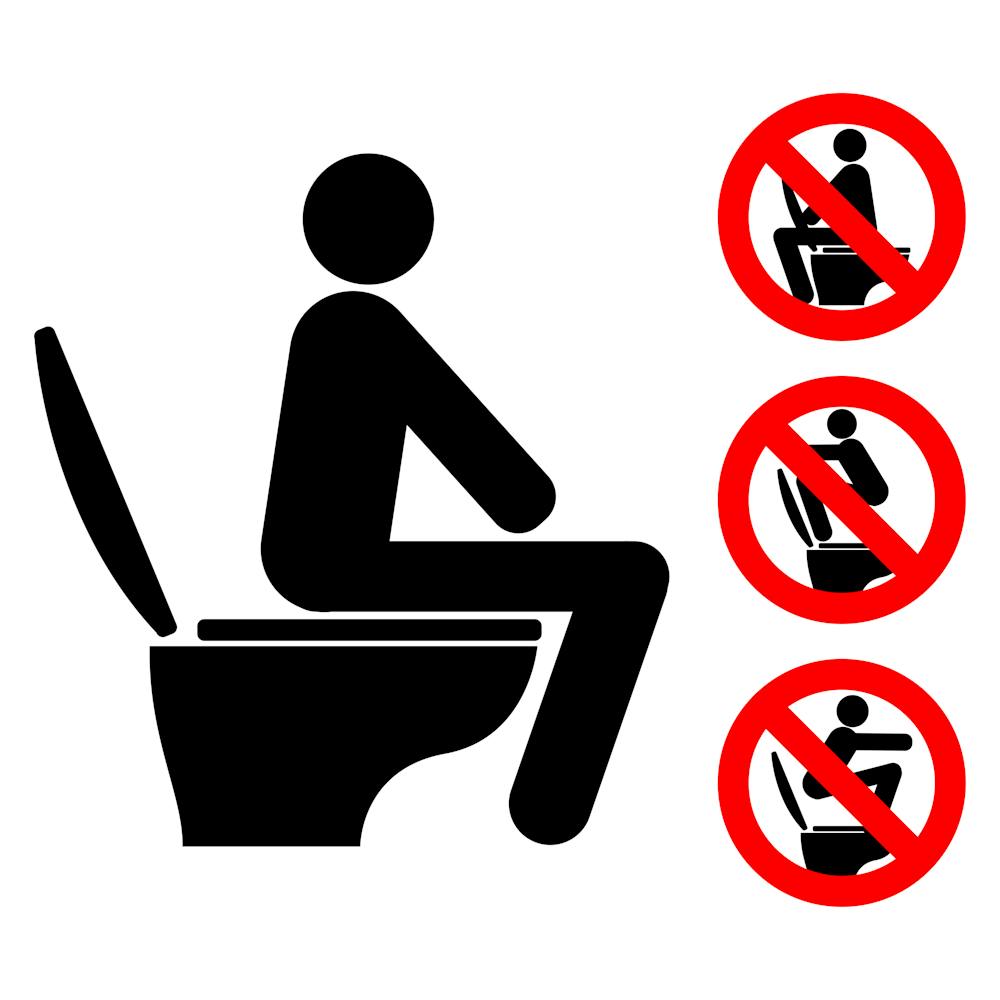 Common sense goes a long way in bathroom hygiene.
Shutterstock
Health education on this front is important. Simple recommendations include:
closing the toilet lid before flushing
wearing a mask where recommended or required, especially for those who have respiratory tract symptoms or a cough
coughing or clearing your throat directly into a tissue and immediately throwing it in the bin
washing your hands regularly with soap and water and not forgetting to dry them, as wet hands are more likely to spread bugs and diseases.
In areas where infection control and prevention are paramount, such as hospitals or food production areas, measures such as increased airflow and air filters can also help.
The bottom line
Using paper towels comes with recurring costs, logistical problems and environmental considerations. Meanwhile, air dryers can further circulate vapourised bacteria.
Managers of public washrooms have much to consider when deciding which method of hand drying to provide. In some scenarios, hand dryers do present as a better option, which is why we continue to see them in public washrooms.
Regardless of what option you choose, don’t forget drying is an essential part of the hand-washing process. Both air dryers and paper towels are, by a long way, better than using nothing at all.
Authors: Christian Moro, Associate Professor of Science & Medicine, Bond University


















