

Looking at the stars, or falling by the wayside? How astronomy is failing female scientists
- Written by Lisa Kewley, Director, ARC Centre for Excellence in All-Sky Astrophysics in 3D, Australian National University
It will take until at least 2080 before women make up just one-third of Australia’s professional astronomers, unless there is a significant boost to how we nurture female researchers’ careers.
Over the past decade, astronomy has been rightly recognised as leading the push towards gender equity in the sciences. But my new modelling, published today in Nature Astronomy, shows it is not working fast enough.
The National Academy of Science’s decadal plan for astronomy in Australia proposes women should comprise one-third of the senior workforce by 2025.
It’s a worthy, if modest, target. However, with new data from the academy’s Science in Australia Gender Equity (SAGE) program, I have modelled the effects of current hiring rates and practices and arrived at a depressing, if perhaps not surprising, conclusion. Without a change to the current mechanisms, it will take at least 60 years to reach that 30% level.
However, the modelling also suggests that the introduction of ambitious, affirmative hiring programs aimed at recruiting and retaining talented women astronomers could see the target reached in just over a decade – and then growing to 50% in a quarter of a century.
How did we get here?
Before looking at how that might be done, it’s worth examining how the gender imbalance in physics arose in the first place. To put it bluntly: how did we get to a situation in which 40% of astronomy PhDs are awarded to women, yet they occupy fewer than 20% of senior positions?
On a broad level, the answer is simple: my analysis shows women depart astronomy at two to three times the rate of men. In Australia, from postdoc status to assistant professor level, 62% of women leave the field, compared with just 17% of men. Between assistant professor and full professor level, 47% of women leave; the male departure rate is about half that. Women’s departure rates are similar in US astronomy.
Read more: 'Death by a thousand cuts': women of colour in science face a subtly hostile work environment
The next question is: why?
Many women leave out of sheer disillusionment. Women in physics and astronomy say their careers progress more slowly than those of male colleagues, and that the culture is not welcoming.
They receive fewer career resources and opportunities. Randomised double blind trials and broad research studies in astronomy and across the sciences show implicit bias in astronomy, which means more men are published, cited, invited to speak at conferences, and given telescope time.
It’s hard to build a solid research-based body of work when one’s access to tools and recognition is disproportionately limited.
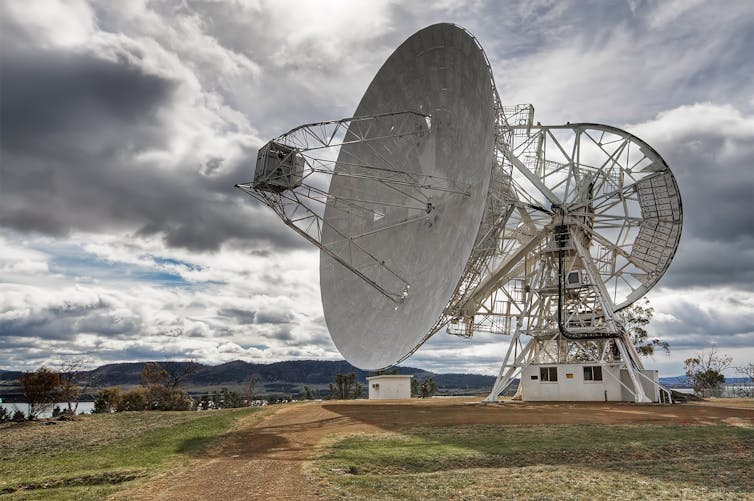 Women astronomers get disproportionately less telescope time than their male colleagues.
Wikimedia Commons, CC BY-SA
Women astronomers get disproportionately less telescope time than their male colleagues.
Wikimedia Commons, CC BY-SA
The loyalty problem
There is another factor that sometimes contributes to the loss of women astronomers: loyalty. In situations where a woman’s male partner is offered a new job in another town or city, the woman more frequently gives up her work to facilitate the move.
Encouraging universities or research institutes to help partners find suitable work nearby is thus one of the strategies I (and others) have suggested to help recruit women astrophysicists.
But the bigger task at hand requires institutions to identify, tackle and overcome inherent bias — a legacy of a conservative academic tradition that, research shows, is weighted towards men.
A key mechanism to achieve this was introduced in 2014 by the Astronomical Society of Australia. It devised a voluntary rating and assessment system known as the Pleiades Awards, which rewards institutions for taking concrete actions to advance the careers of women and close the gender gap.
Initiatives include longer-term postdoctoral positions with part-time options, support for returning to astronomy research after career breaks, increasing the fraction of permanent positions relative to fixed-term contracts, offering women-only permanent positions, recruitment of women directly to professorial levels, and mentoring of women for promotion to the highest levels.
Most if not all Australian organisations that employ astronomers have signed up to the Pleiades Awards, and are showing genuine commitment to change.
So why is progress still so slow?
Seven years on, we would expect to have seen an increase in women recruited to, and retained in, senior positions.
And we are, but the effect is far from uniform. My own organisation, the ARC Centre of Excellence in All-Sky Astrophysics in 3 Dimensions (ASTRO 3D), is on track for a 50:50 women-to-men ratio working at senior levels by the end of this year.
The University of Sydney School of Physics has made nine senior appointments over the past three years, seven of them women.
But these examples are outliers. At many institutions, inequitable hiring ratios and high departure rates persist despite a large pool of women astronomers at postdoc levels and the positive encouragement of the Pleiades Awards.
Using these results and my new workforce models, I have shown current targets of 33% or 50% of women at all levels is unattainable if the status quo remains.
How to move forward
I propose a raft of affirmative measures to increase the presence of women at all senior levels in Australian astronomy – and keep them there.
These include creating multiple women-only roles, creating prestigious senior positions for women, and hiring into multiple positions for men and women to avoid perceptions of tokenism. Improved workplace flexibility is crucial to allowing female researchers to develop their careers while balancing other responsibilities.
Australia is far from unique when it comes to dealing with gender disparities in astronomy. Broadly similar situations persist in China, the United States and Europe. An April 2019 paper outlined similar discrimination experienced by women astronomers in Europe.
Australia, however, is well placed to play a leading role in correcting the imbalance. With the right action, it wouldn’t take long to make our approach to gender equity as world-leading as our research.
Authors: Lisa Kewley, Director, ARC Centre for Excellence in All-Sky Astrophysics in 3D, Australian National University

















