

what was the Medieval warm period?
- Written by Frédérik Saltré, Research Fellow in Ecology for the ARC Centre of Excellence for Australian Biodiversity and Heritage, Flinders University
 CC BY-ND
Climate Explained is a collaboration between The Conversation, Stuff and the New Zealand Science Media Centre to answer your questions about climate change.
If you have a question you’d like an expert to answer, please send it to climate.change@stuff.co.nz
What was the Medieval warm period? What caused it, and did carbon dioxide play a role?
We are living in a world that is getting warmer year by year, threatening our environment and way of life.
But what if these climate conditions were not exceptional? What if it had already happened in the past when human influences were not part of the picture?
The often mentioned Medieval warm period seems to fit the bill. This evokes the idea that if natural global warming and all its effects occurred in the past without humans causing them, then perhaps we are not responsible for this one. And it does not really matter because if we survived one in the past, then we can surely survive one now.
But it’s just not that simple.
Read more:
2,000 years of records show it's getting hotter, faster
The Medieval climate anomaly
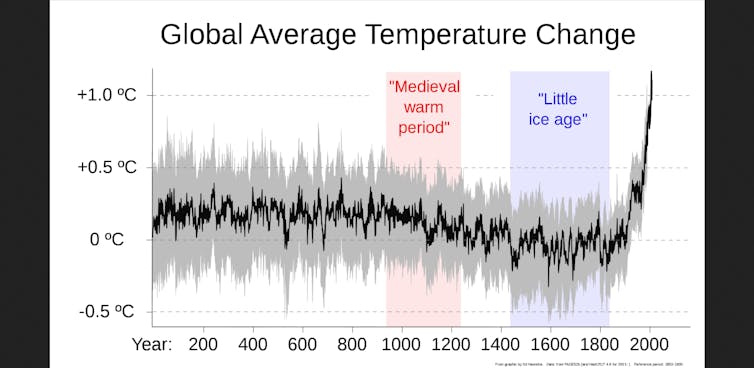
This Medieval period of warming, also known as the Medieval climate anomaly, was associated with an unusual temperature rise roughly between 750 and 1350 AD (the European Middle Ages). The available evidence suggests that at times, some regions experienced temperatures exceeding those recorded during the period between 1960 and 1990.
Despite being predominantly recorded in Europe, south-western North America and in some tropical regions, the Medieval warm period affected both the northern and southern hemispheres. But the temperature increase was not universal, varying across regions of the world, and did not happen simultaneously everywhere.
While the northern hemisphere, South America, China and Australasia, and even New Zealand, recorded temperatures of 0.3-1.0 ℃ higher than those of 1960-1990 between the early ninth and late 14th centuries, in other areas such as the eastern tropical Pacific Ocean, it was much cooler than today.
Mechanisms driving the Medieval warm period
The Medieval warm period was by and large a regional event. Its presence or absence reflects a redistribution of heat around the planet, and this suggests drivers other than a global increase in atmospheric greenhouse gases such as carbon dioxide.
The most likely cause of the regional changes in temperature was related to a modification of the El Niño–Southern Oscillation.
Read more:
Explainer: El Niño and La Niña
This recurring climate pattern of winds and sea-surface temperatures over the tropical eastern Pacific affects the climate and weather of much of the tropics and subtropics. It usually brings clouds and rain in the western tropical Pacific while making regions in the eastern tropical Pacific relatively drier and cooler.
During the Medieval warm period, an increase in solar radiation and decrease in volcanic eruptions created a La Niña-like event that changed the usual patterns. Stronger trade winds pushing more warm water towards Asia created wetter conditions in Australasia, droughts in the southern US and South and Central America, and heavy rains and flooding in the Pacific Northwest and Canada.
The increase in solar radiation also modified the atmospheric pressure system over the north Atlantic Ocean (North Atlantic Oscillation), which brought warmer winters and wetter conditions over northern Europe and most of north-eastern part of the North American continent. These conditions also affected the winter weather in Greenland, north Africa and northern Asia.
Unequal consequences for people and environments
For about 300 years, these new climate conditions changed ecosystems and radically altered human societies.
As northern Europe became warmer, agriculture spread and generated food surpluses. At the time, England was warm enough to support vineyards, centralised governments in Europe were becoming stronger, people no longer needed fortifications to protect their once limited arable lands, and many people left seeking new lands.
Similar agricultural expansion occurred in some parts of North America, but also in central Asia where farmers spread into the northern region of Russia, into Manchuria, the Amur Valley, and northern Japan. The early 13th Century marked the beginning of the conquests of Genghis Khan and his Mongol hordes.
Read more:
Wet climate helped Genghis Khan conquer Asia
With sea ice and land ice in the Arctic shrinking with the rising temperatures, new lands became accessible and Vikings travelled farther north than before. They eventually reached a “green” Greenland and Iceland where they (temporarily) settled.
CC BY-ND
Climate Explained is a collaboration between The Conversation, Stuff and the New Zealand Science Media Centre to answer your questions about climate change.
If you have a question you’d like an expert to answer, please send it to climate.change@stuff.co.nz
What was the Medieval warm period? What caused it, and did carbon dioxide play a role?
We are living in a world that is getting warmer year by year, threatening our environment and way of life.
But what if these climate conditions were not exceptional? What if it had already happened in the past when human influences were not part of the picture?
The often mentioned Medieval warm period seems to fit the bill. This evokes the idea that if natural global warming and all its effects occurred in the past without humans causing them, then perhaps we are not responsible for this one. And it does not really matter because if we survived one in the past, then we can surely survive one now.
But it’s just not that simple.
Read more:
2,000 years of records show it's getting hotter, faster
The Medieval climate anomaly
This Medieval period of warming, also known as the Medieval climate anomaly, was associated with an unusual temperature rise roughly between 750 and 1350 AD (the European Middle Ages). The available evidence suggests that at times, some regions experienced temperatures exceeding those recorded during the period between 1960 and 1990.
Despite being predominantly recorded in Europe, south-western North America and in some tropical regions, the Medieval warm period affected both the northern and southern hemispheres. But the temperature increase was not universal, varying across regions of the world, and did not happen simultaneously everywhere.
While the northern hemisphere, South America, China and Australasia, and even New Zealand, recorded temperatures of 0.3-1.0 ℃ higher than those of 1960-1990 between the early ninth and late 14th centuries, in other areas such as the eastern tropical Pacific Ocean, it was much cooler than today.
Mechanisms driving the Medieval warm period
The Medieval warm period was by and large a regional event. Its presence or absence reflects a redistribution of heat around the planet, and this suggests drivers other than a global increase in atmospheric greenhouse gases such as carbon dioxide.
The most likely cause of the regional changes in temperature was related to a modification of the El Niño–Southern Oscillation.
Read more:
Explainer: El Niño and La Niña
This recurring climate pattern of winds and sea-surface temperatures over the tropical eastern Pacific affects the climate and weather of much of the tropics and subtropics. It usually brings clouds and rain in the western tropical Pacific while making regions in the eastern tropical Pacific relatively drier and cooler.
During the Medieval warm period, an increase in solar radiation and decrease in volcanic eruptions created a La Niña-like event that changed the usual patterns. Stronger trade winds pushing more warm water towards Asia created wetter conditions in Australasia, droughts in the southern US and South and Central America, and heavy rains and flooding in the Pacific Northwest and Canada.
The increase in solar radiation also modified the atmospheric pressure system over the north Atlantic Ocean (North Atlantic Oscillation), which brought warmer winters and wetter conditions over northern Europe and most of north-eastern part of the North American continent. These conditions also affected the winter weather in Greenland, north Africa and northern Asia.
Unequal consequences for people and environments
For about 300 years, these new climate conditions changed ecosystems and radically altered human societies.
As northern Europe became warmer, agriculture spread and generated food surpluses. At the time, England was warm enough to support vineyards, centralised governments in Europe were becoming stronger, people no longer needed fortifications to protect their once limited arable lands, and many people left seeking new lands.
Similar agricultural expansion occurred in some parts of North America, but also in central Asia where farmers spread into the northern region of Russia, into Manchuria, the Amur Valley, and northern Japan. The early 13th Century marked the beginning of the conquests of Genghis Khan and his Mongol hordes.
Read more:
Wet climate helped Genghis Khan conquer Asia
With sea ice and land ice in the Arctic shrinking with the rising temperatures, new lands became accessible and Vikings travelled farther north than before. They eventually reached a “green” Greenland and Iceland where they (temporarily) settled.
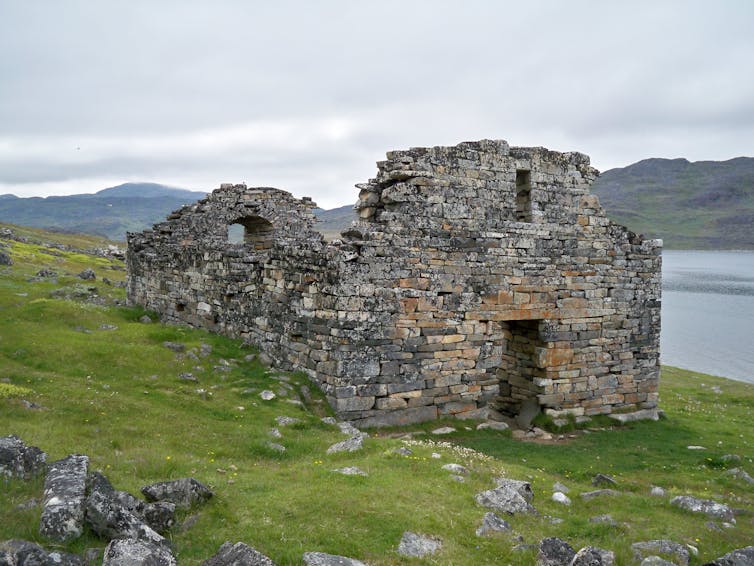 The last written records of the Norse Greenlanders are from an Icelandic marriage in 1408, which was recorded later in Iceland, at Hvalsey Church, the best-preserved of the Norse ruins.
Wikimedia, CC BY-SA
Such long-distance voyages also happened in the southern hemisphere. The Medieval warm period coincided with the settlement of New Zealand and the development of new trade routes across the Pacific basin.
The warm conditions during this period brought many benefits to Earth’s plant and animal life, but in some other parts of the world, people’s lives were instead made worse by intense droughts. Parts of western America and the great Mayan cities of Central America were hit by mega droughts, and Andean civilisations wilted in the face of an emptied Lake Titicaca and faltering freshwater runoff in coastal river valleys.
The last written records of the Norse Greenlanders are from an Icelandic marriage in 1408, which was recorded later in Iceland, at Hvalsey Church, the best-preserved of the Norse ruins.
Wikimedia, CC BY-SA
Such long-distance voyages also happened in the southern hemisphere. The Medieval warm period coincided with the settlement of New Zealand and the development of new trade routes across the Pacific basin.
The warm conditions during this period brought many benefits to Earth’s plant and animal life, but in some other parts of the world, people’s lives were instead made worse by intense droughts. Parts of western America and the great Mayan cities of Central America were hit by mega droughts, and Andean civilisations wilted in the face of an emptied Lake Titicaca and faltering freshwater runoff in coastal river valleys.
 Wikimedia, CC BY-SA
Small, scattered communities of the Pacific basin were forced to gather into bigger and more complex societies, concentrated in coastal areas. They harvested seafood and complemented it with products from new types of agriculture (construction of canals and sunken food gardens, agricultural terraces in steep areas, and the irrigation of lowland crops).
In contrast, La Niña brought intense monsoonal flow into northern, central and western Australia’s arid lands, increasing floods and storms that likely disrupted hunter-gatherer settlement patterns in these regions.
What this means for the future
The fact that some areas of the world actually prospered during the Medieval warm period gives ammunition to the global warming sceptics’ position. But there are two fundamental differences that make the Medieval warm period different from what we are experiencing now.
The present-day baseline used for comparison to the temperatures in the Medieval warm period is 1960-1990. Although it is true that in some regions the temperatures equalled or exceeded this baseline, globally the planet was still cooler on average than today. Temperatures experienced since 2000 in the northern hemisphere are already hotter than any time during the Medieval warm period.
The Medieval warm period is an asynchronous regional warming caused by natural (not human-driven) climatic variation, whereas we are facing a homogeneous and global warming caused by human activity releasing too much greenhouse gas into the atmosphere.
Despite the uncertainties, the climate characteristics of the Medieval warm period make it an irrelevant analogue for the magnitude of climate change we are facing.
Wikimedia, CC BY-SA
Small, scattered communities of the Pacific basin were forced to gather into bigger and more complex societies, concentrated in coastal areas. They harvested seafood and complemented it with products from new types of agriculture (construction of canals and sunken food gardens, agricultural terraces in steep areas, and the irrigation of lowland crops).
In contrast, La Niña brought intense monsoonal flow into northern, central and western Australia’s arid lands, increasing floods and storms that likely disrupted hunter-gatherer settlement patterns in these regions.
What this means for the future
The fact that some areas of the world actually prospered during the Medieval warm period gives ammunition to the global warming sceptics’ position. But there are two fundamental differences that make the Medieval warm period different from what we are experiencing now.
The present-day baseline used for comparison to the temperatures in the Medieval warm period is 1960-1990. Although it is true that in some regions the temperatures equalled or exceeded this baseline, globally the planet was still cooler on average than today. Temperatures experienced since 2000 in the northern hemisphere are already hotter than any time during the Medieval warm period.
The Medieval warm period is an asynchronous regional warming caused by natural (not human-driven) climatic variation, whereas we are facing a homogeneous and global warming caused by human activity releasing too much greenhouse gas into the atmosphere.
Despite the uncertainties, the climate characteristics of the Medieval warm period make it an irrelevant analogue for the magnitude of climate change we are facing.
Authors: Frédérik Saltré, Research Fellow in Ecology for the ARC Centre of Excellence for Australian Biodiversity and Heritage, Flinders University
Read more https://theconversation.com/climate-explained-what-was-the-medieval-warm-period-155294

















