

How lobed brain corals are helping solve the mystery of what general anaesthesia does to the brain
- Written by Adam David Hines, PhD Candidate, The University of Queensland
Many of us will undergo general anaesthesia at some point in our lives — losing consciousness so we can be operated on painlessly. But although humans have used general anaesthesia for more than 150 years, we still don’t fully understand how it affects the brain.
To find out, we turned to a genus of stony coral called lobed brain coral (Lobophyllia). Using a unique fluorescent molecule present in lobed brain coral, we managed to isolate an important target of general anaesthetic drugs in fruit fly brains. Our findings could help develop safer anaesthesia for humans.
Glow-in-the-dark coral
Lobed brain corals are bioluminescent, which means they can naturally produce and emit light. They’re found in the Indian and Pacific oceans, alongside other similar scientifically valuable creatures such as the crystal jelly Aequorea victoria.
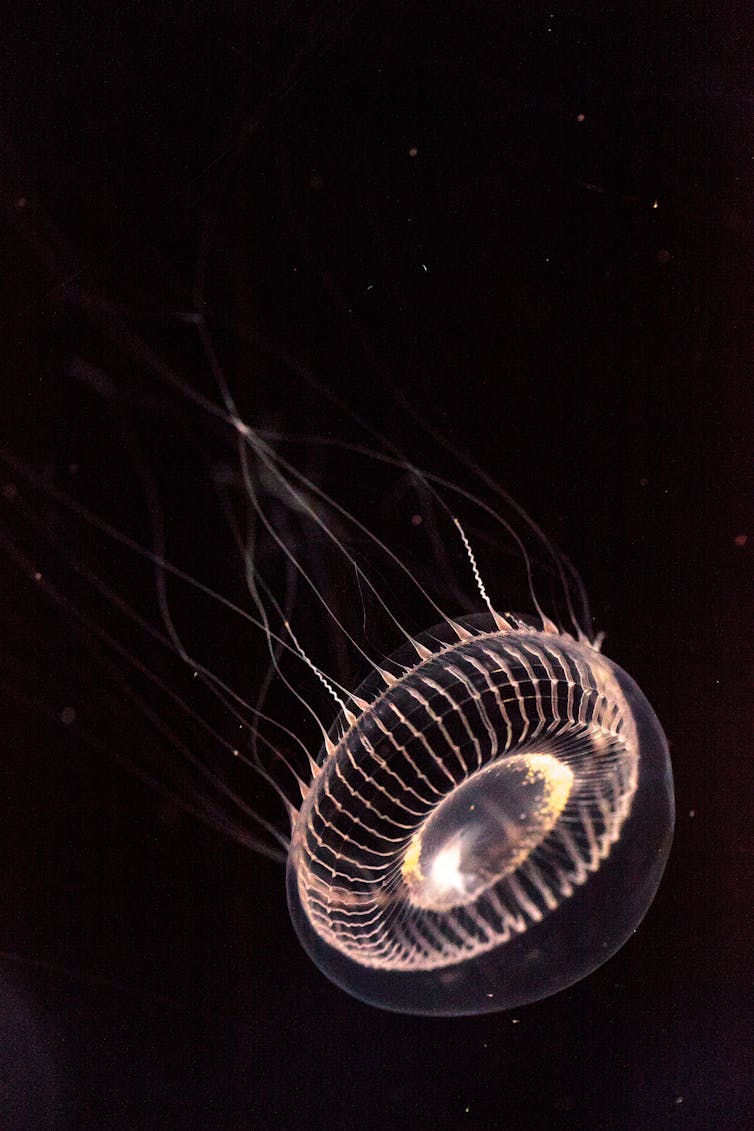 Aequorea victoria is a bioluminescent jellyfish found in the Pacific Ocean.
Shutterstock
Aequorea victoria is a bioluminescent jellyfish found in the Pacific Ocean.
Shutterstock
Bioluminescent ocean-dwellers have equipped researchers with a powerful toolkit of fluorescent molecules to study and track biological processes. They even inspired the Nobel Prize-winning discovery of the green fluorescent protein.
The fluorescent molecule found in the lobed brain coral, Eos, has a rather surprising feature: it can change colour. This lets scientists observe the movement of proteins within living cells — something that was previously impossible.
Imagine you have a Christmas tree covered with lights but they were all lit the same colour; the tree might appear a bit blurry from afar. If one of the lights were to switch to a different colour, however, you’d spot it easily.
The same principles apply when scientists try to track moving proteins in cells. Proteins perform multiple vital tasks for a cell and tracking them can help us understand their function, but they’re usually too small to see with regular microscopes.
Using the Eos molecule, we can develop super-resolution microscopes that reveal even the smallest elements within cells, including proteins.
 A multicoloured lobed brain coral (Lobophyllia) with yellow tips.
Shutterstock
A multicoloured lobed brain coral (Lobophyllia) with yellow tips.
Shutterstock
A sleeping brain isn’t ‘inactive’
Anaesthesia today generally involves injecting a patient’s vein with a dose of a sedative drug and painkiller. For instance, the combination of propofol and fentanyl will make you unconscious and prevent you from feeling pain.
Sedative drugs, including sleeping pills, use your brain’s natural ability to put you to sleep. They target the circuits in your brain that regulate wakefulness and stop them from being active.
However, the brain activity of a sleeping person is very different to that of someone under anaesthesia. A sleeping brain performs many tasks and is quite active. A brain under anaesthesia is largely unresponsive.
Why aren’t we able to be woken up while under general anaesthesia? To find out, scientists need to identify what else in the brain, apart from sleep pathways, is targeted by general anaesthetic drugs.
Read more: Why our brain needs sleep, and what happens if we don’t get enough of it
Anaesthesia stunts the brain’s processing power
Neurons, the cells in the brain, communicate with each other through a process known as synaptic neurotransmission. This is the main way our brains process information.
 Neurotransmission lets neurons to talk to one another and process information such as pain.
Shutterstock
Neurotransmission lets neurons to talk to one another and process information such as pain.
Shutterstock
For neurotransmission to occur, specialised proteins within neurons must release chemicals called neurotransmitters (such as dopamine or glutamate). Proteins are dynamic. They can move freely inside neurons and are often needed in different parts of the cell.
For our research, we took the Eos molecule and attached it onto a protein called “syntaxin1A” — which is responsible for facilitating neurotransmission — to see how general anaesthetic drugs might affect its normal function in the brains of fruit flies.
We found syntaxin1A dynamics were altered with general anaesthetic drugs such as propofol and isoflurane. The protein became trapped in clusters of proteins and its movement was therefore restricted.
This may have been what reduced the efficiency of neurotransmission, preventing the brain from processing complex information.
A goal to develop new, safer drugs
Many proteins apart from syntaxin1A are involved in neurotransmission. So it’s likely others are also affected by anaesthetic drugs.
This new way to observe individual protein behaviour in intact brain tissue will hopefully uncover more drug targets and explain the precise mechanisms that underpin general anaesthetics.
Consequently, this knowledge will aid in the development of safer drugs with fewer side effects. And targeted drug development could help prevent the abnormally long recovery times observed in some patients who undergo general anaesthesia.
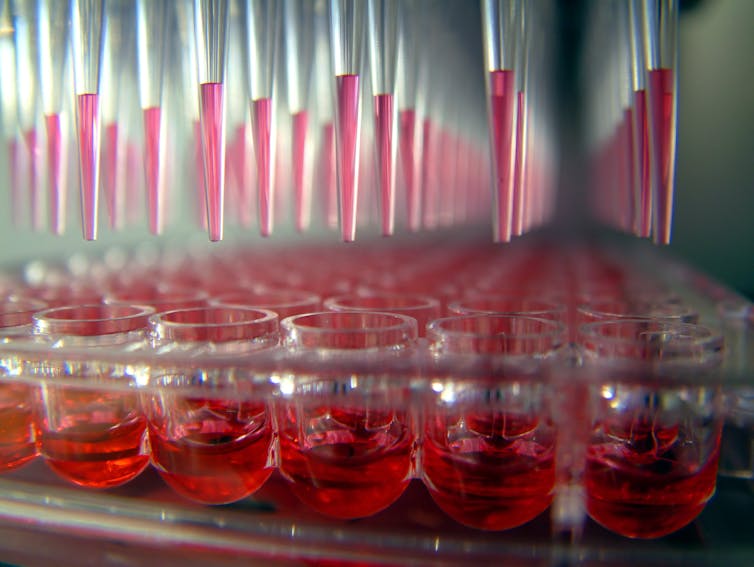 Anaesthetic drug development will be enhanced once we better understand how these drugs affect us.
Shutterstock
Anaesthetic drug development will be enhanced once we better understand how these drugs affect us.
Shutterstock
Authors: Adam David Hines, PhD Candidate, The University of Queensland


















