

Not every student needs senior maths, but we can make maths more engaging in the earlier school years
- Written by John Fischetti, Professor, Pro Vice-Chancellor of the College of Human and Social Futures, University of Newcastle
In late 2019, New South Wales announced it would make maths compulsory all through school. Victoria will have an additional, easier, year 12 maths subject in 2023 to boost the numbers of maths students in senior levels.
Moves to push more students into senior maths partly stem from the idea students need to be equipped with skills for jobs of the future, largely driven by automation. The federal government considers STEM (science, technology, engineering and maths) skills as “crucial for Australia’s changing future”. A resource kit for STEM educators, developed by the federal government, states:
It’s predicted that future workers will spend more than twice as much time on job tasks requiring science, maths and critical thinking than today.
But the number of students taking higher level maths has bottomed-out. Nationally, less than 30% of students choose upper level, calculus based, maths — down dramatically in the past 20 years.
There are many arguments for how to get more students to take senior maths. They include making the subject more engaging, ensuring enough specialist teachers and, of course, making maths compulsory.
Read more: Fewer Australians are taking advanced maths in Year 12. We can learn from countries doing it better
At the moment, only Tasmania requires students to take basic maths through to year 12. Students in the ACT and NSW can finish studying maths in year 10 if they choose to. South Australia, the Northern Territory and Queensland require students to take just one unit of maths in the two final years of high school.
But how important is it for every student to have graduated school with high level maths?
Maths and the future of work
The argument every student needs advanced maths for his or her career doesn’t always hold. A 2013 study of 2,300 workers in the United States found less than 25% of them use maths beyond fractions in their current jobs.
 Human skills, like relationship building, are important to employers.
Shutterstock
Human skills, like relationship building, are important to employers.
Shutterstock
But we’re told the nature of work is rapidly changing and that employment in jobs requiring STEM skills is growing faster than in others. This may be true. Although the federal government also highlights growing industries aren’t all focused on STEM skills. They include:
Most of these jobs will require strong numeracy and computational thinking skills, including problem-solving that can come from subjects outside maths.
A Deloitte report into the future of work also noted the importance of human skills in automated industries:
[…] jobs increasingly need us to use our hearts — the interpersonal and creative roles, with uniquely human skills like creativity, customer service, care for others and collaboration.
A federal government report echoes this by advising those looking for work to:
remember to emphasise your employability skills, rather than just the technical skills […] Communication, reliability, team work, patience, resilience and initiative are required for all jobs, and this will continue to be the case in the future […] Some 75% of employers considered employability skills to be as important, if not more important, than technical skills.
Maths is embedded in most of these skills. But it’s certainly not the only subject that teaches them.
What subjects can give students the skills they need?
Broadly speaking, some of the skills students will need in their future — in both their work and daily life — include:
cognitive flexibility: the ability to adapt to the changing world and information around you; to be a lifelong learner
traditional and digital literacies: basic literacy, numeracy and media literacy (including the use of technology)
creativity and imagination: the human traits that separate us from machines and bring a human perspective to our work
computational thinking: problem solving processes we need in our work and life
ethical and sustainable practice: a commitment to do no harm to each other or the planet
Indigenous perspectives and cultural competence: promoting reconciliation and working successfully and respectfully across cultures and customs
well-being: taking care of our minds, bodies and our mob.
These skills are not taught just in maths but across the disciplines, including science, geography, visual arts, health and physical education, languages, history and design.
What kind of maths skills do students need?
In his 2016 book, The Maths Math: And Other STEM Delusions, bestselling US author Andrew Hacker proposes we allow students to explore their passions in the latter school years instead of pushing advanced maths onto them.
He also recommends we teach basic maths so well students gain computational and critical thinking skills they can use throughout their lives.
Computational skills are the ability to understand a complex problem, develop possible solutions and then present these solutions in a way a computer, human, or both, can understand.
These skills are what primary maths should aim toward, emphasising interdisciplinary connections across key learning areas. And strong basic numeracy skills build a foundation for a lifetime.
Read more: Don’t just solve for x: letting kids explore real-world scenarios will keep them in maths class
But NAPLAN numeracy results in the past decade, as well as scores in the OECD’s Programme for International Student Assessment, indicate many teachers are not prepared to teach primary maths effectively to an increasingly diverse student population.
Current maths assessments tend to limit the possibilities and the interdisciplinary connections by teaching math discretely.
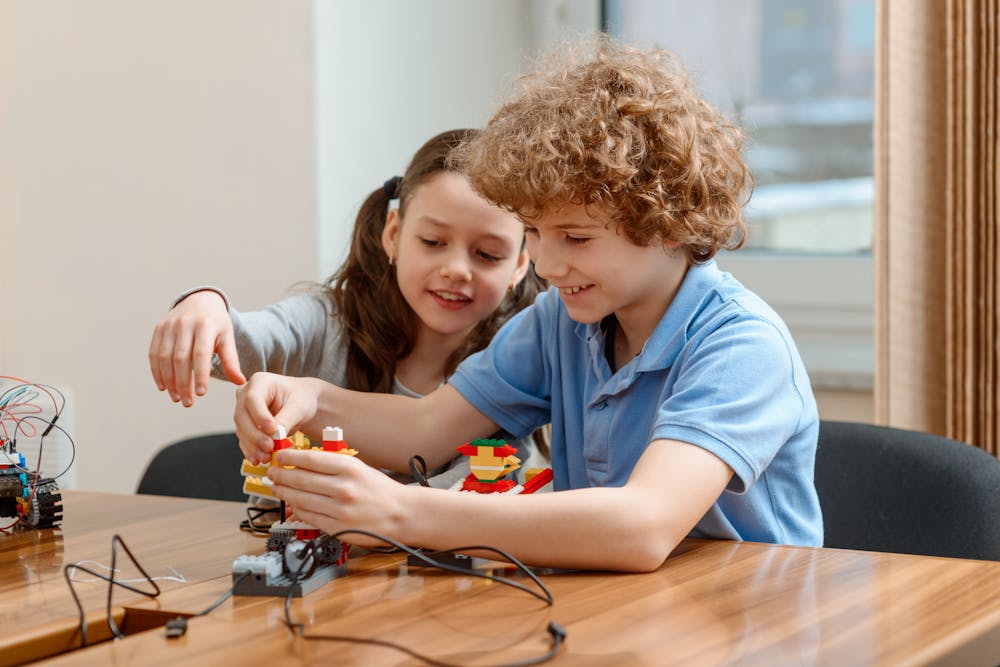 We need to teach maths as part of other subjects to make it more engaging.
Shutterstock
We need to teach maths as part of other subjects to make it more engaging.
Shutterstock
Many schools are using projects and portfolios to develop these relevant skills, with learning outcomes based on ‘doing’ rather than regurgitating facts. This is not a move away from the goal of traditional numeracy skills. Rather, it’s the way we teach them and honour their relevance in multiple contexts outside of maths that makes the subject more engaging.
It’s important then for maths-related lessons to allow students to create, design, make, build, exhibit and present.
These ideas are at the heart of the current reviews into the NSW Curriculum and the Australian curriculum.
Armed with these foundational “basics”, all students could connect their passions as teenagers with the STEM skills they need for the future they envision - and many may then choose advanced maths courses with confidence.
Authors: John Fischetti, Professor, Pro Vice-Chancellor of the College of Human and Social Futures, University of Newcastle

















