

why local knowledge is key to disaster recovery in Gippsland
- Written by: Celeste Young, Collaborative Research Fellow, Sustainable Industries and Liveable Cities (ISILC), Victoria University
Overcoming the odds is second nature to the Gippsland community. The people in this region have seen it all — fires, floods, droughts and extreme weather. And every time, these capable, resourceful and independent communities bounce back.
However, recovery from bushfires of the 2019/2020 Black Summer followed by the COVID-19 pandemic has been different.
Even before these events, we were researching vulnerability to natural hazards, risk ownership and diversity and inclusion nationally as part of our work with the Bushfire and Natural Hazards Cooperative Research Centre.
Through a mix of interviews, focus groups and surveys, we sought insights about communities, how they recover after disaster and what factors have the greatest impact. We focused on community strengths and how to build on them.
Our recently released report, Growing the seeds: recovery, strength and capability in Gippsland communities, highlights that recovery is often non-linear. It’s not just the damage to infrastructure, houses, environment and farmland that makes recovery difficult; the emotional and physical toll is often gruelling as well.
The report identifies several opportunities for change, including the need for a long-term plan (five years minimum) for building community emergency management capability in the region — well before the next disaster strikes.
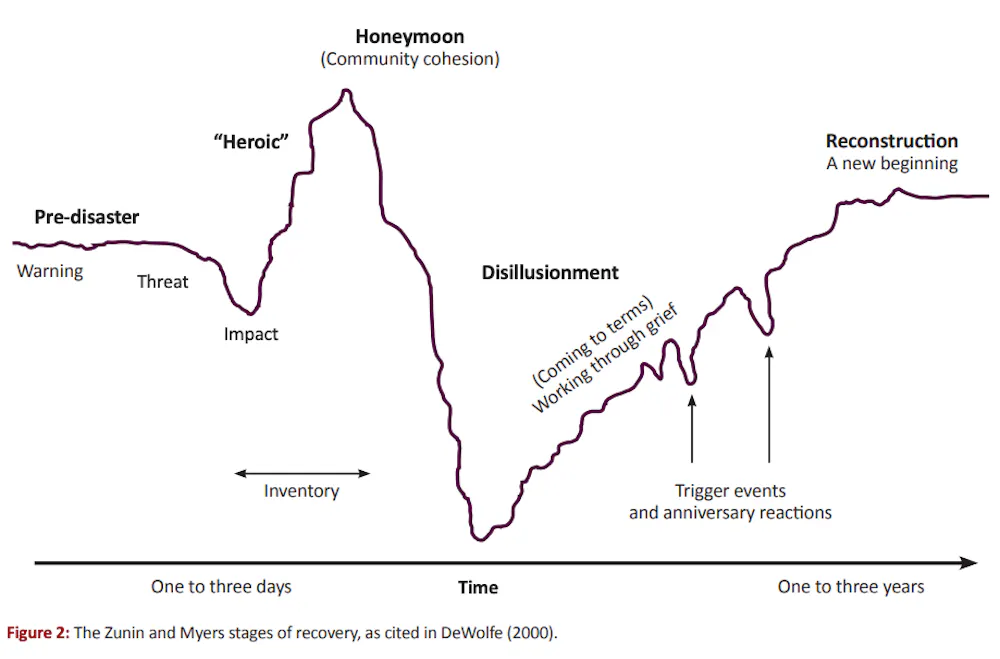 Our research highlights recovery is often non-linear, an observation well supported by other research in this field.
Growing the seeds report.
A brutal time
The 2019–20 fires damaged over half of the East Gippsland Shire, an area of over 1.16 million hectares. Over 400 dwellings and businesses were lost and four people lost their lives. Areas like Mallacoota were at acute risk. In some areas, communities were under threat for weeks and evacuated repeatedly, exhausting them before the recovery process began.
Then, the pandemic hit, disrupting the established pattern of recovery where people get together to make sense of what has happened and start to rebuild their communities. One person describe the timing as “brutal”. Another said:
When the fires happened, you had a couple of amazing people who stepped up, opened the hall, and everyone was coming in, and they started doing Friday night dinners and everyone was there. There were 200-odd people every Friday night and then COVID ended it.
Via online community consultations, interviews and focus groups, we asked community members to identify strengths that supported recovery and opportunities for change.
We also surveyed 614 people during October 2020 in fire-affected regions of Victoria and New South Wales, with 31% of respondents coming from Victoria and 69% from NSW.
When asked what strengths their community showed following the bushfires, they included generosity and kindness (69%), resilience (61%) and active volunteering (59%).
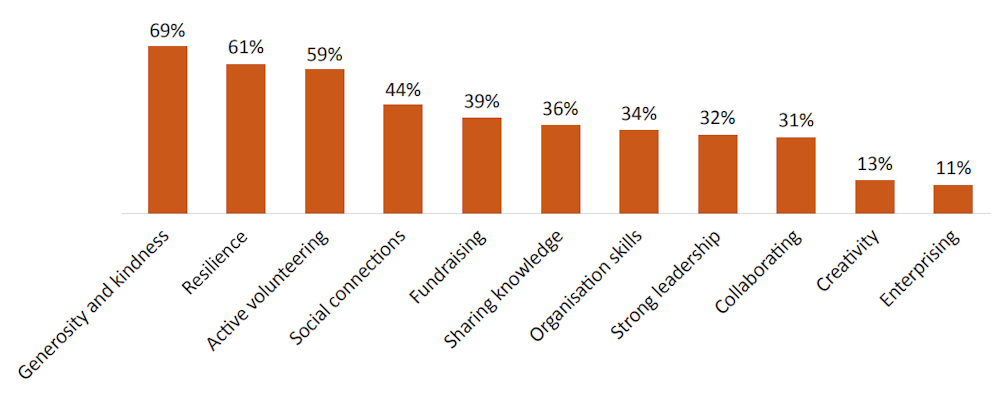 Growing the seeds report., Author provided
When asked to identify the main challenges since the bushfire, COVID was named as the main challenge (49%), followed by damage to the environment (39%), anxiety (31%) and overall fatigue (26%).
 Growing the seeds report., Author provided
The combination of bushfires and the pandemic also created economic risks and disrupted supply chains. Small businesses make up 98% of the local economy, and many are heavily reliant on tourism.
Recovering through community strength and capability
Many of the strengths needed to drive recovery and resilience are already at the heart of these communities. These capabilities are more diverse and widespread than is often assumed.
There is considerable wealth and capacity in some areas, but also a high level of social and economic vulnerability, with some living hand-to-mouth.
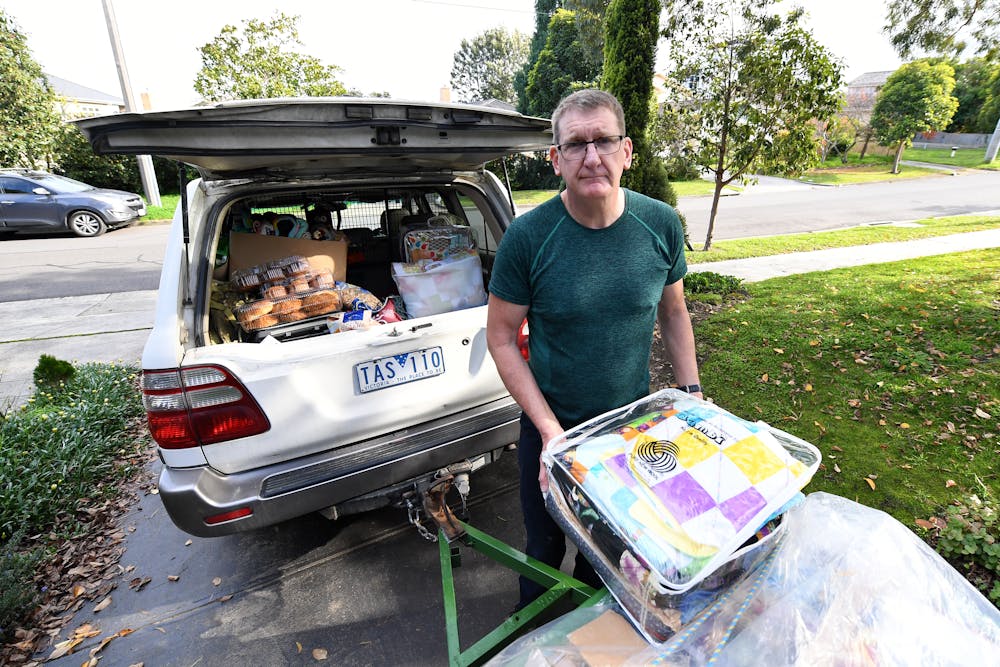 Many Gippsland residents identified active volunteering as a community strength.
AAP Image/James Ross
There is significant local knowledge of risk management and recovery, which is often overlooked by experts coming in from outside. As one person told us:
You’ve got bureaucracy coming in from Melbourne who think that we’re just a bunch of country bumpkins who don’t quite know what we’re doing, yet we know our community better than they do.
Volunteer and informal economies are significant and underpin community resilience. Yet formal recovery strategies don’t target these areas very well; some people in the informal economy found they did not qualify for economic or business support at all.
The JobSeeker and JobKeeper programs helped maintain employment (albeit at levels of productivity that were lower than in the past). JobKeeper has now ended but support is still needed to boost productivity and help the local economy recover.
We also found:
government and some supporting agencies often lacked knowledge about the cultural, physical and social structures of different communities
some policies had perverse effects (for example, the HomeBuilder grant resulted in a lack of available builders)
programs and communication were often not tailored and did not accommodate the diverse needs of communities or specific cohorts within them
a lack of clarity as to what role the community have in response and recovery, and what risks they are responsible for
short-term allocation of resources and funding sometimes created an environment of uncertainty; for example, some participants raised concerns vulnerable community members may at risk when contracts for certain programs ran out, as the service offered would either cease or be led by a new contract-holder. As one person told us:
You can’t just bring someone in now and go, ‘Here you go, you take over all my people’, because the relationships and the trust that you build over this time, it’s not something you can hand over to someone else.
Knowing community strengths and supporting them
Recovery processes will never be perfect and we can also no longer assume communities will have time to recover from one disaster before the next arrives. As one person said:
People are suffering collective trauma, which creates anxiety and irritability. So, it is going to be difficult to move forward and I believe [name removed] will be a really changed place, this is something that will echo up and down along all fire-ravaged communities.
In natural hazard prone areas like Gippsland, it’s crucial to know what strengths already exist in the community so they can be harnessed when disaster hits. In other words, we need to find ways to support and grow community capabilities.
Listening to communities
It’s crucial communities, governments and the emergency services have a shared understanding of what the priorities are after a disaster and what can be realistically achieved.
A database of community capabilities would support more effective planning, policy-making and program development, as would a longer term collaborative project to identify and develop community capability.
Through listening to these communities we can learn from their experiences and support the development of community-led pathways to recovery.
Read more:
More than a decade after the Black Saturday fires, it's time we got serious about long-term disaster recovery planning
If this article has raised issues for you, or if you’re concerned about someone
you know, call Lifeline on 13 11 14. This story is part of a series The Conversation is running on the nexus between disaster, disadvantage and resilience. You can read the rest of the stories here.
Authors: Celeste Young, Collaborative Research Fellow, Sustainable Industries and Liveable Cities (ISILC), Victoria University


















