

These 3 tips will help you create a thriving pollinator-friendly garden this winter
- Written by Tanya Latty, Associate professor, University of Sydney
The busy buzz of pollinating bees is a sound most of us associate with summer. If you live in temperate regions of Australia, you may start to notice fewer insects as the weather gets colder. Across most of the continent, however, some flower-visiting insects are active all year round – and some are more common in cooler months.
Planting winter-blooming flowers is a great way to support beneficial garden insects. Now is the perfect time to start planning your pollinator-friendly winter garden.
Flowers are an important source of food for insects such as bees, butterflies, wasps and hoverflies. Sugary nectar is an important source of carbohydrates, while pollen packs a powerful protein punch.
Planting flowers also attracts and sustains predatory insects. This can help keep pest species under control, meaning less need for pesticides.
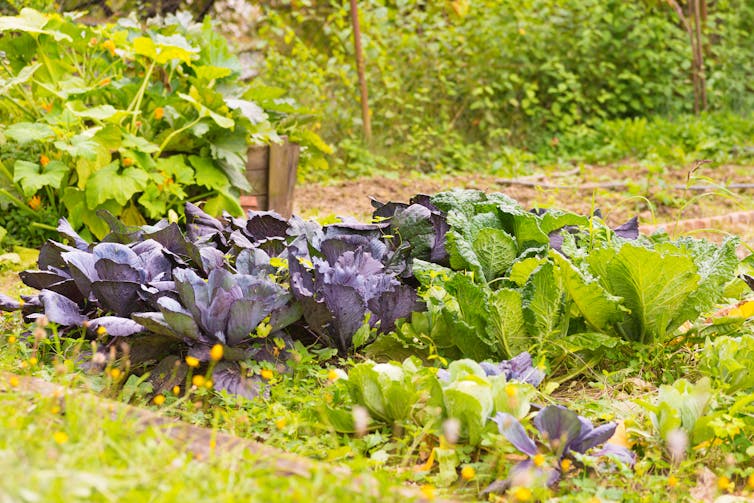 Planting flowers means less need for pesticides.
Shutterstock
Planting flowers means less need for pesticides.
Shutterstock
Know your winter-active insects
First, let’s look at which pollinators and helpful predators you can expect in your garden in winter. This guide, as well as the below gardening tips, applies primarily to temperate regions of Australia where temperatures become cool over winter.
The temperate region comprises the areas shown in blue below. It includes the coastal rim that curves from inland of Brisbane down to Sydney, Canberra, Melbourne and Adelaide, as well as Tasmania and the southwest tip of Western Australia.
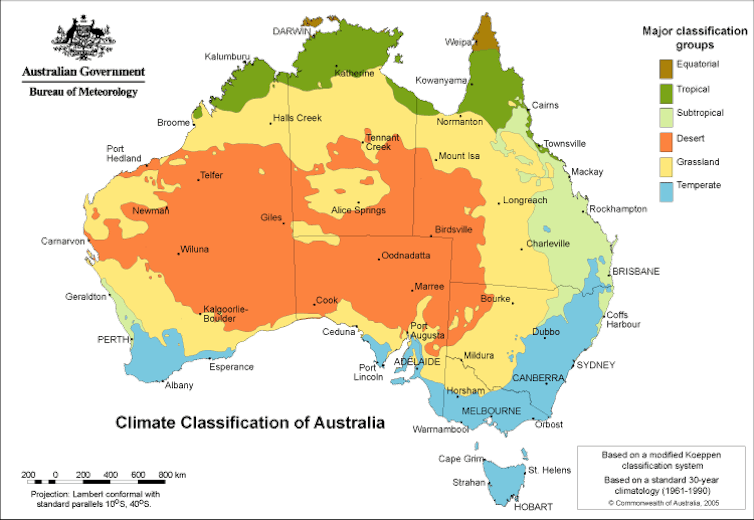 Australian climate zone map.
Bureau of Meteorology
Australian climate zone map.
Bureau of Meteorology
One of the most common pollinators is the Western honeybee (Apis mellifera). This introduced species evolved in cooler regions of the world and tends to be more cold-tolerant than most native bees. They’ll start to leave the hive when the temperature rises above 13℃, but are most active above 19℃.
Most native Australian bees prefer warmer temperatures. But a few species, such as reed bees (Exonerua) and the sugarbag bee (Tetragonula carbonaria), make an appearance on warmer winter days when the temperatures reach the mid- to high teens (although the sugar bag bee is usually not found south of Sydney).
Flies tend to be relatively tolerant of cooler temperatures, and are the stars of winter pollination. Hoverflies (Syrphidae), in particular, are garden superheroes.
Adult hoverflies feed on nectar and pollen and can pollinate a range of plants. As a bonus, the maggot-like larvae of some hoverfly species are voracious predators, happily eating soft-bodied pests such as aphids.
Read more: It's bee season. To avoid getting stung, just stay calm and don't swat
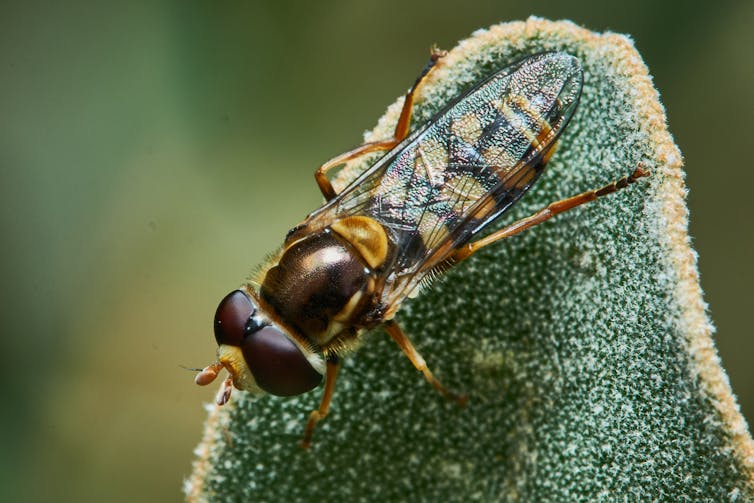 Hoverflies, which have similar patterning to bees, are common garden visitors in winter.
Shutterstock
Hoverflies, which have similar patterning to bees, are common garden visitors in winter.
Shutterstock
Hoverflies are often mistaken for bees or wasps because of their similar yellow and black patterning. The resemblance is not accidental; hoverflies have evolved to mimic the appearance of stinging wasps and bees. Don’t let them fool you – hoverflies cannot sting and are generally harmless.
Some hoverfly species lay their eggs in stagnant water. The resulting larvae are known by the unflattering name “rat-tailed maggots” because they breathe underwater through a long, thin siphon that resembles a tail. Don’t worry if you find these alien-looking critters swimming in your pond or beneath potted plants – the adults are flower-loving vegetarians that can help with pollination.
Other flies such as blowflies (Calliphoridae) are also active through the cooler months. Although blowflies are often considered pests, they play an important role in the pollination of some fruits including avocado and mango, as well as seed production for carrot, celery and cauliflower.
With the right planting, you can also attract predators such as parasitoid wasps, lacewings and ladybird beetles. These insects mostly feed on other insects, but live longer and produce more offspring when they have access to a sweet sip of nectar.
So now we’ve met our winter pollinators and predators, read on for three ways to support them in your garden.
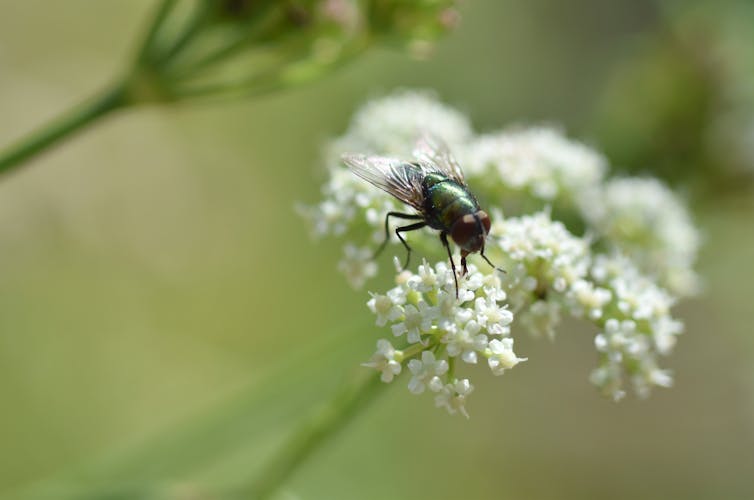 Blowflies and other pollinating insects can be active in cooler months.
Shutterstock
Blowflies and other pollinating insects can be active in cooler months.
Shutterstock
1. Plant lots of flowers
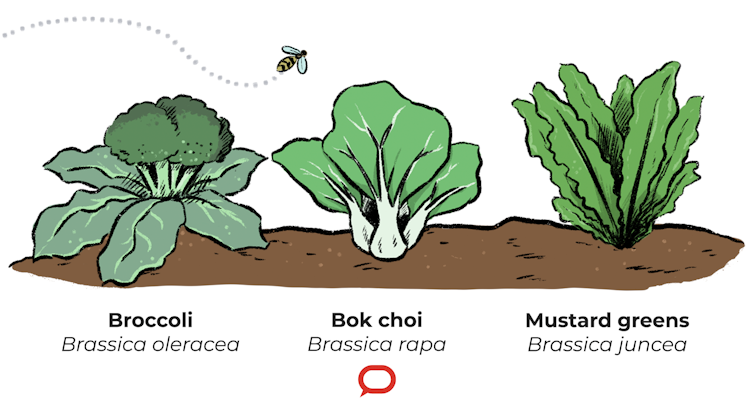
The easiest – and most beautiful – way to support winter insects is to plant lots of colourful winter-blooming flowers. Winter-loving brassicas such as broccoli, bok choi and mustard greens produce flowers that are a favourite food of many insects. Letting a few of these veggies go to flower will help support your local beneficial insects.
 Wes Mountain/The Conversation, CC BY-ND
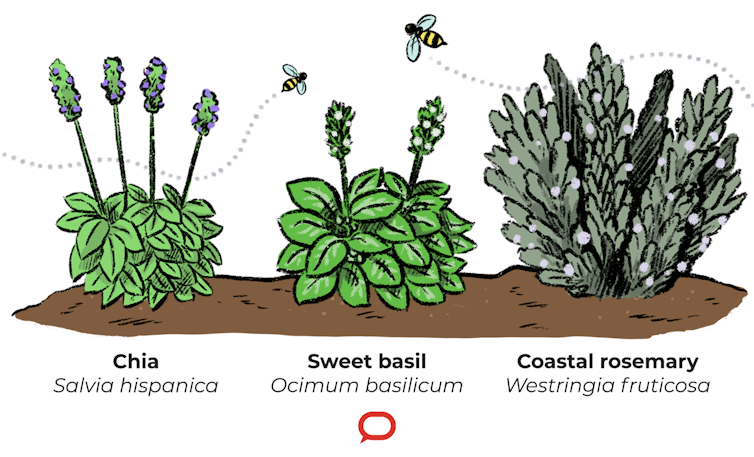
Salvias such as chia (Salvia hispanica) and basils such as sweet basil (Ocimum basilicum) will attract and support a variety of flower-visiting insects.
Wes Mountain/The Conversation, CC BY-ND
Salvias such as chia (Salvia hispanica) and basils such as sweet basil (Ocimum basilicum) will attract and support a variety of flower-visiting insects.
 Wes Mountain/The Conversation, CC BY-ND
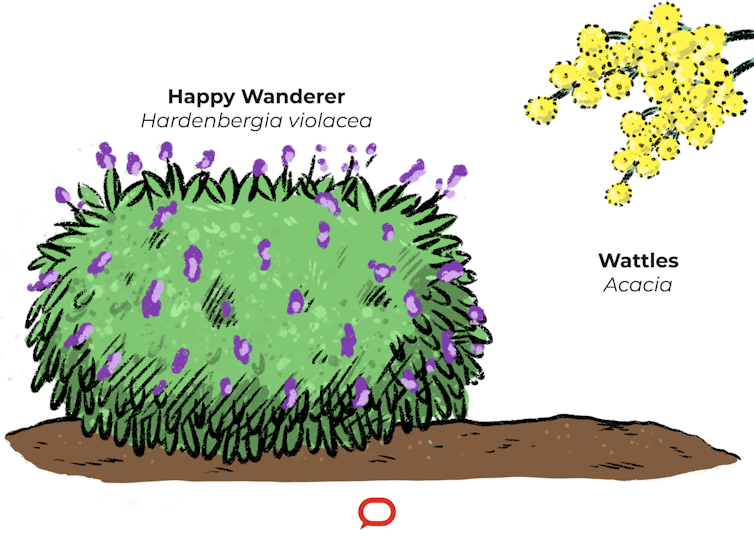
Native flowers such as coastal rosemary (Westringia fruticosa), Happy Wanderer (Hardenbergia violacea), wattles (Acacia) and grevilleas are excellent for some of our pickier native insects.
Wes Mountain/The Conversation, CC BY-ND
Native flowers such as coastal rosemary (Westringia fruticosa), Happy Wanderer (Hardenbergia violacea), wattles (Acacia) and grevilleas are excellent for some of our pickier native insects.
 Wes Mountain/The Conversation, CC BY-ND
2. Create variety
When planning your winter garden, aim for a variety of colours, shapes and blooming times. Ideally, something should be in bloom all year round. Try to include as many native species as possible. Different winter-active insects have different preferences, so a variety of flower types can ensure you cater to a wider range of insects.
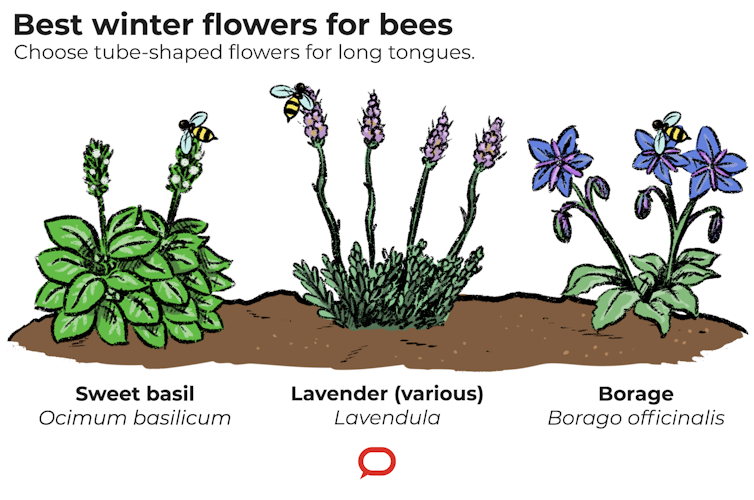
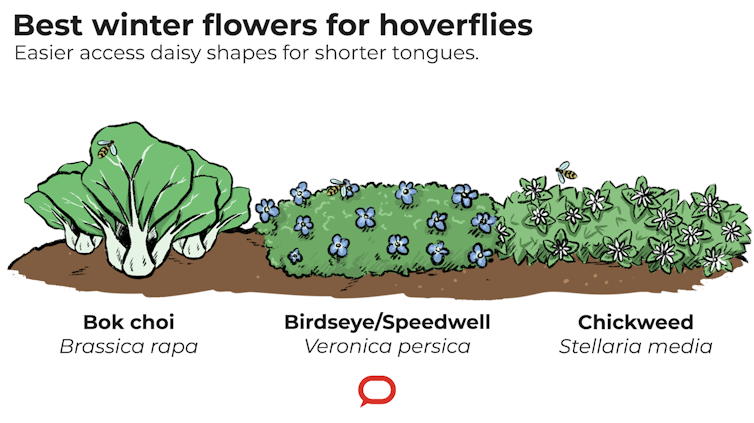
For example, a winter survey of community gardens in Sydney found honeybees were most abundant on sweet basil, lavender (Lavendula) and borage (Borago officinalis), while hoverflies (Melangyna_sp) preferred Brassica rapa, Veronica persica and Stellaria media.
Wes Mountain/The Conversation, CC BY-ND
2. Create variety
When planning your winter garden, aim for a variety of colours, shapes and blooming times. Ideally, something should be in bloom all year round. Try to include as many native species as possible. Different winter-active insects have different preferences, so a variety of flower types can ensure you cater to a wider range of insects.
For example, a winter survey of community gardens in Sydney found honeybees were most abundant on sweet basil, lavender (Lavendula) and borage (Borago officinalis), while hoverflies (Melangyna_sp) preferred Brassica rapa, Veronica persica and Stellaria media.
 Wes Mountain/The Conversation, CC BY-ND
The differences in flower preferences likely reflect differences in the shape and length of insect mouth parts. Honeybees have relatively long tongues that can access nectar in tube-shaped flowers (such as basil and lavender).
Wes Mountain/The Conversation, CC BY-ND
The differences in flower preferences likely reflect differences in the shape and length of insect mouth parts. Honeybees have relatively long tongues that can access nectar in tube-shaped flowers (such as basil and lavender).
 Wes Mountain/The Conversation, CC BY-ND
Hoverflies, with their shorter tongues, have an easier time accessing nectar and pollen from shallower, daisy-like flowers. By planting a variety of flower shapes, you can make sure no insect misses out.
Wes Mountain/The Conversation, CC BY-ND
Hoverflies, with their shorter tongues, have an easier time accessing nectar and pollen from shallower, daisy-like flowers. By planting a variety of flower shapes, you can make sure no insect misses out.
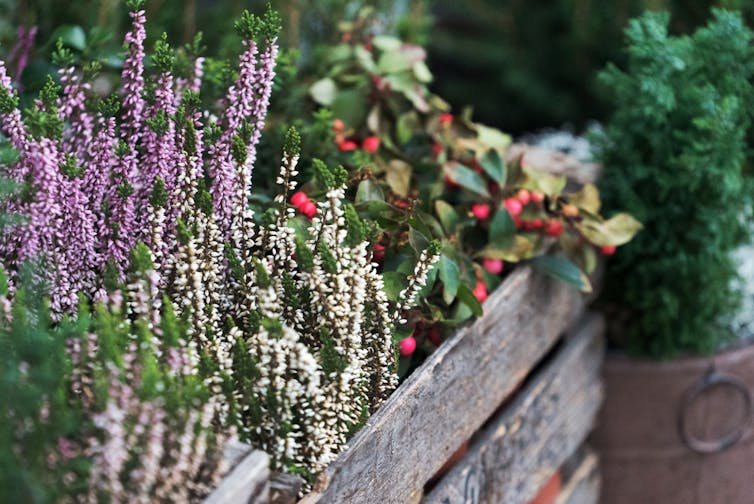 Plant flowers ina. variety of shapes, sizes and colours.
Shutterstock
3. Avoid insecticides
Even organic or so-called “eco-friendly” insecticides may harm beneficial insects. Instead of insecticides, try low-impact options such as removing caterpillars by hand, or using a water spray to remove aphids.
If you feel you must use insecticides, read the label carefully and choose selective baits and sprays, which target one type of insect, over broad-spectrum sprays (such as pyrethrins, pyrethroids and neonicotinoids) which kill insects indiscriminately. Keep in mind that in some cases, using insecticides can actually make your pest problems worse by killing beneficial predatory insects.
Get planting!
Planting a garden for winter-active insects is a wonderful way to support local wildlife. Your garden will thrive as a result of the free pollination and pest control services these beneficial insects provide.
So get planting, and enjoy the delight of a buzzing garden full of helpful insects.
Read more:
Why tiny ants have invaded your house, and what to do about it
Plant flowers ina. variety of shapes, sizes and colours.
Shutterstock
3. Avoid insecticides
Even organic or so-called “eco-friendly” insecticides may harm beneficial insects. Instead of insecticides, try low-impact options such as removing caterpillars by hand, or using a water spray to remove aphids.
If you feel you must use insecticides, read the label carefully and choose selective baits and sprays, which target one type of insect, over broad-spectrum sprays (such as pyrethrins, pyrethroids and neonicotinoids) which kill insects indiscriminately. Keep in mind that in some cases, using insecticides can actually make your pest problems worse by killing beneficial predatory insects.
Get planting!
Planting a garden for winter-active insects is a wonderful way to support local wildlife. Your garden will thrive as a result of the free pollination and pest control services these beneficial insects provide.
So get planting, and enjoy the delight of a buzzing garden full of helpful insects.
Read more:
Why tiny ants have invaded your house, and what to do about it
Authors: Tanya Latty, Associate professor, University of Sydney

















