

3 things rooftop solar can teach us about Australia's electric car rollout
- Written by Bjorn Sturmberg, Research Leader, Battery Storage & Grid Integration Program, Australian National University
Governments and car manufacturers are investing hundreds of billions of dollars on electric vehicles. But while the electric transport revolution is inevitable, the final destination remains unknown.
The electric vehicle transition is about more than just doing away with vehicles powered by fossil fuels. We must also ensure quality technology and infrastructure, anticipate the future and avoid unwanted outcomes, such as entrenching disadvantage.
In Australia, the electric vehicle rollout has been slow, and federal action limited. But some state governments are working to electrify bus fleets, roll out public charging networks and trial smart vehicle charging in homes.
Australia’s world-leading rollout of rooftop solar power systems offers a guide to help navigate the transition. We’ve identified three key lessons on what’s gone well, and in hindsight, what could have been done differently.
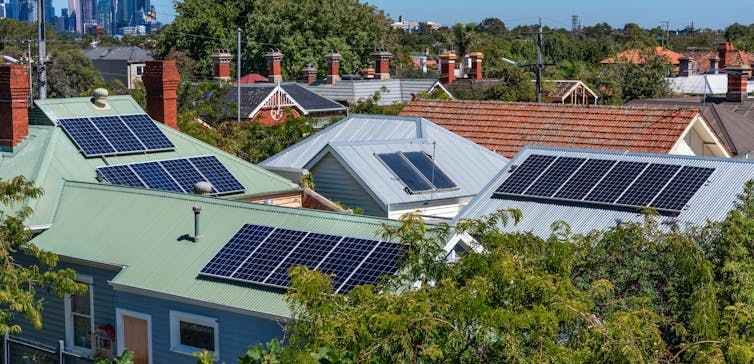 Australia’s rooftop solar boom offers insights into the electric vehicle revolution.
Shutterstock
Australia’s rooftop solar boom offers insights into the electric vehicle revolution.
Shutterstock
1. Price isn’t everything
Solar systems and electric vehicles are both substantial financial investments. But research into rooftop solar has shown financial considerations are just one factor that guides purchasing decisions. Novelty, concerns about climate change and a desire for self-sufficiency are also significant – and electric vehicle research is producing similar findings.
When considering the electric vehicle rollout, understanding these deeper motivators may help avoid a race to the bottom on price.
About one in four Australian homes has rooftop solar, with almost three million systems installed. Solar companies have often sought to highlight the low price of rooftop systems over other considerations. This has created consumer demand for low-priced, lower-quality products – and led to potentially hundreds of thousands of substandard installations across Australia.
So what are the lessons here for the electric vehicle rollout? First, when planning public infrastructure where electric vehicles can be charged, construction costs should not be the only consideration. Factors such as night-time safety and disability access should be prioritised. Shortcuts today will reinforce barriers for women and people with disabilities and create complex problems down the track.
Like rooftop solar, the point of sale of electric vehicles offers a unique opportunity to teach customers about the technology. Companies, however, can only afford to invest in customer education if they aren’t too stressed about margins.
“Smart” charging is one measure being explored to ensure the electricity network can handle future growth in electric vehicle uptake. Smart chargers can be remotely monitored and controlled to minimise their impact on the grid.
The point of sale is a pivotal moment to tell new owners of electric vehicles that their charging may at times be managed in this way.
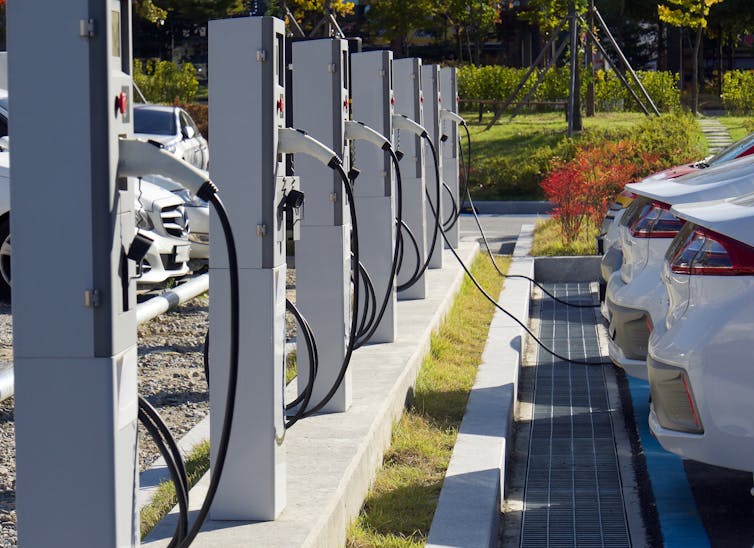 Electric vehicle charging infrastructure should be safe and accessible.
Shutterstock
Electric vehicle charging infrastructure should be safe and accessible.
Shutterstock
2. Plan ahead
The uptake of rooftop solar in Australia has been a raging success. In fact, rooftop solar is now the largest generator in the national power system.
This raises issues, such as how rooftop solar systems will respond to a major disturbance, such as the failure of a transmission line. A large amount of solar power feeding into the grid can also challenge electricity network infrastructure.
In response, electricity networks have implemented changes such as limiting solar exports and therefore, returns to solar system owners, and charging fees for exporting solar.
Such retrospective changes have been unpopular with solar owners. So to maintain reliable electricity supplies, and avoid angering consumers, it’s vital to plan where and when electric vehicles are charged.
If every vehicle in Australia was electric, this would add about a quarter to national power demand. The rise in demand would be greatest near bus and logistics depots and ultra-fast highway chargers.
Read more: Owners of electric vehicles to be paid to plug into the grid to help avoid blackouts
Timing is key to maximising the use of a network connection without overloading it. For example, if everyone charged their vehicle in the evening after they get home from work, as this would put further pressure on electricity supplies at this peak time.
Governments and electricity providers should encourage electric vehicle charging during the day, when demand is lower. This might mean, for example, providing vehicle charging facilities at workplaces and in public areas.
Until Australia’s power grid transitions to 100% renewables, the use of solar energy should be strongly encouraged. This would ensure the vehicles were charged from a clean, cheap energy source and would help manage the challenges of abundant solar.
The question of road user charges for electric vehicles drivers is another example where it’s best to avoid retrospective changes. Such charges are necessary in the long run and best introduced from the outset.
 Vehicle charging during the day, when power demand is lowest, should be encouraged.
Shutterstock
Vehicle charging during the day, when power demand is lowest, should be encouraged.
Shutterstock
3. Coordination is key
Electric vehicle policy spans many government portfolios: transport, infrastructure, energy, planning, environment and climate change. Nationally, and from state to state, different ministers are in charge.
This makes coordination difficult, and creates the risk of policies undermining each other. For example, one policy might encourage the charging of electric vehicles from rooftop solar, to reduce carbon emissions. But because solar energy is so cheap, this might encourage more private vehicle use, which worsens road congestion.
So policies to encourage electric vehicle uptake should not come at the cost of creating more attractive and efficient public transport networks.
And new technologies can entrench societal disadvantage. For example, the rooftop solar rollout often excluded people who could not afford to buy the systems. Without policies to address this, the electric vehicle transition could lead to similar outcomes.
 Encouraging electric vehicle use could worsen road congestion, if not well managed.
Shutterstock
Encouraging electric vehicle use could worsen road congestion, if not well managed.
Shutterstock
Lessons in the rear-view mirror
As Australia’s experience with rooftop solar has shown, successful technology transitions must be carefully planned and attentively steered.
In the case of electric vehicles, this will ensure the benefits to owners, society and the environment are fully realised. It will also ensure a smooth-as-possible transition, the gains from which all Australians can share.
Read more: The US jumps on board the electric vehicle revolution, leaving Australia in the dust
Authors: Bjorn Sturmberg, Research Leader, Battery Storage & Grid Integration Program, Australian National University

















