
Net zero by 2050? Even if Scott Morrison gets the Nationals on board, hold the applause
- Written by: Peter Christoff, Senior Research Fellow and Associate Professor, Melbourne Climate Futures initiative, The University of Melbourne
Resurrected Nationals leader Barnaby Joyce is back in the saddle, facing backwards. His determination to prevent the Morrison government from adopting a target of net-zero greenhouse emissions by 2050 will again delay the renovation of Australia’s climate policy.
The Nationals’ leadership spill reportedly followed growing disquiet about Morrison’s slow pivot towards a net-zero by 2050 goal. Many Nationals MPs have indicated they don’t back the target, and Joyce says he will be “guided by the party room” on the issue.
If Morrison eventually gets the 2050 target past Joyce and passed by the joint party room, there will be little cause for celebration. In fact, the achievement will be as exciting as watching a vaudeville magician wrench an old rabbit out of a moth-eaten hat.
Australia’s premiers will yawn in unison. Every state and territory in the country has already adopted this target, or better. Yet at the end of the day, net-zero by 2050 is a risky and inadequate goal, especially for wealthy nations such as Australia.
 Barnaby Joyce, centre, says the Nationals’ stance on a zero-emissions target will be guided by the party room.
Mick Tsikas/AAP
Barnaby Joyce, centre, says the Nationals’ stance on a zero-emissions target will be guided by the party room.
Mick Tsikas/AAP
A target is nothing without a plan to get there
All G7 states and 11 G20 members are aiming for net-zero emissions by mid-century. These include the United Kingdom, Japan, Canada, Germany, France, the Republic of Korea, Italy, the European Union, Argentina and the United States. China, the world’s largest emitter, has committed to net-zero by 2060.
However, as international environment law expert Professor Lavanya Rajamani has argued, net-zero targets should not automatically be applauded. First, they should be checked for their credibility, accountability and fairness. On these measures, a net-zero by 2050 target for Australia is nothing to cheer.
Why? First, because a target is nothing without an effective strategy to get there – something Australia is sorely lacking.
To successfully achieve net-zero emissions by 2050, tough short- and medium-term targets are essential to staying on track. Victoria, for example, has pledged to halve carbon emissions by 2030. The UK is aiming for a 78% reduction by 2035, reflecting its confidence in existing and emerging technologies.
Read more: 'Failure is not an option': after a lost decade on climate action, the 2020s offer one last chance
The Morrison government’s 2030 target – a 26-28% reduction below 2005 emissions levels - is not credible. Experts say a 2030 target of between 50% and 74% is needed to put Australia in line with keeping warming below 2℃ and 1.5℃ respectively – the goals of the Paris Agreement.
So what about Australia’s actual emissions-reduction measures? The Morrison government’s technology-first approach falls short of what’s needed to drive quick and deep emissions cuts.
Reaching net-zero requires substantial government funding and tax relief for investors in renewable technologies. Morrison’s announcement of an additional A$540 million for new technologies is insufficient and partly misdirected.
For instance, the government is investing in carbon capture and storage. As others have argued, the technology is increasingly commercially unviable and encourages further fossil fuel use.
In the meantime, the government is failing to assist the uptake of proven technologies such as electric vehicles, despite transport being Australia’s third-worst sector for emissions.
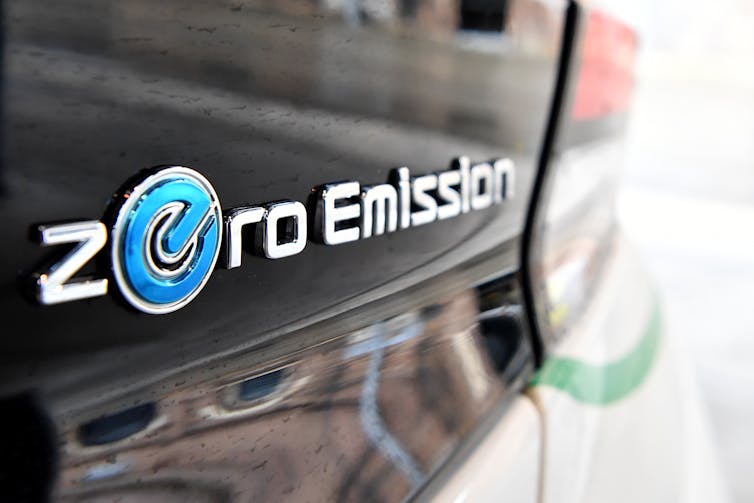 The Morrison government has failed to invest in electric vehicles.
Shutterstock
The Morrison government has failed to invest in electric vehicles.
Shutterstock
2050 goal is risky business
Even if Australia adopted a goal of net-zero by 2050, and measures to get there comfortably, the target is risky.
In 2018, the Intergovernmental Panel on Climate Change (IPCC) released a report on the potentially catastrophic impacts of exceeding 1.5℃ global warming. In the same report it established the idea of “net zero” as a global aim, saying achieving the target by 2050 was needed to stay below that warming threshold.
The IPCC described the emissions-reduction pathways required, but failed to emphasise crucial assumptions underlying them. Most depended on “negative emissions” - drawing down carbon from the atmosphere.
Many of those presumed drawdown measures involve land use measures that potentially threaten biodiversity or food security, for instance by requiring farmland and virgin forests to be used for growing “carbon crops”. Others involve geo-engineeering technologies which are yet to be tested or proven safe at scale.
It’s a risky strategy to avoiding rapid, substantial and real emissions reductions in favour of gradual mitigation pathways that rely on such future carbon drawdown. It locks us into technologies which are problematic or don’t yet exist. To limit these risks, Australia must aim for net-zero well before 2050, predominantly via actual emissions cuts.
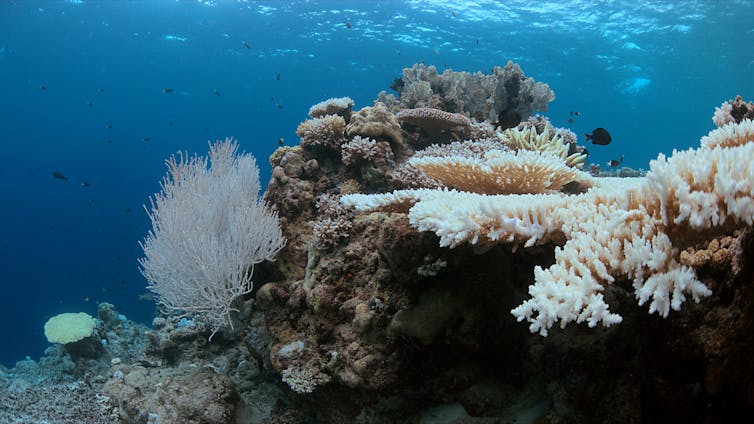 The IPCC warned of catastrophic climate impacts, such as coral bleaching.
Shutterstock
The IPCC warned of catastrophic climate impacts, such as coral bleaching.
Shutterstock
A matter of fairness
The matter of equity is another where policy-makers have been inattentive to nuance. Calling for every country to achieve net-zero by 2050 shifts the burden and costs onto poorer countries.
The United Nations Framework Convention on Climate Change, the Kyoto Protocol and the Paris Agreement each require developed countries to cut emissions faster than poorer countries – and to assist poorer countries in their efforts. This recognises the fact developed nations are largely responsible for global warming, and have the wealth and technological capacities to act.
The undifferentiated call for net-zero by 2050 shifts the burden and costs of effort onto poorer countries. No wonder so many developed countries have been happy to adopt it!
Developing nations such as India, Pakistan and Bangladesh, as well as those in Southeast Asia, Latin America, the Pacific and Africa, are mostly below global average wealth. Forcing them to meet the same net-zero timeframe as rich nations is patently unfair.
And for the international community to achieve even the 2050 goal, China – a global emissions giant – must increase its ambition to at least net-zero by 2050 (rather than its current 2060 timeframe).
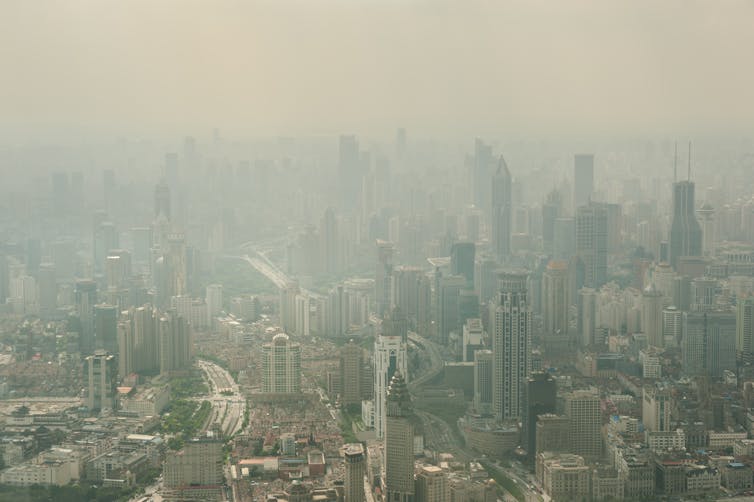 China must accelerate its climate efforts.
Shutterstock
China must accelerate its climate efforts.
Shutterstock
Morrison’s bind
It’s clear that rich developed countries must both aim for net-zero emissions well before 2050, and provide climate finance to assist poorer countries to do the same. Anything less will almost certainly guarantee Earth overshoots an already risky target.
Australia, given its wealth and technological means, must certainly aim for net-zero well before 2050. A report in April this year suggested reaching net-zero in 2035, to make a “fair and achievable contribution to the global task” and given our vulnerability to extreme weather.
The issue of climate finance was on the agenda at this month’s G7 summit, but critics say the final commitment – meeting an overdue spending pledge of US$100 billion a year – is inadequate considering the urgency of the task.
Just months out from a crucial UN climate summit in Glasgow in November, Scott Morrison is caught in a bind. On the global stage, he’s under increasing pressure to commit to a net-zero emissions target or face carbon tariffs. At home, he’s forced to assuage a minor coalition partner now led by a man who will reportedly push for a new coal-fired power station, and for agriculture – and potentially mining – to be exempt from emissions targets.
The looming general election will test whether rural voters are prepared to endure Joyce’s climate antics or will swing to savvy independents. And it remains to be seen whether urban voters will tolerate a prime minister whose transactional politics leaves Australia increasingly exposed at home and abroad.
Authors: Peter Christoff, Senior Research Fellow and Associate Professor, Melbourne Climate Futures initiative, The University of Melbourne


















