

You may have heard the 'moon wobble' will intensify coastal floods. Well, here's what that means for Australia
- Written by: Mark Gibbs, Principal Engineer: Reef Restoration, Australian Institute of Marine Science
Extreme floods this month have been crippling cities worldwide. This week in China’s Henan province, a year’s worth of rain fell in just three days. Last week, catastrophic floods swept across western Germany and parts of Belgium. And at home, rain fell in Perth for 17 days straight, making it the city’s wettest July in 20 years.
But torrential rain isn’t the only cause of floods. Many coastal towns and cities in Australia would already be familiar with what are known as “nuisance” floods, which occur during some high tides.
A recent study from NASA and the University of Hawaii suggests even nuisance floods are set to get worse in the mid-2030s as the moon’s orbit begins another phase, combined with rising sea levels from climate change.
The study was conducted in the US. But what do its findings mean for the vast lengths of coastlines in Australia and the people who live there?
A triple whammy
We know average sea levels are rising from climate change, and we know small rises in average sea levels amplify flooding during storms. From the perspective of coastal communities, it’s not if a major flood will occur, it’s when the next one will arrive, and the next one after that.
But we know from historical and paleontological records of flooding events that in many, if not most, cases the coastal flooding we’ve directly experienced in our lifetimes are simply the entrée in terms of what will occur in future.
Flooding is especially severe when a storm coincides with a high tide. And this is where NASA and the University of Hawaii’s new research identified a further threat.
Researchers looked at the amplification phase of the natural 18.6-year cycle of the “wobble” in the moon’s orbit, first identified in 1728.
The orbit of the moon around the sun is not quite on a flat plane (planar); the actual orbit oscillates up and down a bit. Think of a spinning plate on a stick — the plate spins, but also wobbles up and down.
Read more: Predators, prey and moonlight singing: how phases of the Moon affect native wildlife
When the moon is at particular parts of its wobbling orbit, it pulls on the water in the oceans a bit more. This means for some years during the 18.6-year cycle, some high tides are higher than they would have otherwise been.
This results in increases to daily tidal rises, and this, in turn, will exacerbate coastal flooding, whether it be nuisance flooding in vulnerable areas, or magnified flooding during a storm.
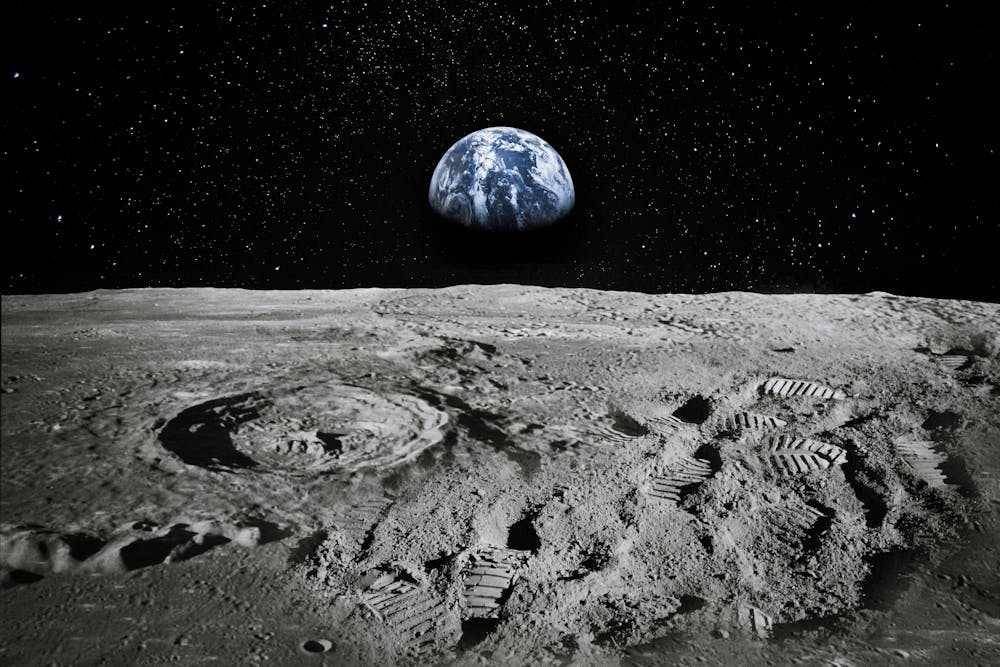 The moon’s orbit isn’t on a flat plane. It oscillates up and down, like a plate would when it spins on a stick.
Shutterstock
The moon’s orbit isn’t on a flat plane. It oscillates up and down, like a plate would when it spins on a stick.
Shutterstock
A major wobble amplification phase will occur in the mid-2030s, when climate change will make the problem become severe in some cases.
The triple whammy of the wobble in the moon’s orbit, ongoing upwards creep in sea levels from ocean warming, and more intense storms associated with climate change, will bring the impacts of sea-level rise earlier than previously expected — in many locations around the world. This includes in Australia.
So what will happen in Australia?
The locations in Australia where tides have the largest range, and will be most impacted by the wobble, aren’t close to the major population centres. Australia’s largest tides are close to Broad Sound, near Hay Point in central Queensland, and Derby in the Kimberley region of Western Australia.
However, many Australian cities host suburbs that routinely flood during larger high tides. Near my home in Meanjin (Brisbane), the ocean regularly backs up through the storm water drainage system during large high tides. At times, even getting from the front door to the street can be challenging.
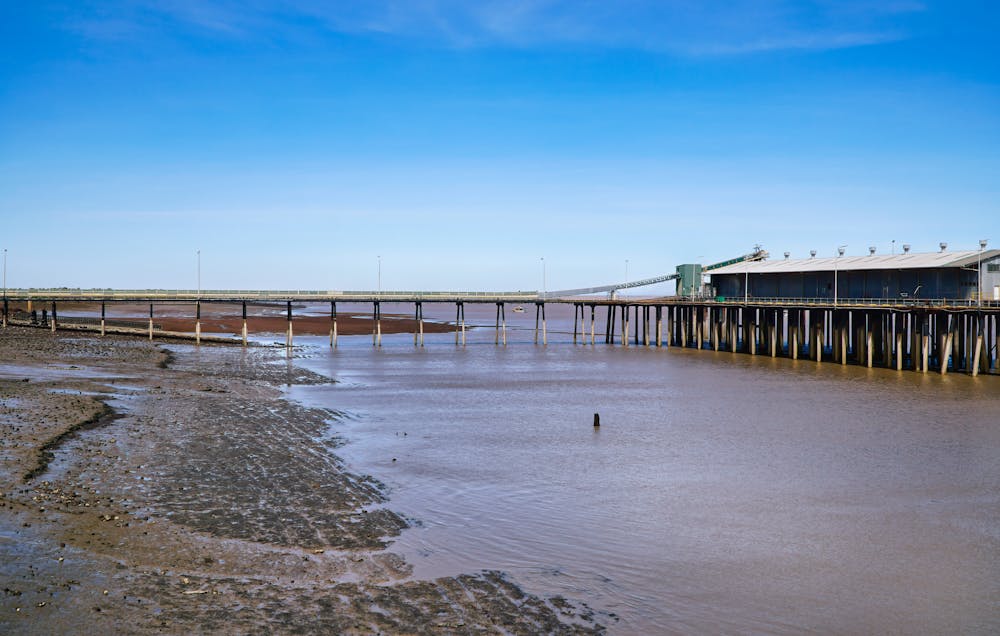 Derby, WA, has one of the biggest tidal ranges in Australia.
Shutterstock
Derby, WA, has one of the biggest tidal ranges in Australia.
Shutterstock
Some bayside suburbs in Melbourne are also already exposed to nuisance flooding. But a number of others that are not presently exposed may also become more vulnerable from the combined influence of the moon wobble and climate change — even when the weather is calm. High tide during this lunar phase, occurring during a major rainfall event, will result in even greater risk.
Read more: High-tide flood risk is accelerating, putting coastal economies at risk
In high-income nations like Australia, sea-level rise means increasing unaffordability of insurance for coastal homes, followed by an inability to seek insurance cover at all and, ultimately, reductions in asset values for those unable or unwilling to adapt.
The prognosis for lower-income coastal communities that aren’t able to adapt to sea-level rise is clear: increasingly frequent and intense flooding will make many aspects of daily life difficult to sustain. In particular, movement around the community will be challenging, homes will often be inundated, unhealthy and untenable, and the provision of basic services problematic.
What do we do about it?
While our hearts and minds continue to be occupied by the pandemic, threats from climate change to our ongoing standard of living, or even future viability on this planet, haven’t slowed. We can pretend to ignore what is happening and what is increasingly unstoppable, or we can proactively manage the increasing threat.
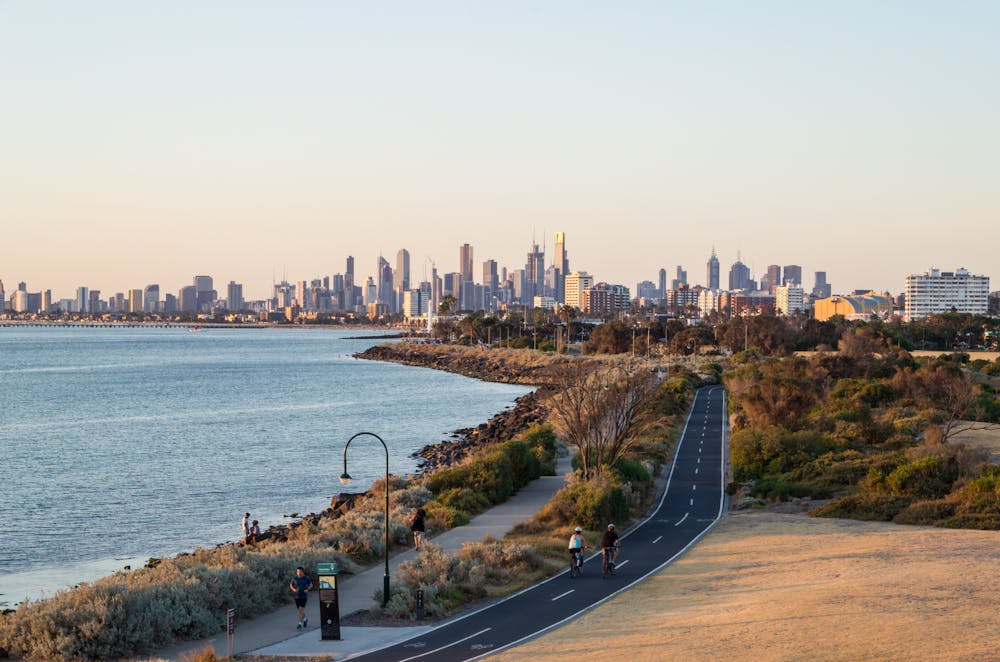 Some coastal communities, such as in Melbourne’s bayside suburbs, may experience flooding, even if they never have before.
Shutterstock
Some coastal communities, such as in Melbourne’s bayside suburbs, may experience flooding, even if they never have before.
Shutterstock
Thankfully, approaches to adapting the built and natural environment to sea-level rise are increasingly being applied around the world. Many major cities have already embarked on major coastal adaptation programs – think London, New York, Rotterdam, and our own Gold Coast.
However, the uptake continues to lag behind the threat. And one of the big challenges is to incentivise coastal adaptation without overly impacting private property rights.
Read more: For flood-prone cities, seawalls raise as many questions as they answer
Perhaps the best approach to learning to live with water is led by the Netherlands. Rather than relocating entire communities or constructing large barriers like sea walls, this nation is finding ways to reduce the overall impact of flooding. This includes more resilient building design or reducing urban development in specific flood retention basins. This means flooding can occur without damaging infrastructure.
There are lessons here. Australia’s adaptation discussions have often focused on finding the least worst choice between constructing large seawalls or moving entire communities — neither of which are often palatable. This leads to inaction, as both options aren’t often politically acceptable.
The seas are inexorably creeping higher and higher. Once thought to be a problem for our grandchildren, it is becoming increasingly evident this is a challenge for the here and now. The recently released research confirms this conclusion.
Read more: King tides and rising seas are predictable, and we're not doing enough about it
Authors: Mark Gibbs, Principal Engineer: Reef Restoration, Australian Institute of Marine Science


















