

Planning to plant an Australian native like wattle? Read this first — you might be spreading a weed
- Written by: Singarayer Florentine, Professor (Restoration Ecologist), Federation University Australia
Australian native plants are having a moment in the sun, with more of us seeking out and planting native species than in the past. Our gardens — and our social media feeds — are brimming with beautiful Australian native blooms.
But not all Australian native species belong in all Australian environments. In fact, many have become pests in places far from their original homes.
They can crowd out other native endemic species, affect the local balance of insects and other animals, wreck soils and even increase fire risk.
Here are three Australian native plants that have become invasive species after ending up in places they don’t belong.
Sydney golden wattle (Acacia longifolia subspecies longifolia)
Originally extending from East Gippsland in Victoria up about as far as Brisbane in Queensland, this species is undoubtedly photogenic. It’s also an invasive weed in parts of Victoria, South Australia and Western Australia.
It was spread across the nation by well-meaning gardeners who saw it as a charming ornamental plant. However, its seeds made their way into the wild and took off — it’s what’s known in my field as “a garden escapee”.
Like many weeds, this species can capitalise on a natural disaster; after fire it can send out shoots from its base. Acacias are often one of the first species to sprout following a bushfire. They’re now completely dominant and spreading in many areas.
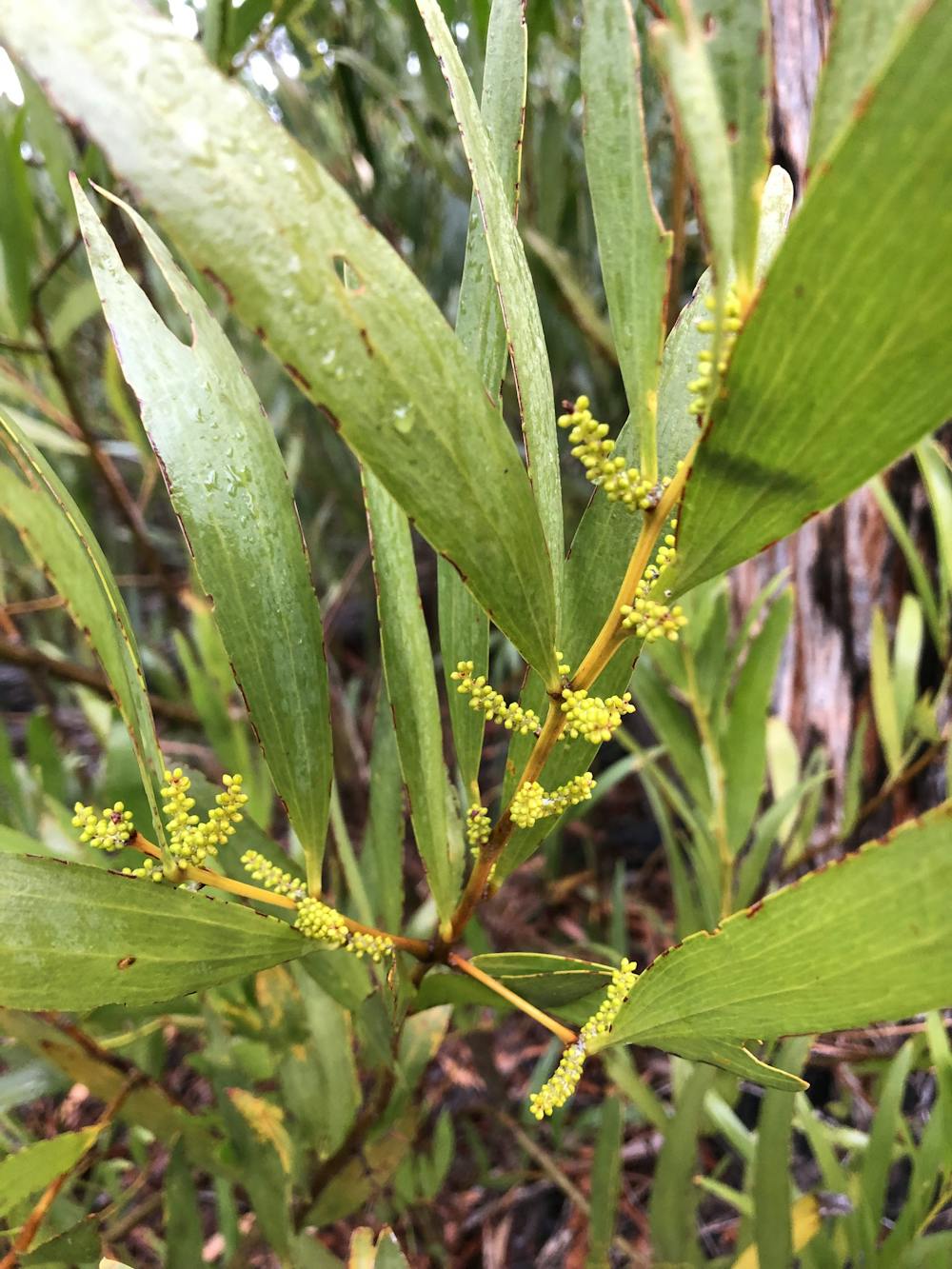 Sydney golden wattle is an invasive weed in other parts of Victoria, South Australia and Western Australia.
Gill Armstrong, Author provided
Sydney golden wattle is an invasive weed in other parts of Victoria, South Australia and Western Australia.
Gill Armstrong, Author provided
Seeds of Sydney golden wattle can last in the soil for many decades, long after the parent plants have died. The heat from a fire cracks the hard seed coat, allowing water to enter and germination to take off.
In the Grampians, in Victoria, Sydney golden wattle is causing terrible soil problems. Many native plants endemic to this area don’t like high levels of soil nitrogen, but Acacia longifolia subsp. longifolia is a nitrogen-fixing plant.
 Acacia longifolia subsp. longifolia has quite long, thin seed pods.
Gill Armstrong, Author provided
Acacia longifolia subsp. longifolia has quite long, thin seed pods.
Gill Armstrong, Author provided
In other words, it increases the nitrogen in the soil and changes the soil nutrient status and even physical aspects of the soil. It can grow tall and produce a lot of foliage, which reduces the amount of light coming to the ground. That makes it harder for native species lower to the ground to survive.
This is a major challenge, especially in biodiversity-rich places like the Grampians.
Coast wattle (Acacia longifolia subspecies sophorae)
The blooms on Acacia longifolia subspecies sophorae (Coast wattle) look more or less the same as many other wattles, but the leaves are a bit shorter and stubbier.
Originally, Coast wattle occurred along the east coast from western Victoria — up about as far as Brisbane and down south as far as Tasmania (where Sydney golden wattle did not occur naturally).
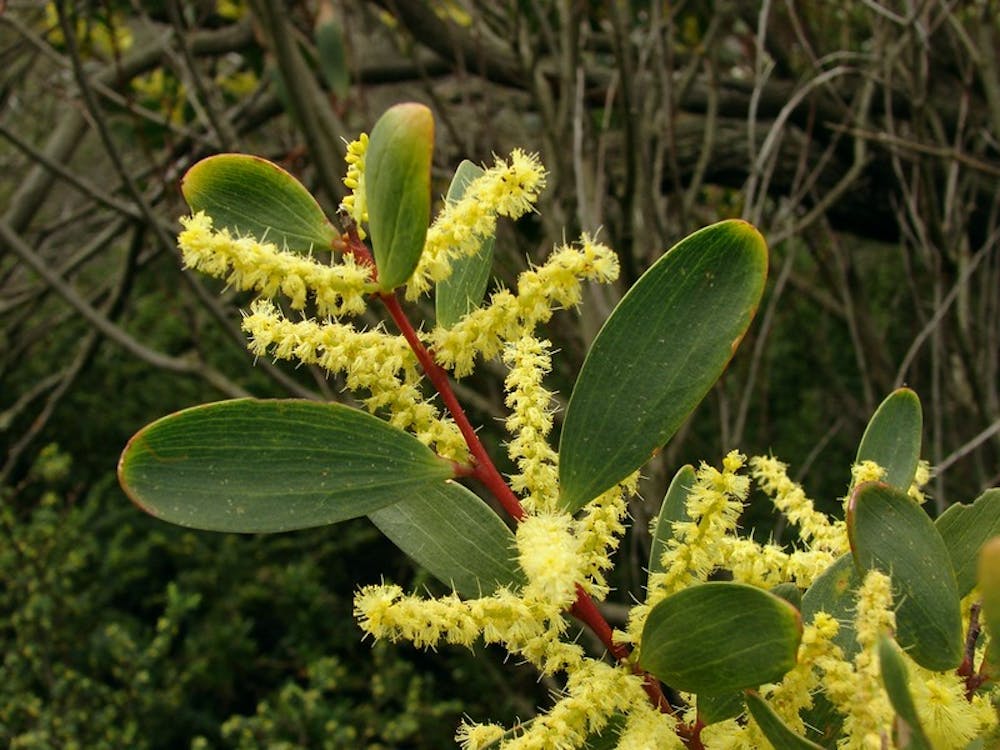 Acacia longifolia subsp. sophorae, also known as ‘Coastal Wattle’, has shorter, stubby leaves.
Tatters ✾/Flickr, CC BY
Acacia longifolia subsp. sophorae, also known as ‘Coastal Wattle’, has shorter, stubby leaves.
Tatters ✾/Flickr, CC BY
It was originally restricted to sandy sites at the top of beaches but has been deliberately planted as a “sand-binder” in other sites. It’s also naturally spread into heathlands inland of the beaches and is now causing huge problems around our coasts.
Like the earlier example, it dominates local ecosystems and displaces native species endemic to the area (particularly in our species-rich heathlands), which affects local insect habitats. It is also now modifying natural sand dune patterns.
It is increasing fire risk by changing heathland plant profiles from mostly short shrubs of limited bulk to tall, dense shrublands with much higher fuel levels.
Coast teatree (Leptospermum laevigatum)
As with Coast wattle, Coast teatree was formerly restricted to a narrow strip on sandy soils just above the beaches of south-eastern Australia. But it has now spread into nearby heathlands and woodlands. It’s even reached as far as Western Australia.
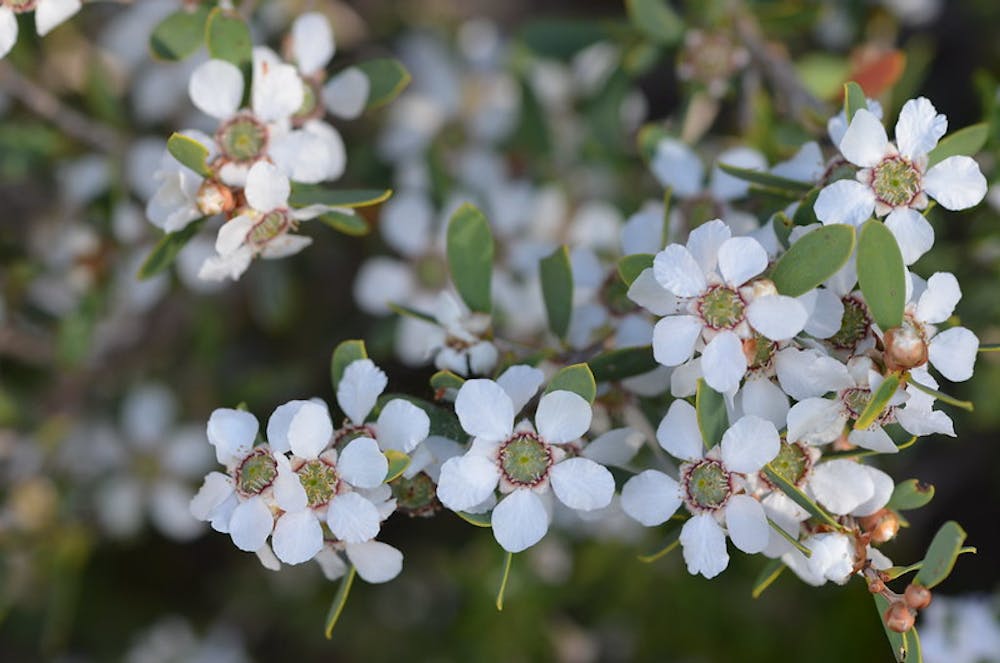 Coast teatree, Leptospermum laevigatum, is now an invasive species in some areas.
Flickr/Margaret Donald, CC BY
Coast teatree, Leptospermum laevigatum, is now an invasive species in some areas.
Flickr/Margaret Donald, CC BY
This teatree plant is now considered an invasive species in parts of Victoria and South Australia.
Although the mature plants are usually killed by fire, the seeds are abundant and very good at surviving; they pop out of their capsules after fires.
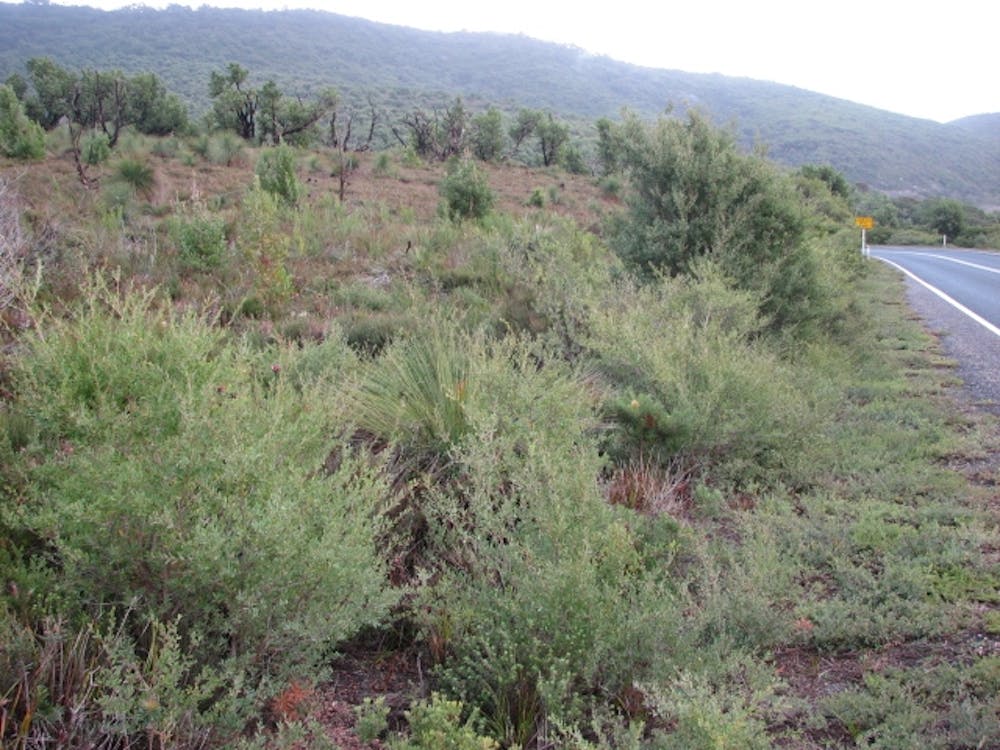 Coast teatree produces a lot of seeds.
Dr David Chael, Author provided
Coast teatree produces a lot of seeds.
Dr David Chael, Author provided
They are high-density plants that burn quickly in a fire. They are very quick to take over and push out endemic species.
For example, parts of the Wilson’s Prom National Park in Victoria, which was originally a Banksia woodland, have now been converted almost to a teatree monoculture. It is very sad.
A call to action
Authorities are trying their best to keep these and other native invasive species under control, but in some cases things may never go back to the way they were. Sometimes, the best you can hope for is just to strike a balance between native and invasive species.
When you do landcare restoration work or home gardening, I urge you to look up the plant history and see if the species you’re thinking of planting is listed as one that might cause problems in future.
When you go to purchase from a nursery or plant centre, be cautious. Think twice before you bring something into your garden. Too many species have “jumped the garden fence” and now cost us a great deal in control efforts and in native species loss.
Lots of apps, such as PlantNet, can help you identify plants and see what is native to your area.
Australia has spent billions trying to control invasive species and environmental weeds. Anything you can do to help is a bonus.
Authors: Singarayer Florentine, Professor (Restoration Ecologist), Federation University Australia


















