

We're all exhausted but are you experiencing burnout? Here's what to look out for
- Written by: Gabriela Tavella, Research Officer, UNSW School of Psychiatry, UNSW
With more than half the country in lockdown and many of the social support systems we rely on having been put on hold, it’s no wonder people are feeling overwhelmed and exhausted. For some, such feelings may ultimately culminate in burnout.
Before the COVID-19 pandemic, burnout was, for the most part, considered a work-related issue. But in our research, we have identified burnout in people outside of the workplace, including those who are dealing with other life stressors, such as caring for loved ones full-time.
Now, because of the pandemic, rates of burnout appear to be rising, especially since working from home means workers are often required to “do more with less” and be online and available 24/7, as well as home-school children.
Read more: It's OK if you have a little cry in lockdown. You're grieving
We have been researching burnout to determine how to best identify and manage it. This research is outlined in a recently published book – Burnout: A guide to identifying burnout and pathways to recovery – and summarised here.
What is burnout?
The most widely used burnout measure, the Maslach Burnout Inventory (MBI), defines it by three criteria:
- exhaustion
- loss of empathy towards service recipients or cynicism directed towards one’s job
- reduced professional accomplishment.
But the MBI has been widely critiqued. One concern is it overlooks key symptoms that are prominent in burnout and may be especially debilitating, such as cognitive dysfunction (which might include forgetting things or not being able to concentrate).
Another concern is it was derived solely from researching burnout in those who work directly with patients or clients, such as health-care workers and those in other caring professions. Nuances of burnout that occur in other contexts may have been overlooked.
Our alternative – the Sydney Burnout Measure
In our studies, we asked more than 1,000 participants who said they’d experienced burnout to report their main symptoms. They worked across a range of contexts, from paid employment positions to more “informal” work positions such as caring for elderly parents and/or children.
We found the syndrome comprised of not just exhaustion, but also cognitive dysfunction, withdrawal and disconnection from the world and those around you, and reduced work performance (whether that be in paid work or in tasks you are responsible for at home), commonly accompanied by depression, anxiety and insomnia.
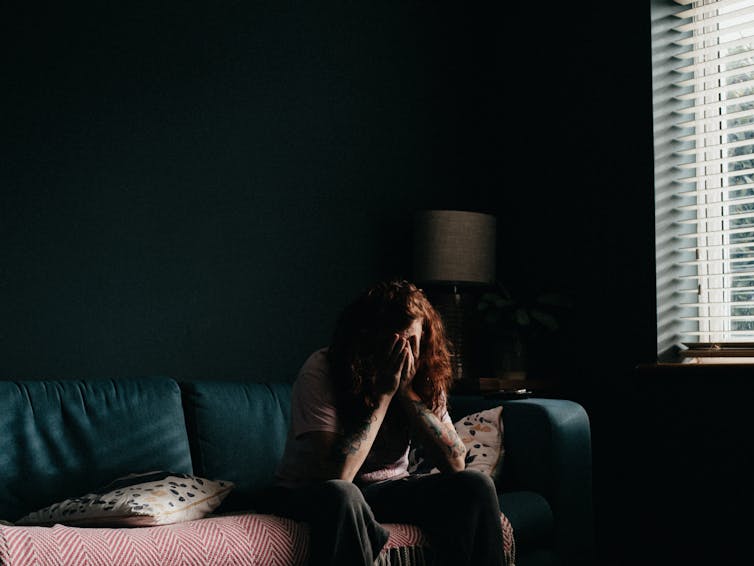 Burnout can include withdrawal or disconnection from the world and those around you.
Annie Sprat/Unsplash
Burnout can include withdrawal or disconnection from the world and those around you.
Annie Sprat/Unsplash
We collated the burnout symptoms we identified into our own measure. The Sydney Burnout Measure, or SBM, is a checklist of 34 burnout symptoms, with a high score on our measure indicative that you might have burnout.
But it’s also possible to get a high score because of some other underlying condition that shares several of burnout’s symptoms, such as depression. To assess for this possibility, approaching a GP or mental health professional may be necessary.
These professionals will use their clinical experience to assess whether the symptoms you have are likely the consequence of burnout, or whether they could be due to some other mental health condition. Such clarification is important as different psychological conditions often require disorder-specific treatment strategies.
Read more: Compassion fatigue: the cost some workers pay for caring
Addressing the external stressor
Once you know you have burnout, what can be done about it?
As a first step, the causes of your burnout need to be identified, so you can work to reduce their impact.
External causes of burnout can come from your workplace (such as being overloaded, being overlooked for a promotion, working overtime) or from the home (including caring for multiple children and/or elderly parents, being primarily responsible for domestic duties).
A combination of both factors could be at play, especially during our current state of lockdown, where many are juggling working-from-home demands, financial difficulties and home-schooling children.
 Many people are currently juggling multiple demands as they work from home in the pandemic.
Shutterstock
Many people are currently juggling multiple demands as they work from home in the pandemic.
Shutterstock
Seeking resolution from your boss or manager may be useful in overcoming some work stressors. Can they extend your deadlines, or arrange flexible working hours around your child-rearing responsibilities?
For factors in the home, asking family members to assist in juggling tasks, or researching whether some tasks can be outsourced (for example, can you hire a cleaner or a babysitter once a week?) may be of use.
Applying de-stressing strategies
When escaping these stressors isn’t possible, you may have to bring on some de-stressing strategies to help curb your burnout symptoms. Things like exercise, meditation and practising mindfulness are consistently nominated by our study participants as most helpful.
Such practices not only help you to distract and relax, but also have proven biological benefits, such as reducing levels of stress hormones throughout the body.
Consulting a mental health professional can also be useful here, as they will have several specific cognitive strategies to help reduce anxiety and stress.
Addressing a predisposing factor: perfectionism
While stressors experienced at work or at home may set the wheels of burnout in motion, our analyses indicated burnout may also develop as a result of predisposing personality traits, especially perfectionism.
People with perfectionistic traits are usually excellent workers, as they’re extremely reliable and conscientious. However, they’re also prone to burnout as they set unrealistic and unrelenting standards for their own performance, which are ultimately impossible to live up to.
We therefore suggest managing burnout requires not only addressing precipitating work stressors and employing de-stressing strategies, but also tweaking any predisposing personality style.
 Getting it done is more important than making it perfect.
Nathana Rebouças/Unsplash
Getting it done is more important than making it perfect.
Nathana Rebouças/Unsplash
Several strategies can assist in modifying perfectionistic thoughts and behaviours. For example, learning to focus more on the “big picture” rather than the finer details can help prevent procrastination, which is a common consequence of perfectionism.
So, when starting a task, you want to approach it with the goal of getting it done (no matter how poor the quality) rather than ensuring it’s perfect from the get-go. You can go back and fix it later.
Learning to avoid black and white thinking (“If this goes wrong, I will definitely lose my job”) is another important strategy for addressing perfectionism. Consider instead the shades of grey (“If this goes wrong, I can try to approach it from another angle”).
A mental health professional may also be of assistance here, as they can offer therapeutic techniques, often taken from cognitive-behavioural therapy (CBT), that help people notice and modify unhelpful thinking patterns that are common in perfectionism and make them prone to stress and anxiety.
Overall, the key to managing burnout is identifying whether the presenting problem actually is burnout and not another condition. If it’s burnout, the key drivers (including any personality contribution) need to be determined. Only then can management strategies targeting each causal factor be applied.
Gabriela and Gordon’s book, Burnout: A guide to identifying burnout and pathways to recovery, co-authored by Kerrie Eyers, is published by Allen & Unwin.
Authors: Gabriela Tavella, Research Officer, UNSW School of Psychiatry, UNSW


















