

3 ways to protect our kids against the Delta variant
- Written by: Katrina McLean, Assistant Professor, Medicine, Bond University
Last year in the COVID-19 pandemic, children were not catching or spreading the virus much. The main focus was on protecting our elderly and vulnerable.
But the Delta strain has changed things. Children around the world are contracting Delta in high numbers and some frontline doctors believe they may also be getting sicker from this strain.
Many parents and schools have concerns about how to best protect children from COVID-19. There’s also the worry children will catch the virus at school and take it back to their families and communities.
While many children are now well-accustomed to washing and sanitising their hands, this is simply not enough to tackle the spread of COVID-19, especially now we know the virus is airborne. We need a whole toolbox of strategies.
There are three key areas to focus on that we believe are evidence-based, easy to implement and will help protect our children: masks, ventilation and vaccination.
1. Masks
In certain Australian states, children aged 12 and above are currently required to wear a mask in public areas (schools included).
Meanwhile, Victoria’s chief health officer Brett Sutton has recommended children aged five and up wear masks in the face of rising Delta transmission among children.
As GPs, parents often ask us if it’s safe for children to wear masks. While we understand concern from parents, we reassure them masks have been found to cause no harm in children over the age of two. When children wear masks it doesn’t affect their breathing or reduce their oxygen levels.
Importantly, when worn properly, masks are effective at reducing the spread of COVID-19, for adults and children alike.
A few quick tips. Fabric masks should be treated like underwear: wash them regularly, ensure they cover everything, and don’t share. These are a better option for the environment.
Label fabric masks like school hats — they will go missing!
Surgical/disposable masks are single use. Like using a tissue to blow your nose, make sure it goes in the bin once used and then wash your hands.
And masks should fit snugly — the less gaps there are the better they will work.
Like anything new, getting used to masks can take time. Children may initially be anxious, especially if their parents are too. Though most kids adapt really quickly (much quicker than adults, in our experience).
While the majority of children will adapt quickly there will be some who have specific and legitimate concerns, for example disabilities and sensory issues. GPs and paediatricians can help work out what the safest approach is for these children.
2. Ventilation
SARS-CoV-2, the virus that causes COVID-19, can float in the air like smoke. If you’re inside in a small enclosed room with other people and the ventilation is poor, it will only be a matter of time before you’re all breathing in each other’s air.
Schools have lots of children inside enclosed classrooms, often for hours, so what can be done?
Ventilation is something schools can and should address. Some simple strategies include:
get outside as often as is practical. Call children into the classroom only once the day has started. Hold some lessons outside the classroom. During breaks and lunch time children should be outside whenever possible too
set air conditioning or heating systems to bring in as much outdoor air as possible
check the air with carbon dioxide monitors. This is occurring overseas.
Why do we care about CO₂? Well, we breathe in oxygen and breathe out CO₂. In confined spaces with lots of air that has been “breathed out”, monitors will detect higher levels of CO₂.
All that “breathed out” air could be full of viral particles, so if the monitor is measuring high, airflow needs to be improved immediately by opening a door or window.
In stuffy rooms, or rooms that measure high for CO₂ (indicating the ventilation is poor), a longer-term plan to clean the air should be considered. What’s encouraging is that the technology already exists to address this.
Air cleaners, also known as air purifiers, scrubbers, or HEPA filters, can actually help to “clean” the air we breathe. Lots of schools around the world are now actively improving ventilation systems and air quality monitoring.
Improving the air quality in schools may also prevent some of the other colds and flus kids pick up at school, and reduce asthma and allergy symptoms.
3. Vaccination
At this stage in Australia the Pfizer vaccine is recommended for vulnerable children aged 12-15, including those registered on the National Disability Insurance Scheme.
Vaccinations for all children 12 and over are now under way in New Zealand.
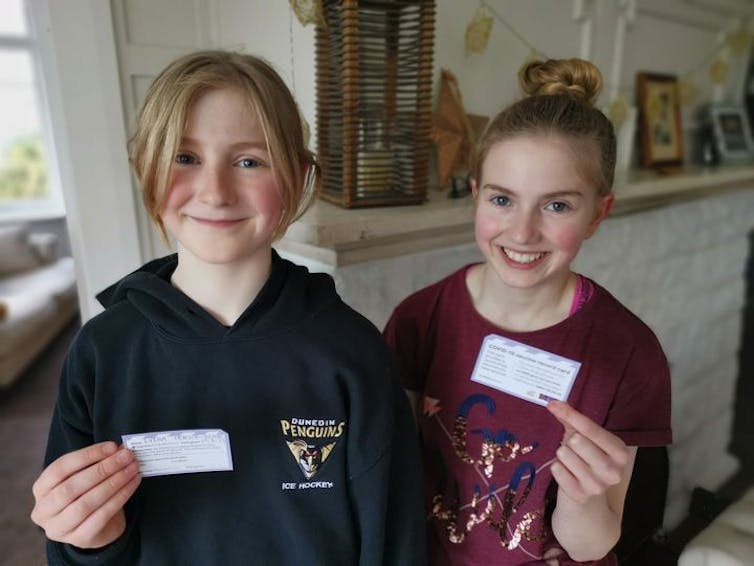 New Zealand GP Dr Sarah Hortop shared this photo of her daughters who received their first dose of the Pfizer vaccine recently.
Sarah Hortop, Author provided
New Zealand GP Dr Sarah Hortop shared this photo of her daughters who received their first dose of the Pfizer vaccine recently.
Sarah Hortop, Author provided
Many other countries have been giving vaccines to children for several months now. For example, in the United States, more than one-third of 12 to 15-year-olds are fully vaccinated and nearly 50% have had at least one dose.
We know the vaccines work well in this age group and just like in adults, there is very close monitoring of adverse events from these vaccines in children. It’s reassuring to see very few serious reactions, and even those that are (for example myocarditis — inflammation of the heart) are treatable.
Vaccine trials are under way in children under 12 in the US (for Pfizer and Moderna), and once we have the safety and efficacy data we can start making decisions around vaccinating them too.
Authors: Katrina McLean, Assistant Professor, Medicine, Bond University


















