

Got a child with COVID at home? Here's how to look after them
- Written by: Brendan McMullan, Conjoint Senior Lecturer, School of Women's and Children's Health, UNSW
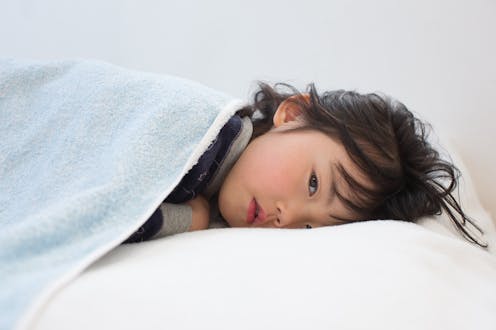
The Delta variant is more infectious and is leading to more COVID-19 cases in children than previous strains.
Many parents are wondering whether Delta is making kids sicker, and how to care for their children if they get COVID.
It can be a nerve-racking time for parents, but there are practical things you can do to make your child more comfortable if they’re ill.
How common is COVID in kids, and how sick do they get?
There have been more than 50,000 confirmed COVID cases in Australia.
Of these, 4,625 cases have been in children aged 0-9, and 6,325 among those aged 10-19 — totalling approximately 20% of all Australian cases.
Symptoms in children are often like those of other viral infections and may include fever, runny nose, sore throat, cough, vomiting, diarrhoea and lethargy.
A small number of children have other symptoms such as tummy pains, chest pain, headache, body aches, breathing difficulties or loss of taste or smell. Up to half of children with COVID may be asymptomatic.
Despite evidence the more-infectious Delta variant is causing more severe illness in young adults, there’s no convincing evidence it has caused more severe illness in children to date.
Most children can be cared for at home. Hospital networks, including children’s hospitals and local networks, are helping parents and carers to support this care at home.
In some cases, children and families may be transferred to special health accommodation to provide safe isolation and care.
How can I best care for my child at home if they get COVID?
Caring for a child with COVID will look similar to the general supportive care for children with other viral infections.
Children should be dressed in appropriate clothing, so they’re comfortable — not sweating or shivering.
Parents and carers should make sure the child drinks lots of fluids. They can also take paracetamol or ibuprofen if they are uncomfortable with pain or fever. These medicines should be administered as directed in the product information or by a health professional.
Read more: Masks, ventilation, vaccination: 3 ways to protect our kids against the Delta variant
Warning signs of deterioration include prolonged fever (for more than five days), difficulty breathing or chest pain.
Some children get severe abdominal pain, vomiting and/or diarrhoea. It’s important to encourage these children to frequently drink fluids. It’s a concern if they’re drinking less or passing urine less than half of what they normally would, or if they are excessively sleepy or irritable.
For these or other serious concerns, parents and carers should seek urgent advice from their care team. In an emergency, they should request ambulance assistance, informing the operator the child has COVID.
Don’t some children end up in hospital or intensive care?
Yes, there’s a small risk of severe disease from COVID in children but this is very uncommon, even in children who have medical vulnerabilities.
Children and adolescents can develop inflammatory complications after COVID, though this is rare. Symptoms include persistent fever and rash, among others. These conditions, termed “Multisystem Inflammatory Syndrome in Children (MIS-C)” or “Paediatric Multisystem Inflammatory Syndrome (PIMS-TS)” have been reported mainly in the United States and Europe.
Estimates from the US suggest these occur in around one in 3,000-4,000 cases of COVID in children. There’s only been a handful of cases reported in Australia to date.
Children aged 12-15 in Australia are now eligible for vaccination, and vaccination trials are ongoing for younger children.
Do children get ‘long COVID’?
There has been increasing concern about prolonged symptoms after COVID infection, sometimes called long COVID, even with mild disease.
Fortunately, this is rare in children. In a study of more than 150 children with mild or asymptomatic COVID in Australia, most symptoms resolved in 4-8 weeks and children generally returned to their baseline health within 3-6 months.
What if some people in the home aren’t infected?
The SARS-CoV-2 virus spreads easily from one person to another, particularly in close contact and for those living in the same household as someone who has the virus.
You can reduce the risk of spread by:
keeping more than 1.5m distance where possible
getting the child to use a separate bathroom, if this is available
wearing a mask (for adolescents and older children); younger children and others who cannot wear a mask can be encouraged to observe the other behaviours
covering coughs and sneezes
performing regular hand hygiene with soap and water or hand sanitiser.
Good ventilation is also a factor in reducing transmission, but not everyone can modify this in their living situation.
If someone in the household has COVID, high touch surfaces such as door handles, kitchen bench tops, switches and taps should be regularly cleaned.
Personal household items such as cutlery, dishes and towels should be washed before being shared. Regular household disinfectant is sufficient.
The authors would like to acknowledge Christine Lau, paediatrician, and Nadine Shaw, clinical nurse consultant, Sydney Children’s Hospitals Network, for their contributions to this article.
Authors: Brendan McMullan, Conjoint Senior Lecturer, School of Women's and Children's Health, UNSW
Read more https://theconversation.com/got-a-child-with-covid-at-home-heres-how-to-look-after-them-166732


















