

What's the point of homework?
- Written by: Katina Zammit, Deputy Dean, School of Education, Western Sydney University
Homework hasn’t changed much in the past few decades. Most children are still sent home with about an hour’s worth of homework each day, mostly practising what they were taught in class.
If we look internationally, homework is assigned in every country that participated in the OECD’s Programme for International Student Assessment (PISA) in 2012.
Across the participating countries, 15-year-old students reported spending almost five hours per week doing homework in 2012. Australian students spent six hours per week on average on homework. Students in Singapore spent seven hours on homework, and in Shanghai, China they did homework for about 14 hours per week on average.
Read more: Aussie students are a year behind students 10 years ago in science, maths and reading
Shanghai and Singapore routinely score higher than Australia in the PISA maths, science and reading tests. But homework could just be one of the factors leading to higher results. In Finland, which also scores higher than Australia, students spent less than three hours on homework per week.
So, what’s the purpose of homework and what does the evidence say about whether it fulfils its purpose?
Why do teachers set homework?
Each school in Australia has its own homework policy developed in consultation with teachers and parents or caregivers, under the guiding principles of state or regional education departments.
For instance, according to the New South Wales homework policy “… tasks should be assigned by teachers with a specific, explicit learning purpose”.
Homework in NSW should also be “purposeful and designed to meet specific learning goals”, and “built on knowledge, skills and understanding developed in class”. But there is limited, if any, guidance on how often homework should be set.
Research based on teacher interviews shows they set homework for a range of reasons. These include to:
establish and improve communication between parents and children about learning
help children be more responsible, confident and disciplined
practise or review material from class
determine children’s understanding of the lesson and/or skills
introduce new material to be presented in class
provide students with opportunities to apply and integrate skills to new situations or interest areas
get students to use their own skills to create work.
So, does homework achieve what teachers intend it to?
Do we know if it ‘works’?
Studies on homework are frequently quite general, and don’t consider specific types of homework tasks. So it isn’t easy to measure how effective homework could be, or to compare studies.
But there are several things we can say.
First, it’s better if every student gets the kind of homework task that benefits them personally, such as one that helps them answer questions they had, or understand a problem they couldn’t quite grasp in class. This promotes students’ confidence and control of their own learning.
Read more: Learning from home is testing students' online search skills. Here are 3 ways to improve them
Giving students repetitive tasks may not have much value. For instance, calculating the answer to 120 similar algorithms, such as adding two different numbers 120 times may make the student think maths is irrelevant and boring. In this case, children are not being encouraged to find solutions but simply applying a formula they learnt in school.
In primary schools, homework that aims to improve children’s confidence and learning discipline can be beneficial. For example, children can be asked to practise giving a presentation on a topic of their interest. This could help build their competence in speaking in front of a class.
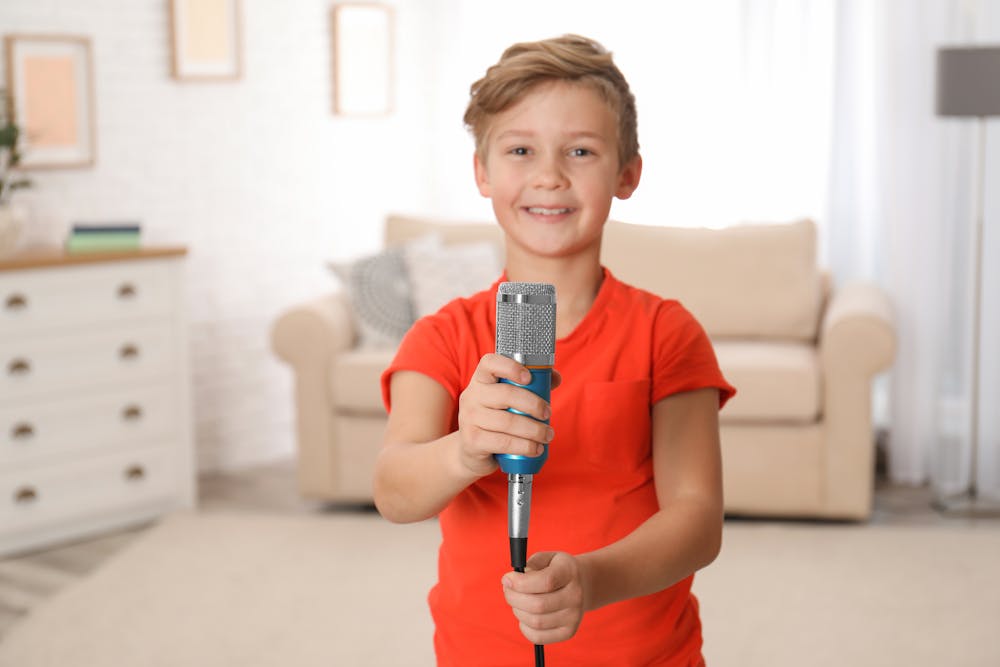 Children can practise giving a speech to their parents to gain confidence to present in front of the class.
Shutterstock
Children can practise giving a speech to their parents to gain confidence to present in front of the class.
Shutterstock
Homework can also highlight equity issues. It can be particularly burdensome for socioeconomically disadvantaged students who may not have a space, the resources or as much time due to family and work commitments. Their parents may also not feel capable of supporting them or have their own work commitments.
According to the PISA studies mentioned earlier, socioeconomically disadvantaged 15 year olds spend nearly three hours less on homework each week than their advantaged peers.
What kind of homework is best?
Homework can be engaging and contribute to learning if it is more than just a sheet of maths or list of spelling words not linked to class learning. From summarising various studies’ findings, “good” homework should be:
personalised to each child rather than the same for all students in the class. This is more likely to make a difference to a child’s learning and performance
achievable, so the child can complete it independently, building skills in managing their time and behaviour
aligned to the learning in the classroom.
If you aren’t happy with the homework your child is given then approach the school. If your child is having difficulty with doing the homework, the teacher needs to know. It shouldn’t be burdensome for you or your children.
Authors: Katina Zammit, Deputy Dean, School of Education, Western Sydney University
Read more https://theconversation.com/whats-the-point-of-homework-154056


















