

New Zealand's latest terror attack shows why ISIS is harder to defeat online than on the battlefield
- Written by: Joe Burton, Senior Lecturer, New Zealand Institute for Security and Crime Science, University of Waikato
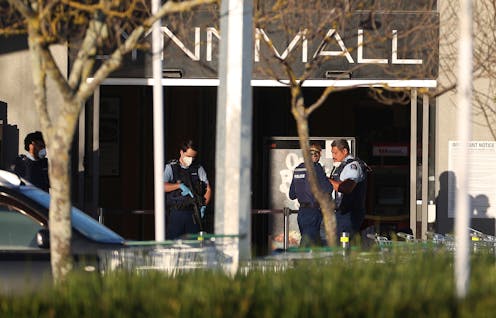
As Friday’s attack by an ISIS sympathiser in a New Zealand supermarket has shown, ISIS’s extreme ideology still holds strong appeal for some disaffected Muslims living in the west. ISIS ideology did not die in Syria and Iraq with the defeat of ISIL and its plans to establish a caliphate.
ISIS continues to be a radicalising influence on those susceptible to anti-western narratives. Social networks, the dark web and encrypted platforms continue to facilitate the global spread of its beliefs.
The Sir Lankan-born national responsible for Friday’s terrorist attack had previously been found to possess ISIS content on his personal computing devices and been banned from accessing social media sites for this very reason.
That’s why we should be wary of describing him as a “lone wolf”. He may have acted alone, with no direct assistance from a terrorist group. But his ideology and process of radicalisation are connected to global groups deliberately seeking to promote their vicious world view and attract new adherents to their cause.
Why ISIS is so hard to beat
While the COVID-19 pandemic may have had a temporary chilling effect on radicalism, there are concerns that in the post-pandemic era, terrorism will become a bigger problem globally.
ISIS was never truly defeated. Their military defeat in Iraq and Syria has led to the diffusion of the threat to other countries, including Afghanistan. Following the Taliban’s declaration of an Islamic emirate in Afghanistan, there are concerns about a resurgence of Islamic violence internationally.
Read more: Afghanistan: ISIS-K violence could force the west into an unlikely alliance with Taliban
The Taliban are no friends of ISIS and there has already been some cooperation with the new Taliban government to protect Kabul airport from ISIS attacks. But extremists will have been inspired by the defeat of the US-led coalition in Afghanistan, and buoyed to continue their global aspiration for conflict between Muslim and non-Muslim peoples.
NZ’s global efforts to fight online terrorists
New Zealand is already pursuing international collaborations, including the Christchurch Call, to help eliminate terrorism online.
Some progress has been made, including reforming the Global Internet Forum to Counter Terrorism, creating a crisis response protocol for effective cooperation in the event of terrorist incidents with an online component, and greater involvement in the online counter-terrorism effort from civil society.
Hoewever, the threat landscape continues to evolve. There is now increased attention on the role of social media algorithms in directing users to extremist content, and the continued global threat from far-right groups, including the attack on the US Capitol earlier this year, which was organised online.
Prime Minister Ardern’s recent call for “ethical algorithms” to stop the risk and spread of extremist online content highlights the importance of the issue to the New Zealand government.
New Zealand has also committed to joining the Budapest Convention on cyber crime, which guides countries developing comprehensive national legislation against online crime. It also provides a framework for international cooperation to counter aspects of violent extremism, including investigations into extremism on social media and the dark web.
Beyond international efforts, New Zealand’s government is establishing a national centre of excellence on violent extremism to boost research and more effective counter-terrorism policy.
Why preventing attacks is so challenging
The type of attack committed in New Zealand on Friday is very difficult to prevent. It follows a number of similar incidents, including the killing of UK soldier Lee Rigby in 2013 and the more recent 2017 London Bridge attack, in which eight people were killed by a vehicle and knife attack by an Islamic extremist.
It raises questions about the role of New Zealand’s security services. The Auckland supermarket attacker had been monitored since 2017 for his extremist beliefs — and was even being followed by police on Friday before he began stabbing people, which is how they were able to shoot him within a minute. But this also points to some inherent difficulties in New Zealand’s and global counter-terrorism efforts.
The first problem is one of resources. Even though there are relatively few radicals living in New Zealand, security services still find it difficult to mount 24-hour surveillance of individuals who may plan to carry out acts of violence.
It remains difficult to stop offenders acting on their violent beliefs, especially in random attacks like the one in Auckland, and impossible to predict when or if their beliefs will translate into action.
More comprehensive and intrusive electronic surveillance of internet platforms is one option, but democratic societies like New Zealand are naturally reticent to use more heavy-handed practices, especially because whole communities can feel targeted.
Countering extremism can lead to further division and resentment, a lesson New Zealand policy makers have learned in the aftermath of the Christchurch mosque attacks.
New Zealand’s security services cannot arrest and hold people for their beliefs alone, and rightly so. This is the ultimate intractable problem with modern counter-terrorism.
Social cohesion is the key
Perhaps the best and only way forward in countering such attacks is community resilience and cohesion. The New Zealand Muslim community has already expressed its horror at this callous act of violence and will be concerned about any rise in anti-Muslim sentiment that may result from it.
New Zealand was able to take an international lead following the Christchurch attacks, and the national solidarity demonstrated in the aftermath of the attack was a lesson for other nations dealing with the scourge of terrorism.
Friday’s terrorist attack took place amid the global backdrop of the US and allied withdrawal from Afghanistan and the attack by ISIS-K, an Afghan affiliate of ISIS, which killed 13 US military personnel and over 150 civilians at Kabul airport.
It would be a stretch to draw any direct links between terrorism in central Asia and the attack in Auckland. But it shows that ISIS continues to recruit online and is harder to defeat there than on the battlefield.
Authors: Joe Burton, Senior Lecturer, New Zealand Institute for Security and Crime Science, University of Waikato


















