

'Preprints' are how cutting-edge science circulates. Banning them from grant applications penalises researchers for being up-to-date
- Written by: Nicole Bell, Professor, Physics, The University of Melbourne
A sudden rule change by the Australian Research Council — to ban grant applications that cite preprint material — has deemed 32 early and mid-career researchers ineligible to receive critical funding.
A preprint is a scientific paper or report that has been made available before it is published in a peer-reviewed journal.
The researchers were caught unaware by the rule, which many consider unworkable and unethical. It is out of step with the way science operates.
What is a preprint?
Preprints are usually hosted on electronic preprint repositories, managed by the scientific community. Providing free and open access, preprints play a critical role in the rapid communication of scientific results.
They allow scientists to claim priority for their discoveries, making their work available ahead of the often slow peer review and publication process.
Preprint repositories also host documents never intended for publication, such as design reports for major experiments.
Preprints are not new. In decades past, it was common for physicists to mail paper copies of preprints to colleagues around the world. This practice was revolutionised in 1991, when the physics community pioneered the electronic preprint repository now known as arXiv.
This had a transformational impact on the way scientific information is shared and paved the way for the modern era of open-access publishing. Such was the success of arXiv that, by the turn of the century, the participation rate in the physics community approached 100%.
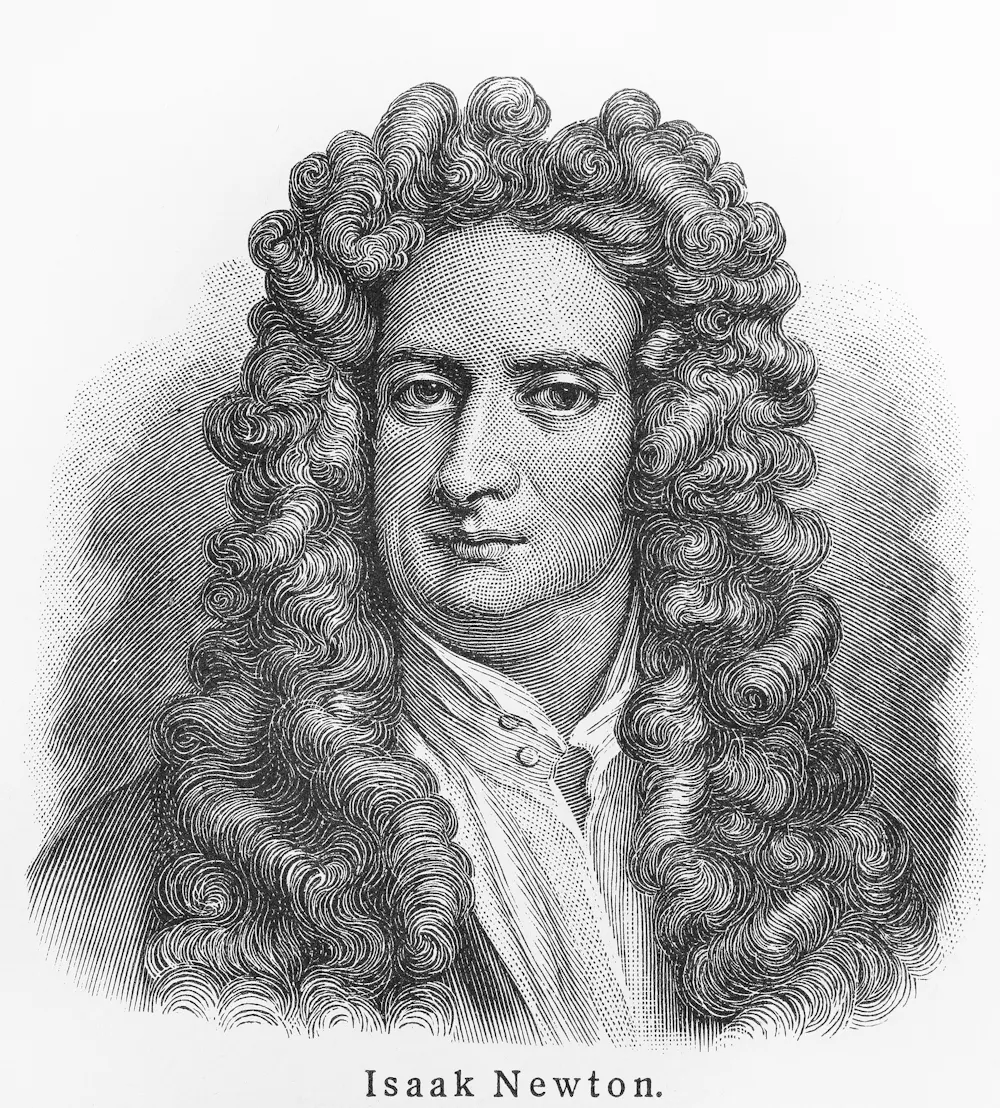 Newton’s calculus was first.
Shutterstock
Newton’s calculus was first.
Shutterstock
Other fields soon followed suit. The arXiv now hosts preprints in physics, astronomy, mathematics, computer science, biology and finance. Other disciplines, such as chemistry and medicine, developed their own dedicated preprint repositories.
Many ground-breaking discoveries were first communicated in non-peer-reviewed form. When Isaac Newton developed calculus, it was first recorded in his unpublished paper De Analysi per Aequationes Numero Terminorum Infinitas (On analysis by equations with an infinite number of terms), written during the plague years of 1665–1666.
Theoretical physicist Abdus Salam’s Nobel Prize-winning work on a unified description of electromagnetic and weak nuclear forces was first presented during lectures at Imperial College in 1967 and not published until the following year.
In 2002 and 2003 Russian mathematician Grigori Perelman finally presented proof of the famous Poincare conjecture, which had eluded mathematicians for almost 100 years. He did so in three electronic preprints that have to this day never been published.
Who has been impacted?
The Australian Research Council (ARC) is the main government agency that allocates funding to Australian researchers working in the natural and social sciences and humanities.
There is stiff competition for this funding. All applications are subject to rigorous scrutiny from the ARC College of Experts in addition to experienced external experts.
Two important funding schemes, designed to support the careers of our most talented young researchers, are the Discovery Early Career Researcher’s Awards (DECRAs) and the Future Fellowships.
Each year, the ARC awards some 200 DECRAs and 100 Future Fellowships. After the ARC stipulated preprints cannot not be cited anywhere in a funding application, some 32 early and mid-career researchers, who referenced preprints in accordance with standard conventions, were devastated to learn their DECRA or Future Fellowship applications were deemed ineligible.
Read more: The words that make a successful research grant application
All these applications were in physics or astronomy. Ten of the disqualified applicants were from the University of Melbourne and Sydney alone — many at make-or-break career points.
In addition to the effect on the applicants themselves, this wasted significant time, effort and resources devoted by university grant administrators, academic mentors and expert reviewers.
Australia’s National Medical Health and Research Council (NHMRC) allows preprints to be used. So do all international funding agencies that we know of, such as the US National Science Foundation (NSF) and the European Research Council (ERC).
It flies in the face of core principles
Although physics and astronomy were hardest hit in the recent ARC funding round, the preprint issue transcends academic boundaries. Science moves fast. There is no better illustration of this fact than the rapid response to the current global pandemic. Often, by the time a paper is published, it is old news.
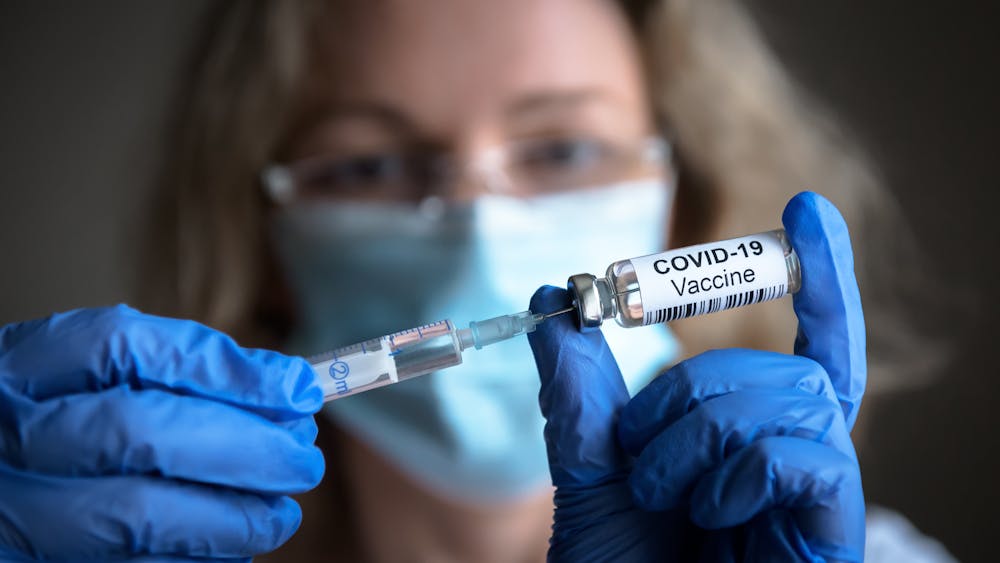 Science moves fast. The rapid development of several COVID vaccines is only one example.
Shutterstock
Science moves fast. The rapid development of several COVID vaccines is only one example.
Shutterstock
Those who work at the cutting edge will necessarily learn of new advances via preprints and incorporate that knowledge into their own research strategies.
To have no mechanism to cite the most up-to-date available knowledge presents an ethical dilemma: how to properly credit the work of others, which either hasn’t yet been peer-reviewed or was never intended for peer review.
Read more: Preprints: how draft academic papers have become essential in the fight against COVID
This is an unworkable predicament for scientists, for whom transparency and academic integrity are concepts held dear. An administrative ban on preprints flies in the face of these core, long-established, principles and practices.
Outcry from the research community
The Australian research community has united to express concern about the ARC’s rule. The Australian Institute of Physics, the Royal Australian Chemical Institute, the Australian Mathematical Society, and Astronomical Society of Australia have coordinated an open letter, signed by many leading scientists, urging the ARC to rescind the preprint ban as a matter of urgency.
Researchers strongly desire to work with the ARC to develop clear guidelines that recognise the importance of preprints in cutting-edge science. For its part, the ARC has said it is reviewing its upcoming policy position. But the Council must also urgently reconsider the applications impacted in the current round, in the spirit of academic integrity and fairness.
Both authors of this article are former Future Fellowship holders.
Authors: Nicole Bell, Professor, Physics, The University of Melbourne


















