

Why hip fractures in the elderly are often a death sentence
- Written by: Sharon Brennan-Olsen, Senior Research Fellow, NHMRC Career Development Fellow, University of Melbourne
The news an elderly relative has broken a hip tends to sound alarm bells, perhaps more than breaking another bone would. That’s because a hip fracture dramatically increases an older person’s risk of death.
One in three adults aged 50 and over dies within 12 months of suffering a hip fracture. Older adults have a five-to-eight times higher risk of dying within the first three months of a hip fracture compared to those without a hip fracture. This increased risk of death remains for almost ten years.
Beyond suffering pain, a hip fracture results in a loss of physical function, decreased social engagement, increased dependence, and worse quality of life. Many people who have a hip fracture need to change their living conditions, such as relocating from their home into a residential aged care facility.
Ultimately, the often rapid regression of an older person’s health following a hip fracture means outcomes are poor.
Risk factors for hip fractures
Age is a key risk factor, with hip fractures more likely to occur in those aged 65 or older. They’re primarily a result of a fall, or when the hip collides with a solid object such as a kitchen bench. However, they can also occur when there has been little or no trauma, such as standing up.
Cognitive impairment such as dementia is a common factor that increases the risk of falling. Frailty, poor vision, the use of a combination of medications, and trip hazards in the home also increase the likelihood of falls. Osteoporosis, a disease characterised by low bone mass and degradation of bone tissue, is another significant risk factor for hip fractures.
Osteoporosis and osteopenia (where bone mass is lower than normal, but not yet osteoporotic) are reported to affect more than one million Australians aged 65 and older. Worldwide, one in three women and one in five men experience a fracture caused by such bone fragility, with a fracture occurring every three seconds. Compared to a fracture of any other bone, a hip fracture results in the most serious of all consequences.
Read more: Why older people get osteoporosis and have falls
While the reasons remain unclear, hip fractures also disproportionately affect those at the disadvantaged end of the social scale.
Previous research has reported around 30% of people with hip fractures have had a prior fracture; this is known as the “fracture cascade”. The increased risk of subsequent fracture may persist for ten years, which highlights the importance of treating the initial fracture promptly and effectively.
Increased risk of death
In Australia, standard clinical care following a hip fracture begins with timely assessment, including X-rays, and pain and cognitive assessments. Australian data indicate more than three-quarters of people who sustain a hip fracture undergo surgery, the most common procedure being a joint replacement. Surgical intervention will generally occur within 48 hours.
But some patients may prefer not to undergo surgery. Or, their medical team may determine the risks are too great to expose the person to surgery.
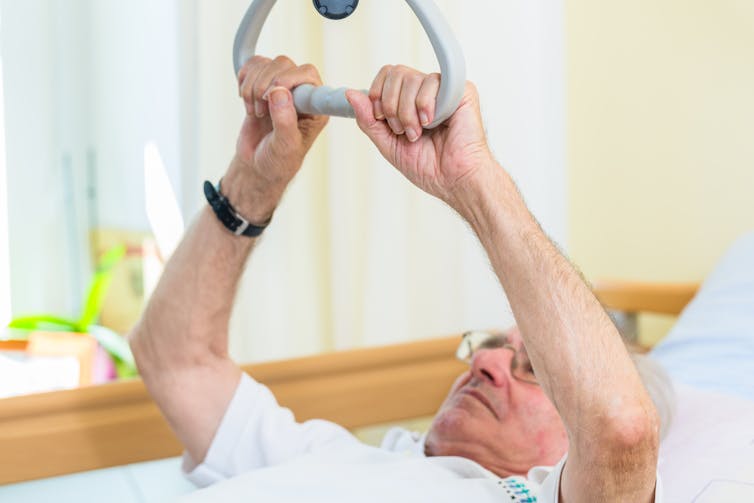 Immobility after a hip fracture can lead to poor patient outcomes.
From shutterstock.com
Immobility after a hip fracture can lead to poor patient outcomes.
From shutterstock.com
Combined with the trauma of a fracture and surgery, an existing health condition may significantly increase the risk of death. Death after a hip fracture may also be related to additional complications of the fracture, such as infections, internal bleeding, stroke or heart failure.
One study showed heart disease, stroke and pneumonia resulted in a long-term doubling of risk of death after hip fracture, and this risk remained high for up to ten years in women and 20 in men.
Studies suggest issues related to the hospitalisation, surgery, or immobility (which could put patients at risk of pneumonia) after a fracture lead to other complications that ultimately result in earlier death.
Read more: Hip fractures and depression quicken frailty in the elderly
How can patient outcomes be improved?
Together with controlling immediate post-surgery pain and symptoms, patients should receive therapeutic rehabilitation and functional training for the best chance of regaining mobility.
Taking individual capabilities, physical health and function into account, therapeutic rehabilitation may include improving the range of motion, pool therapy, and strengthening and progressive resistance exercises. Functional training will include gait training, and resistance and balance exercises.
Even if the patient has not had surgery, rehabilitation is necessary to begin moving as quickly as possible to avoid the serious complications of being immobilised.
 Rehabilitation is important after a hip fracture.
From shutterstock.com
Rehabilitation is important after a hip fracture.
From shutterstock.com
Some data suggest beginning physical activity as soon as possible post-surgery will reduce the likelihood of death. What we don’t yet know is the type, intensity and duration of physical activity that will give the best results.
Nutrition can also help recovery. Some data has shown poor nutrition at the time of the fracture reduced people’s ability to walk unaided six months after the fracture, compared to those with good nutrition.
There are mixed messages regarding whether nutritional supplements help improve function after a hip fracture. But the combination of protein intake and physical activity is known to increase muscle mass and function. Good muscle mass and function reduce frailty and improve balance, thereby reducing the risk of falls and subsequent fracture.
And there are additional benefits to be gained from being physically active, such as reducing depression – particularly when exercising with other people.
Authors: Sharon Brennan-Olsen, Senior Research Fellow, NHMRC Career Development Fellow, University of Melbourne
Read more http://theconversation.com/why-hip-fractures-in-the-elderly-are-often-a-death-sentence-95784


















