

Kate Sheppard and the making of a New Zealand feminist icon
- Written by Katie Pickles, Professor of History, University of Canterbury
In 1992 four New Zealand icons (and the queen) appeared on new banknotes. Part of creating national identity, these notable citizens were chosen to represent the pinnacles of achievement.
Āpirana Ngata, Edmund Hillary, Ernest Rutherford and Kate Sheppard — all in circulation so their acts and values can be admired, celebrated and emulated.
Collectively, the banknote icons signalled a bicultural nation that celebrates Māori knowledge and success, a place where women are equal and where it is possible to lead the world, including in science and exploration.
But while positioned on individual pedestals, these people were also part of citizenship-building that relied on team efforts.
Ngata was one of many talented members of the Young Māori Party. Hillary didn’t climb Everest alone. And Rutherford’s scientific breakthroughs resulted from collaborative work that stood “on the shoulders of giants”.
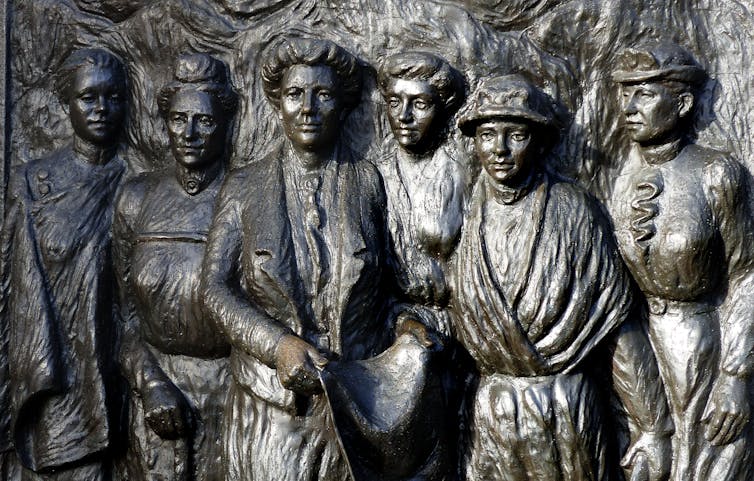 A detail from Margriet Windhausen’s Kate Sheppard National Memorial, unveiled in Christchurch in 1993 by New Zealand’s first female governor-general, Dame Catherine Tizard.
CC BY-SA
A detail from Margriet Windhausen’s Kate Sheppard National Memorial, unveiled in Christchurch in 1993 by New Zealand’s first female governor-general, Dame Catherine Tizard.
CC BY-SA
Cast in bronze
So what of Kate Sheppard’s position? A year after she graced the $10 note, she was put on another pedestal, literally. Unveiled in 1993, the national memorial provides a useful interpretation of the suffrage leader’s place in the collaborative women’s movement of the late 19th century.
The memorial’s Christchurch location, Sheppard’s name in its title and her central position cast in bronze all recognise her leadership. But the monument also recognises how, after the victory, she brought together the networks that had formed during the suffrage campaign.
Sheppard became the first president of the National Council of Women (NCW) in 1896, but flanking her in bronze are others central to the women’s movement.
Meri Te Tai Mangakāhia of Taitokerau requested the vote for women from the Kotahitanga parliament. Amey Daldy was a leader of Auckland’s Women’s Christian Temperance Union (WCTU) and Franchise League. Ada Wells of Christchurch worked for equal educational opportunities for girls and women. Harriet Morison of Dunedin was an advocate for working-class women and active in the Tailoresses’ Union. And Helen Nicol led the important women’s franchise campaign in Dunedin.
The monument also recognises the complex layers and themes of women’s suffrage, including the place of men such as MP Sir John Hall who played a vital part in the suffrage victory. Seven other prominent suffragists are also named. Smaller panels depict generic women going about their daily lives, all part of the wider movement.
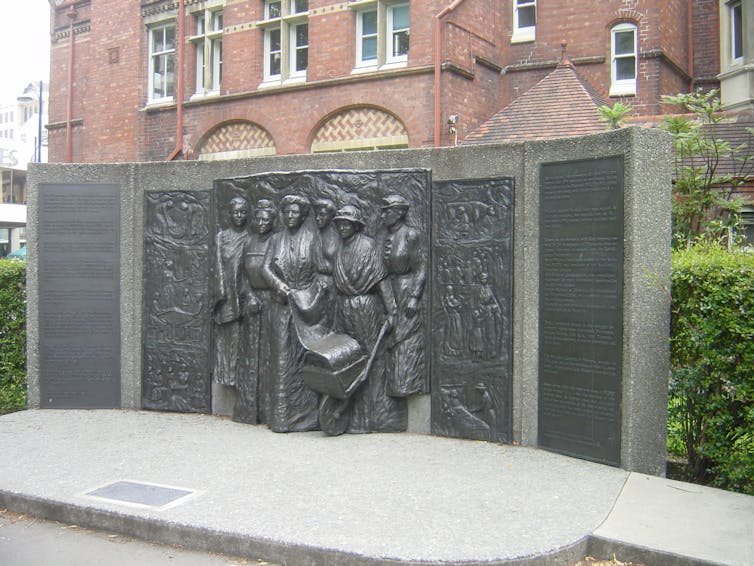 The full Kate Sheppard memorial in Christchurch: layers of context and meaning.
CC BY-SA
The full Kate Sheppard memorial in Christchurch: layers of context and meaning.
CC BY-SA
An archetypal heroine?
So what makes Sheppard so iconic? As well as her role in a world-first episode in New Zealand history, I would argue Sheppard embodies many of the characteristics common to modern heroines globally.
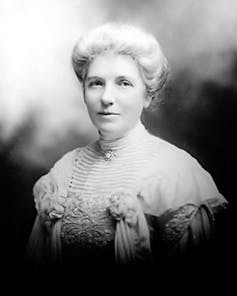 She is emblematic of a mother figure, specifically as a maternal feminist concerned with home, purity and well-being. Metaphorically, her work involves giving birth to the nation.
Accompanied by an image of the symbolic white camellia flower presented to pro-suffrage MPs, Sheppard’s image on the banknote is part of her invention as a feminine, stylishly dressed, commanding figure.
But there are other dynamics at work, too. Sheppard is sometimes framed as a reformer, called to work for a more peaceful and egalitarian society. But the 2015
punk-rock musical That Bloody Woman portrays her as a rebel warrior queen, fighting with bravery and determination.
Read more:
Did a tragic family secret influence Kate Sheppard's mission to give New Zealand women the vote?
Intrigue in her private life also adds to Sheppard’s appeal. Was her marriage to Walter Sheppard unhappy? They lived apart from 1905 until he died in 1915. Author Rachel McAlpine wrote a fictional account involving an extramarital affair and a love child.
And what of the rumours surrounding Sheppard’s friendship with William Lovell-Smith, who she married towards the end of her life after the death of his wife Jenny? Her private life hints at mystery and suggests a woman advancing new ways of co-habiting.
There is also tragedy. Sheppard lost her only child, Douglas, in 1910, and outlived her nearest and dearest friends and relations, including her only grandchild.
Sheppard’s shape-shifting presence leaves room for us to create our own versions to augment all the writing she left revealing her beliefs and ideas. The Kate Sheppard Women’s Bookshop aptly memorialises her, and her leadership is honoured through scholarships and awards.
All this has helped keep her memory alive, especially with the feminists who have always claimed her as a heroine.
She is emblematic of a mother figure, specifically as a maternal feminist concerned with home, purity and well-being. Metaphorically, her work involves giving birth to the nation.
Accompanied by an image of the symbolic white camellia flower presented to pro-suffrage MPs, Sheppard’s image on the banknote is part of her invention as a feminine, stylishly dressed, commanding figure.
But there are other dynamics at work, too. Sheppard is sometimes framed as a reformer, called to work for a more peaceful and egalitarian society. But the 2015
punk-rock musical That Bloody Woman portrays her as a rebel warrior queen, fighting with bravery and determination.
Read more:
Did a tragic family secret influence Kate Sheppard's mission to give New Zealand women the vote?
Intrigue in her private life also adds to Sheppard’s appeal. Was her marriage to Walter Sheppard unhappy? They lived apart from 1905 until he died in 1915. Author Rachel McAlpine wrote a fictional account involving an extramarital affair and a love child.
And what of the rumours surrounding Sheppard’s friendship with William Lovell-Smith, who she married towards the end of her life after the death of his wife Jenny? Her private life hints at mystery and suggests a woman advancing new ways of co-habiting.
There is also tragedy. Sheppard lost her only child, Douglas, in 1910, and outlived her nearest and dearest friends and relations, including her only grandchild.
Sheppard’s shape-shifting presence leaves room for us to create our own versions to augment all the writing she left revealing her beliefs and ideas. The Kate Sheppard Women’s Bookshop aptly memorialises her, and her leadership is honoured through scholarships and awards.
All this has helped keep her memory alive, especially with the feminists who have always claimed her as a heroine.
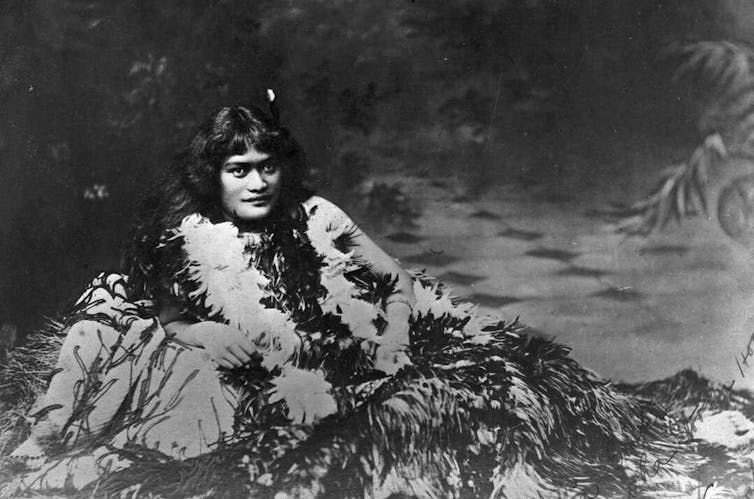 Princess Te Kirihaehae Te Puea Herangi as a girl.
Ref: 1/2-005159-G. Alexander Turnbull Library, CC BY-NC
Who else but Sheppard?
Sheppard is on the money, then, but who else might represent the heroic archetype?
Waikato woman of mana and Kīngitanga leader Te Puea Hērangi is surely one, described by historian J.G.A. Pocock as possibly the most influential woman in New Zealand’s political history.
Te Puea was also a mother figure. A literal healer, she nursed her people back to health — especially after the smallpox epidemic of 1913 and the devastating 1918 influenza epidemic that killed a quarter of the population at Mangatāwhiri, leaving many orphans to be cared for.
Her motto is said to have been “work, eat, pray, work again”. Te Puea was called to help her people and was dedicated to leading their resurgence. In particular, her efforts secured the Kīngitanga movement. Part of her legacy as the most active leader of her generation was the building of Tūrangawaewae marae at Ngāruawāhia.
Like Sheppard, Te Puea’s health and welfare work included campaigns against alcohol and smoking. In the face of Pākehā resistance she built an impressive health facility at Tūrangawaewae. In 1951 she became the first patron of the Māori Women’s Welfare League.
Read more:
NZ was first to grant women the vote in 1893, but then took 26 years to let them stand for parliament
Her activism included seeking compensation for land confiscation. An early peace warrior, she led a non-violent campaign against conscription during the first world war. Like Sheppard, she was part of an international network and well-connected around the Pacific.
Also like Sheppard, Te Puea was strategic and collaborated with many men. She launched Māui Pōmare’s political career and later collaborated with Āpirana Ngata. Well known in the Pākehā world as Princess Te Puea, in 1937 she was made a Commander of the Order of the British Empire.
In many ways, of course, Christchurch and Ngāruawāhia were worlds apart. While both women challenged the state, Sheppard represented a mainstream Pākehā establishment, whereas Te Puea pursued mana motuhake for her people. Yet, placed side by side and viewed through an early 21st-century lens, both are important heroines in history.
Both stand for citizens working together for the common good. Kate Sheppard might be on the money to represent women’s rights as a fundamental part of Aotearoa New Zealand. But, as her memorial suggests, it’s important we don’t see her as the only woman worthy of being on a pedestal.
Princess Te Kirihaehae Te Puea Herangi as a girl.
Ref: 1/2-005159-G. Alexander Turnbull Library, CC BY-NC
Who else but Sheppard?
Sheppard is on the money, then, but who else might represent the heroic archetype?
Waikato woman of mana and Kīngitanga leader Te Puea Hērangi is surely one, described by historian J.G.A. Pocock as possibly the most influential woman in New Zealand’s political history.
Te Puea was also a mother figure. A literal healer, she nursed her people back to health — especially after the smallpox epidemic of 1913 and the devastating 1918 influenza epidemic that killed a quarter of the population at Mangatāwhiri, leaving many orphans to be cared for.
Her motto is said to have been “work, eat, pray, work again”. Te Puea was called to help her people and was dedicated to leading their resurgence. In particular, her efforts secured the Kīngitanga movement. Part of her legacy as the most active leader of her generation was the building of Tūrangawaewae marae at Ngāruawāhia.
Like Sheppard, Te Puea’s health and welfare work included campaigns against alcohol and smoking. In the face of Pākehā resistance she built an impressive health facility at Tūrangawaewae. In 1951 she became the first patron of the Māori Women’s Welfare League.
Read more:
NZ was first to grant women the vote in 1893, but then took 26 years to let them stand for parliament
Her activism included seeking compensation for land confiscation. An early peace warrior, she led a non-violent campaign against conscription during the first world war. Like Sheppard, she was part of an international network and well-connected around the Pacific.
Also like Sheppard, Te Puea was strategic and collaborated with many men. She launched Māui Pōmare’s political career and later collaborated with Āpirana Ngata. Well known in the Pākehā world as Princess Te Puea, in 1937 she was made a Commander of the Order of the British Empire.
In many ways, of course, Christchurch and Ngāruawāhia were worlds apart. While both women challenged the state, Sheppard represented a mainstream Pākehā establishment, whereas Te Puea pursued mana motuhake for her people. Yet, placed side by side and viewed through an early 21st-century lens, both are important heroines in history.
Both stand for citizens working together for the common good. Kate Sheppard might be on the money to represent women’s rights as a fundamental part of Aotearoa New Zealand. But, as her memorial suggests, it’s important we don’t see her as the only woman worthy of being on a pedestal.
Authors: Katie Pickles, Professor of History, University of Canterbury

















