

why do sloths go slow?
- Written by Shelby A. Ryan, PhD Candidate | School of Environmental and Life Sciences, University of Newcastle
Why do sloths go slow? Nina, Sydney, aged 5

You’re right, sloths do move very slowly!
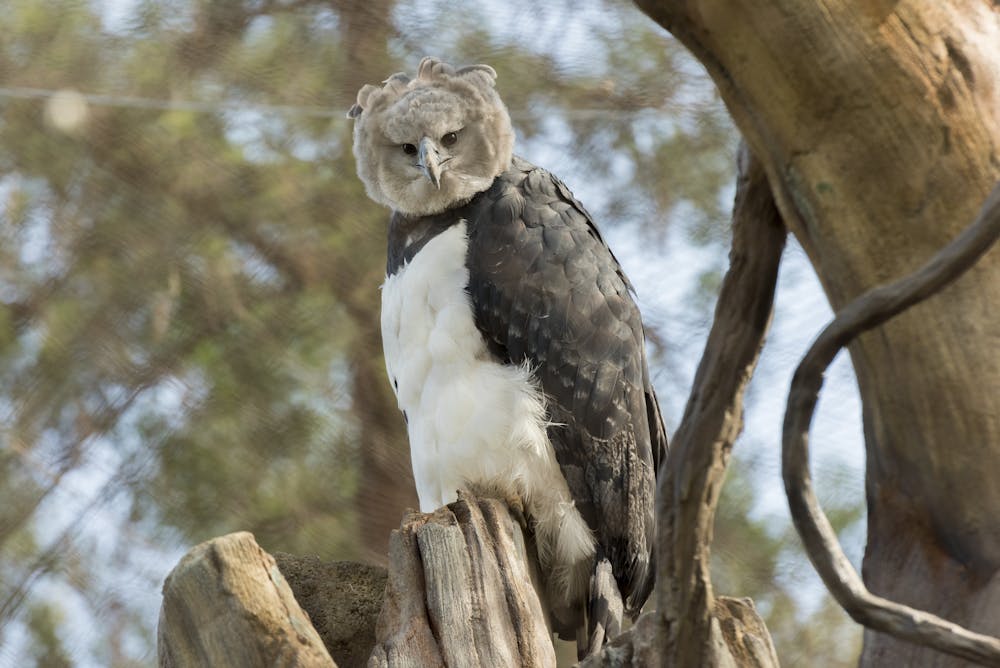
Sloths live in tropical forests in South and Central America, and they actually move so slowly that algae grows on their fur. This can give sloths a green colour that helps them hide in the forest from predators like nocturnal cats and harpy eagles.
This is very lucky, because some sloths often move less than 40 meters a day. They are much slower on the ground than in the trees, some travelling just four meters every minute on the ground — far too slow to outrun a jaguar!
The reason sloths go slow has a lot to do with what they eat. Let’s look at why.
Counting sloth toes
Sloths might all look the same to us, but there are actually two main types: sloths with two toes, and sloths with three toes.
Two-toed sloths are “omnivores”, which means they eat both plants and animals.
Three-toed sloths are “folivores”, which means they can only eat leaves and flower buds. Unlike most other plant-eating animals, they stay away from stems or roots.
This type of diet is extremely rare — only ten other types of animals that live in trees are folivores, and Australia’s cuddly koala is one of them.
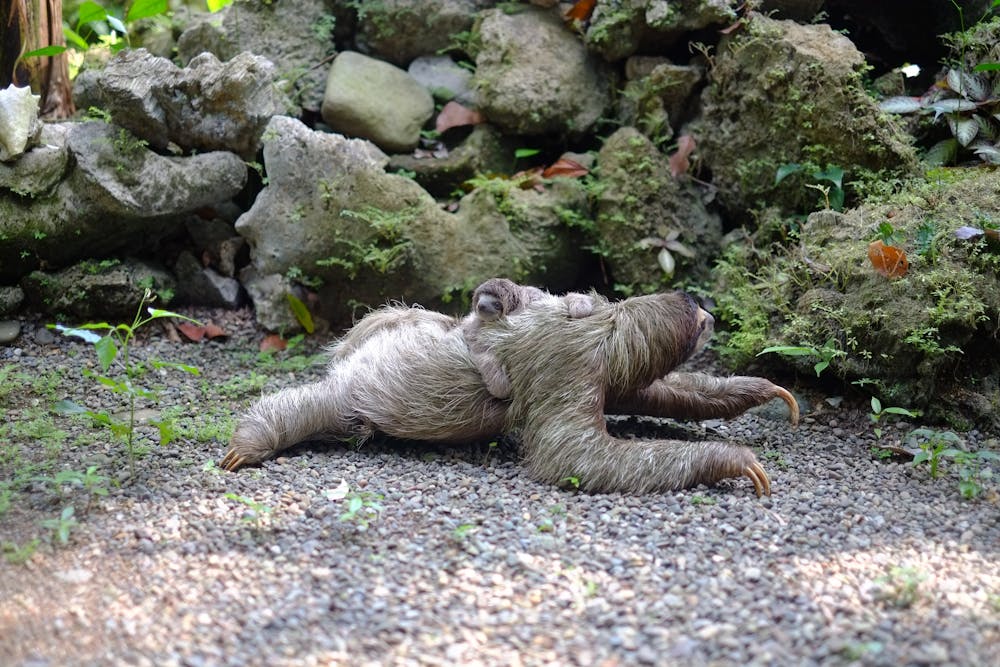 Sloths move much more slowly on the ground than in the trees.
Roger Burkhard/Unsplash
Sloths move much more slowly on the ground than in the trees.
Roger Burkhard/Unsplash
Koalas and sloths have a lot in common
Koalas, like sloths, have claws that are good for climbing, are often more active at night and only munch on leaves.
There is a very good reason there are only very, very few folivores like the three-toed sloth and koala in the world.
Leaves are very low in nutrients, and contain very little energy. This means the koala and sloth have discovered a way to survive on very little energy at all.
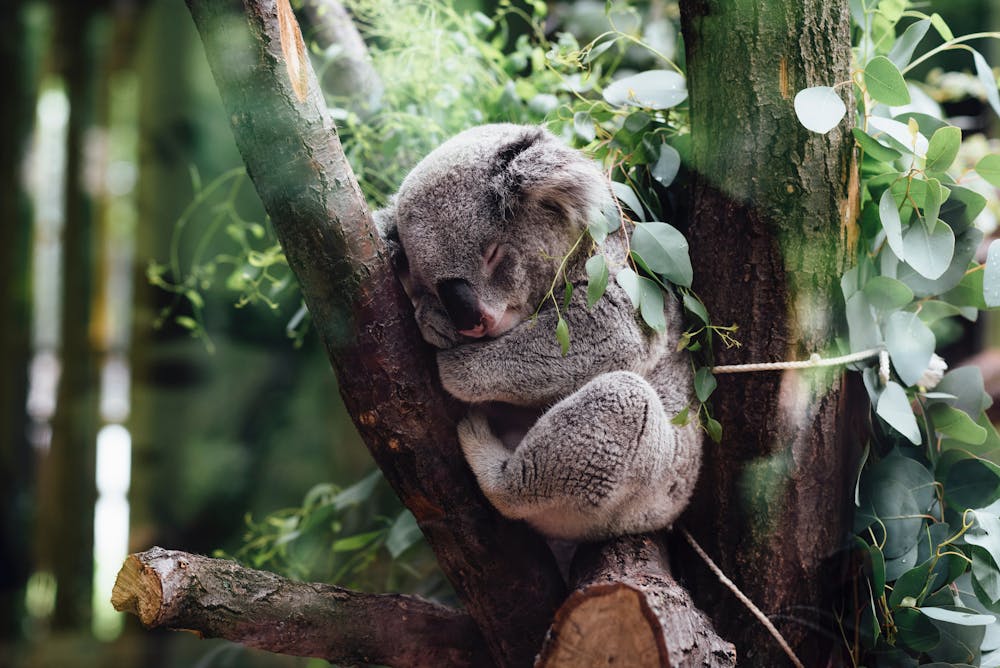 Koalas can sleep up to 20 hours per day.
Jordan Whitt/Unsplash
Koalas can sleep up to 20 hours per day.
Jordan Whitt/Unsplash
Imagine how slow you’d move if you were only able to eat leaves instead of all your high energy fruit and vegetables!
One of the main ways sloths and koalas keep their energy low is by resting lots, and not moving very often. If you have ever seen a koala, you might have noticed they are often resting and sleeping — some say up to 20 hours a day.
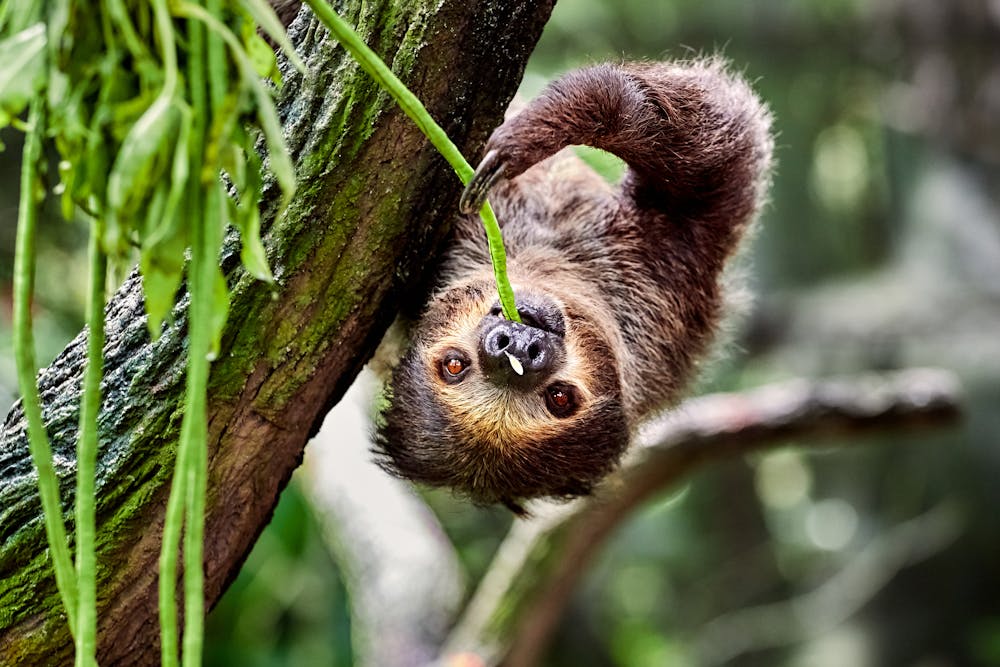 Three-toed sloths eat only leaves and flower buds’.
Shutterstock
Three-toed sloths eat only leaves and flower buds’.
Shutterstock
Compared to sloths, koalas are much more active but often only with a short burst in energy. Koalas move about 190 metres every day, but some have been recorded moving as much as 2,500 meters in one day.
In fact, the three-toed sloth uses the least amount of energy of any animal that doesn’t hibernate. But when sloths need to travel longer distances, they can use their long legs to swim, which they are much faster at.
Sloths are good swimmers, and sometimes swim to look for a mate.Koalas and sloths are losing their homes
Unfortunately, when trees in forests are chopped down, sloths and koalas must travel further away along the ground to find food and mates. This exposes these rare animals to dangers, like cats and jaguars, or busy roads where they could get hurt.
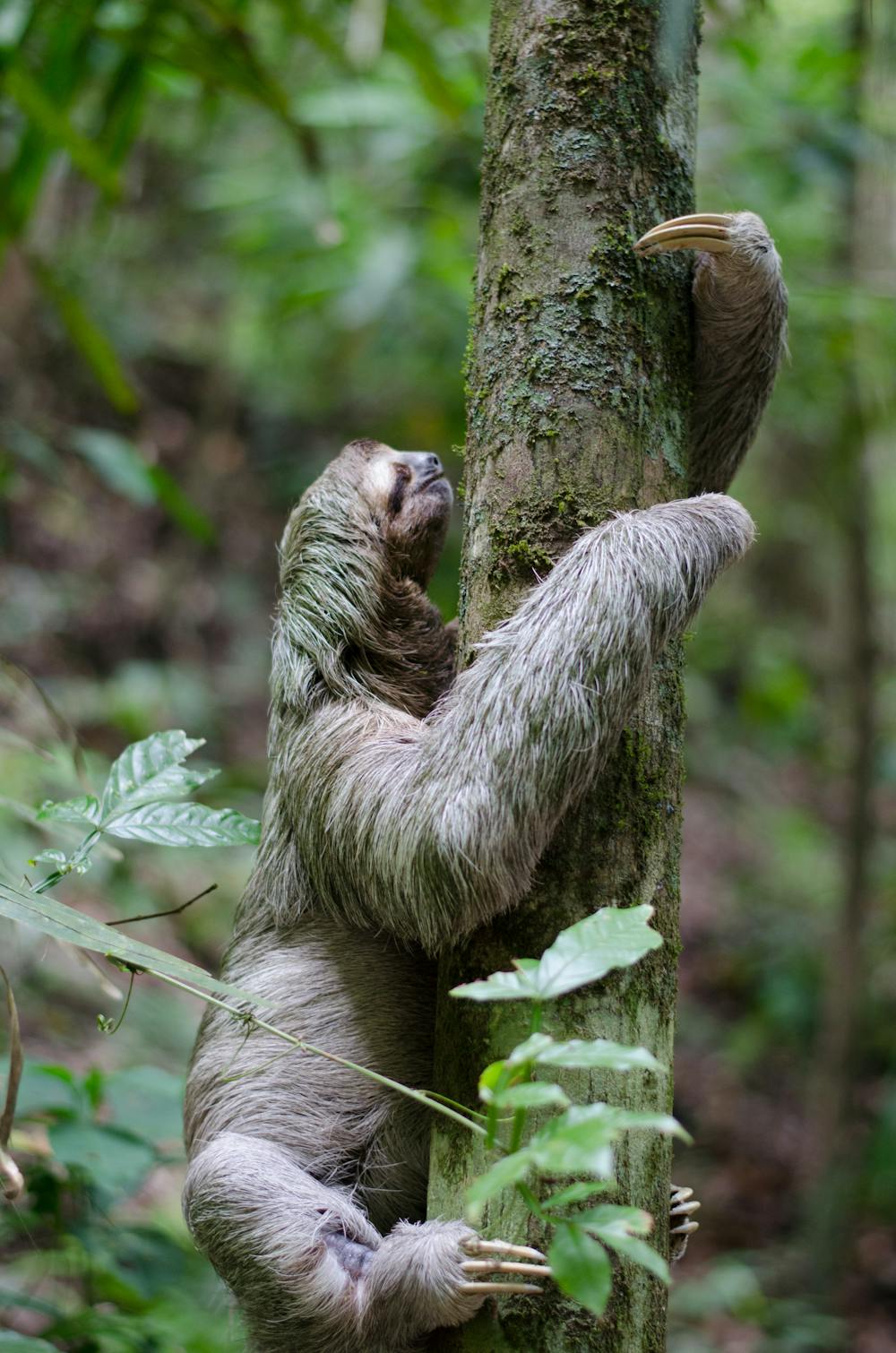 Sloths are under threat when their trees get chopped down.
Sebastian Molinares/Unsplash
Sloths are under threat when their trees get chopped down.
Sebastian Molinares/Unsplash
Losing their tree homes has led to a big drop in the number of sloths left in the world, particularly the pygmy three-toed sloth which is “critically endangered”. This means we don’t have long left to save it from going extinct.
Koalas are in similar danger. Because so many trees are getting chopped down in Australia, scientists think there might be no koalas left in the wild in New South Wales by the year 2050.
To look after sloths and koalas, scientists and the community need to work together to protect these incredible animals and their homes.
Authors: Shelby A. Ryan, PhD Candidate | School of Environmental and Life Sciences, University of Newcastle
Read more https://theconversation.com/curious-kids-why-do-sloths-go-slow-163573

















