

Better building standards are good for the climate, your health, and your wallet. Here's what the National Construction Code could do better
- Written by: Trivess Moore, Senior Lecturer, School of Property, Construction and Project Management, RMIT University
The recent IPCC report highlighted we must urgently transition to a low carbon future. One low hanging fruit is to improve the sustainability of new and existing housing.
Minimum performance and quality requirements for new housing in Australia are set via the National Construction Code. The last significant change was in 2010 with the introduction of the six-star requirements. These requirements are at least 40% less stringent than international best practice.
A suite of proposed changes to energy efficiency section of the National Construction Code are a good step forward. However, a lot more can be done.
And improving building quality requirements isn’t just good for the climate — it also delivers enormous health benefits, slashes energy bills and makes our homes more comfortable.
Read more: Low-energy homes don't just save money, they improve lives
Change is underway
Proposed energy efficiency changes for the National Construction Code 2022 include:
• an increase in the minimum thermal performance of homes from six stars to seven stars
• whole-of-home requirements for performance of heating, cooling, hot water, lighting and pool heating equipment
• new provisions designed to allow easy addition of on-site solar photovoltaic panels and electric vehicle charging equipment
• additional ventilation and wall vapour permeability requirements.
The Regulatory Impact Statement — a document aimed at helping government officials understand the cost-benefit impacts of a proposed regulatory change — has also been released.
Overall, it finds the costs for proposed more stringent requirements will outweigh the benefits for society.
In better news, it finds that for the majority of households, any increase in mortgage repayments from the additional costs of higher standards will be offset by a reduction in energy costs. In other words, you save so much on energy costs over time that it doesn’t matter you have to borrow more to pay for these building features.
There is critique of the Regulatory Impact Statement from stakeholders such as the Victorian government and the Green Building Council of Australia. Critics have pointed to the limited consideration of health and well-being, the impact to the energy network, and the climate emergency.
There are also issues with key economic assumptions which do not reflect environmental impacts of decisions and concerns delivery costs to households have been overestimated, potentially encouraging a “do nothing” policy position.
Public consultation is open until October 17.
What do the changes mean?
The proposed changes are important steps towards reducing carbon emissions. Currently less than 5% of new housing in Australia is built to achieve seven or more stars. These changes will affect thousands of new dwellings every year.
The seven-star standard will reduce heating and cooling energy for new housing by about 24%, slashing energy bills. The changes future-proof housing by reducing costs to add renewables or electric car charging once the house is built.
And with issues of mould and condensation in Australian housing, changes will make our housing healthier.
Historically, higher standards have been met by boosting specifications like insulation and double glazing. These new standards will shift attention to cost-effective strategies like orientation and site-responsive design, as it becomes harder to achieve higher stars through specifications alone.
Research from Sustainability Victoria’s Zero Net Carbon Homes program show homes can increase performance by one star simply changing from their worst to best orientation.
There’s room for improvement
These proposed changes are a good step forward. However, more can be done.
A decade ago research and case studies showed that seven star housing was achievable for little additional costs.
YourHome and developments like The Cape make seven or more star house designs freely available, showing we don’t have to reinvent the wheel.
The recently announced Green Star Homes Standard will also help to drive innovation beyond minimum performance requirements.
Our energy regulations are still measured per square metre (rather than per dwelling/person) and are predominantly concerned with operational energy demand.
To further reduce carbon emissions, we need to acknowledge the influence of house size and materials usage on total energy consumption and factor in the carbon footprint of building materials.
Additionally, the code does not use future climate data when demonstrating compliance. This means that our housing may not be fit for purpose in our future climate.
We will need more focus on summer performance. This should include performance in late summer and autumn, when the sun is lower in the sky, but extreme heat will be more likely. This will require solutions like adjustable shading.
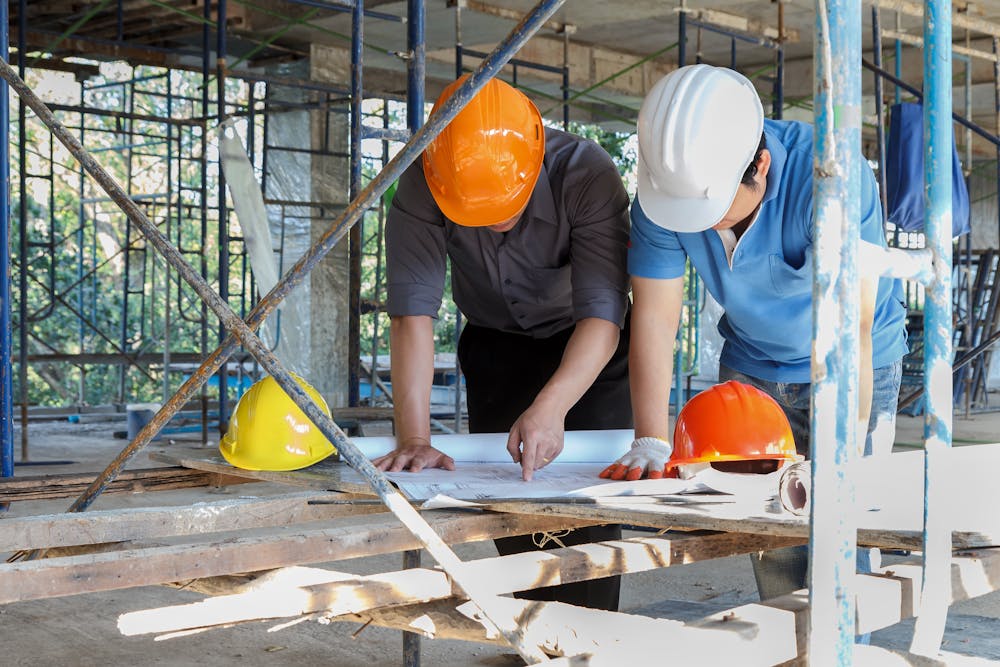 There is little accountability across the construction industry to ensure builders comply with the design.
Shutterstock
There is little accountability across the construction industry to ensure builders comply with the design.
Shutterstock
As-built verification is a critical inclusion in new schemes such as Green Star Homes; we need similar mechanisms in our construction code to ensure as-built compliance. There is no point improving regulations on paper if we can’t deliver it in practice.
While the focus of these changes is on new housing, we must not forget the millions of existing homes which need to undergo deep retrofits to improve sustainability and performance. The new standards will need careful adaptation to suit alteration and addition projects.
Tools like the National Scorecard Initiative aim to help homeowners in existing dwellings improve performance but more could be done with regulations to ensure existing housing is part of the push towards a sustainable housing future.
Read more: Sustainable housing's expensive, right? Not when you look at the whole equation
Authors: Trivess Moore, Senior Lecturer, School of Property, Construction and Project Management, RMIT University


















