Health workers are among the COVID vaccine hesitant. Here's how we can support them safely
- Written by: Holly Seale, Associate professor, UNSW
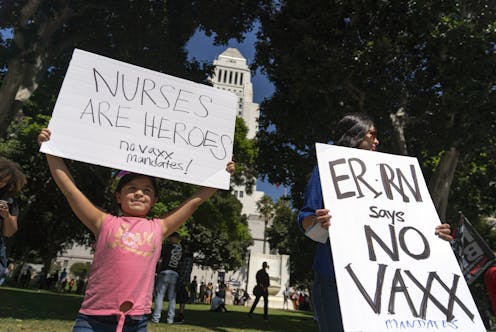
Given the caring nature of their profession, the general public might assume there isn’t any vaccine hesitancy among health workers. It can surprise (and anger) the community when health workers protest the introduction of COVID vaccine mandates.
In France, around 3,000 health workers have been suspended because they were not vaccinated. In Greece, health workers have protested against mandatory vaccination plans. Similar scenes have played out in Canada and New York State.
In Australia, health workers have reportedly joined protests in Melbourne and Perth. A small number of unvaccinated staff members are challenging vaccination mandates in the NSW Supreme Court. Beyond the hospital sector, there are reports of staff members leaving the aged care sector following the introduction of mandates.
Hesitancy among health workers broadly reflects concerns in the wider community. But the risks of being unvaccinated in health settings mean we should acknowledge these concerns and support informed decision-making.
Read more: 'Living with COVID' looks very different for front-line health workers, who are already exhausted
A range of concerns
Over 90% of health workers in NSW and Victoria have received a COVID vaccine. But there remains a small percentage of people who work at hospitals and other clinical settings who are vaccine hesitant or want to choose the vaccine they receive. NSW health figures suggest that currently about 7% (or 7,350 staff members) remain unvaccinated.
Internationally, prevalence of COVID vaccination hesitancy in health workers ranges from 4.3 to 72% (average 23%).

In the US, one in four hospital workers in direct contact with patients had not received a single dose of a COVID vaccine by the end of May.
A study conducted in the first few months of this year found while most health workers intended to accept a COVID vaccine, 22% were unsure or did not intend to vaccinate. These findings tallied with a study in Italy that found 33% of health workers were unsure or did not intend to vaccinate.
The top three reasons for health workers to be hesitant echo the same concerns expressed by some in the wider community: vaccine safety, efficacy and side effects.
Earlier surveys overseas showed less than a third of health workers felt they had enough information around COVID vaccines. And, just like the wider community, health workers are vulnerable to misinformation and sometimes have insufficient understanding about how vaccines are developed.
A group who identified themselves as health workers staged a peaceful protest in Melbourne.The risks
While hospital patients are more likely to be the source of hospital COVID outbreaks, unvaccinated health and aged care workers still pose a risk to patient and resident safety. Transmission of COVID to or between unvaccinated health workers poses a risk to the wider community including their families and friends.
Beyond the risk of transmission, there is also the impact vaccine-hesitant health workers have on wider vaccine confidence. Health workers are seen as credible sources of information and are trusted by the community.
There are videos on social media, YouTube and TikTok of individual health workers speaking about the COVID vaccines, often repeating misinformation regarding the safety or effectiveness of the vaccines or expressing uncertainty. The potential impact of these viral videos may be heightened compared to those featuring speakers who don’t work in health professions. University of Washington researcher Rachel Moran, who examines internet misinformation, says such health workers are
leveraging the credibility of medical professionals to create a false impression that there is considerable debate about COVID vaccines among doctors and nurses when, in reality, there is a consensus about their efficacy and safety.
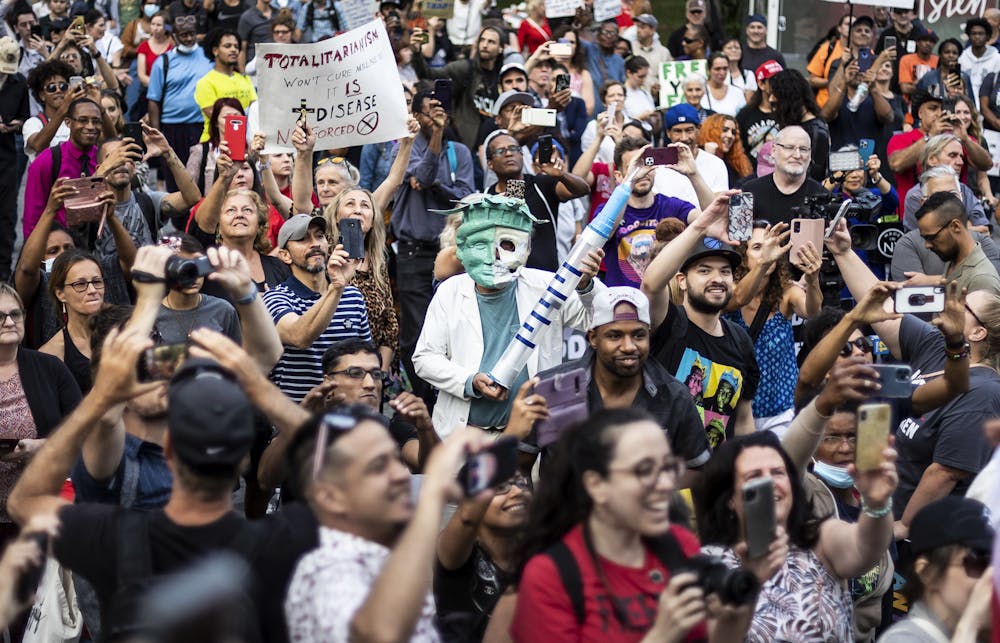 In New York, crowds rallied last week against city-wide COVID vaccine mandates for public school teachers and state-wide mandates for health-care workers.
EPA/JUSTIN LANE
In New York, crowds rallied last week against city-wide COVID vaccine mandates for public school teachers and state-wide mandates for health-care workers.
EPA/JUSTIN LANE
How can we all stay safe?
Moving forward, we must acknowledge three things when it comes to health workers and vaccine hesitancy:
1. Don’t judge
While there is a moral imperative and duty of care for health workers to receive the COVID vaccine, we should ensure unvaccinated staff members have the opportunity to discuss vaccines in a non-judgemental way.
As with the general public, we need to find out who health workers trust and connect them with trusted resources to alleviate their fears. This might be done via hospital websites, discussions with their primary health-care providers or evidence-based information.
2. Work out what works
Unlike the community setting, there has been a gap in funding to develop and test resources and interventions focused on supporting health and aged care worker vaccine uptake.
Understanding the specific strategies that work to support vaccine uptake, without having to move directly to mandates, is important from not only a patient safety perspective but an occupational health and safety lens.
These findings are relevant for COVID and other occupational vaccine programs.
3. Ensure supply and access
Prior to introducing a mandate, there needs to be adequate supply and equitable access to vaccines. We need to ensure people have the opportunity to review vaccine safety and effectiveness data and to get the vaccine of their free will.
Careful planning, consultation and communication with key groups can improve acceptability of mandates.
In the coming weeks, more health workers are likely to resign or be dismissed for failing to comply with the COVID mandates. There will be those in social media who will call out the situation as the “right move”. But some health workers will become privately or publicly vocal on the issue and will cast doubt on the vaccine. It is important we prepare for these situations, especially in regional areas where there may be fewer voices and greater trust in long-serving health workers.
Read more: The 9 psychological barriers that lead to COVID-19 vaccine hesitancy and refusal
Authors: Holly Seale, Associate professor, UNSW