

Google AI


Modern Australian

Tough carbon dioxide car emissions ceilings could get us well on the road to net-zero

  • Written by: Marion Terrill, Transport and Cities Program Director, Grattan Institute
Tough carbon dioxide car emissions ceilings could get us well on the road to net-zero

The federal government’s mantra of “technology, not taxes” has left it with few options to easily reduce carbon emissions.

In many sectors of the economy, it’s a recipe for disaster — a vague slogan that keeps us waiting.

But for all its flaws, relying on technology points us in the right direction in at least one field — reducing emissions from cars.

Light vehicles are responsible for 11% of Australia’s carbon emissions.

As it stands, Australia is way behind the pack. The lowest-emitting variants of the top-selling models in Australia are more emissions-intensive than the models available overseas.

The average US passenger light vehicle is more than 100kg heavier than the average Australian light vehicle and has 30kW more power. Yet on average US vehicles emit 5 grams less carbon dioxide per kilometre travelled.

Emissions ceilings are common worldwide

A new Grattan Institute report recommends Australia quickly move to catch up to mainstream international practice.

Eighty per cent of the world imposes a carbon dioxide emissions standard, or ceiling, on new light vehicles, applied across the offering of each manufacturer.

The US, the UK and Europe all have ceilings that tighten over time, bringing down average emissions. If manufacturers breach the ceiling, they face fines.

Read more: Top economists call for measures to speed the switch to electric cars

Australia has no such standard, although it regulates other pollutants including nitrogen oxides and particulate emissions, but to a weaker standard than much of the rest of the world because our petrol is of poorer quality.

Laboratory tests in 2015 found the average new vehicle sold in Australia emitted 184 grams of carbon dioxide per kilometre driven. More than five years on, little has changed – in 2020 the average new vehicle sold emitted 180 grams per kilometre driven.

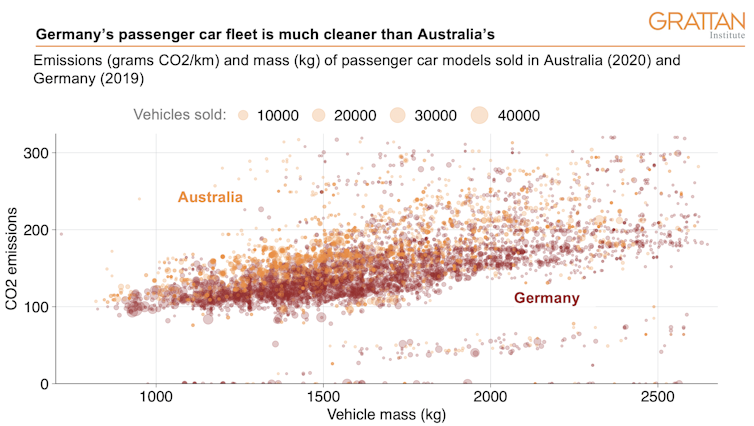
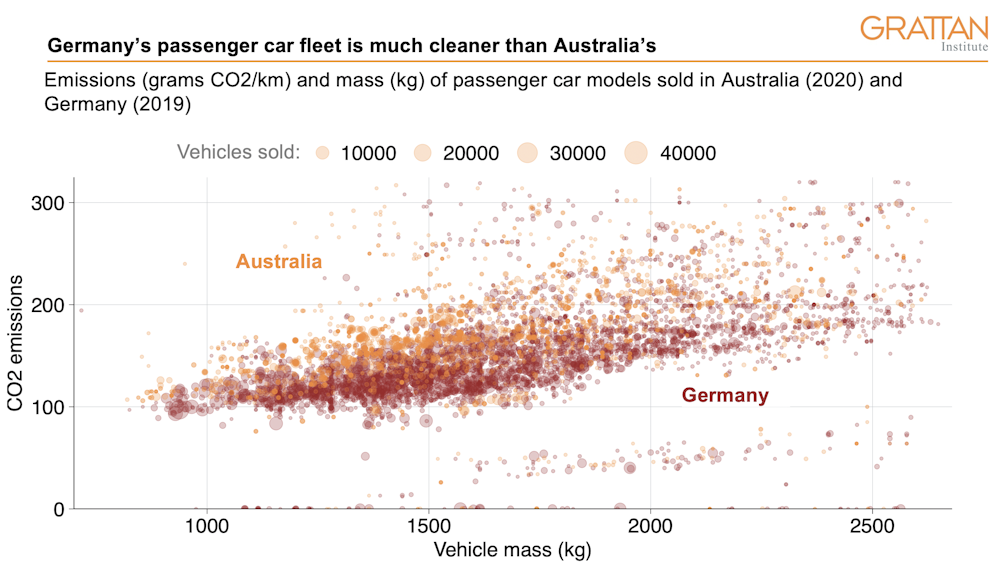
That’s much higher than in comparable countries. New passenger cars sold in Germany, for example, are similar to Australia’s in weight, yet emit significantly less carbon dioxide per kilometre.
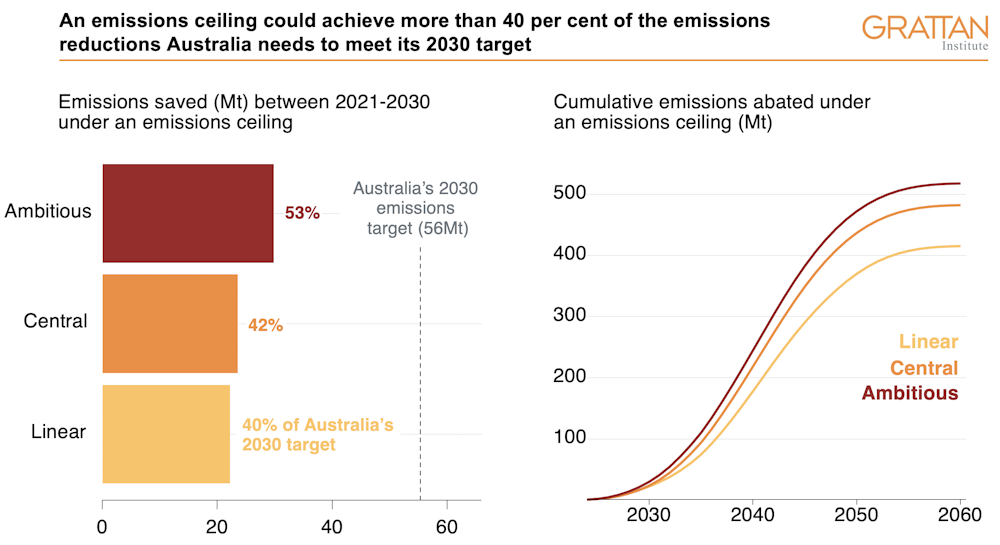
Plenty of excuses are offered for Australia’s poor performance when it comes to vehicle carbon dioxide emissions; among them the fact that we drive large cars and that the quality of our petrol is poor. But our bigger problem is the absence of a carbon dioxide emissions ceiling. We are not proposing a tax. A carbon dioxide emissions ceiling comes as close as possible to mandating better technology while sticking to the Government’s pledge of not telling people “what cars to drive”. A ceiling is not a tax The ceiling should come into force no later than 2024 at 143 grams of carbon per kilometre (g/km). It would tighten to 100g/km by 2027 and 25g/km by 2030. Carbon emissions from new vehicles under the ceiling would fall to zero by 2035. To ensure it works Australia should adopt the Worldwide Harmonised Light Vehicle Test Procedure and new vehicles sold should include on-board vehicle emissions monitors by 2024, with de-identified data released publicly. Read more: Going electric could be Australia’s next big light bulb moment The change could save almost 500 million tonnes of carbon dioxide by 2060. By 2030, the savings would make up at least 40% of what’s needed to reach Australia’s 26% cut in emissions target — which would be a good start to achieving net zero emissions by 2050. It would save drivers money The change would leave drivers better off financially. It would probably increase the price of new vehicles slightly, but make them cheaper to run. The average Australian driver would save almost A$1,000 within five years of buying a new car. It wouldn’t mean the end of the weekend. But it would change the balance of options available. There would be more low-emissions and zero-emissions vehicles, and a smaller offering of higher-emitting vehicles. In the leadup to 2035 as more people switched to electric vehicles, there would be space under the ceiling for manufacturers to sell higher-emitting varieties to those who need or prefer them. Read more: China is on course to build the best cars in the world In the UK, where there is a strong ceiling, consumers can choose from about 130 electric vehicle models across a range of prices. Here, there are just 31 models available, few affordable to everyday Australians. What we are proposing is a meaningful step towards net-zero at negligible cost to taxpayers. It would save drivers money, increase the range of cars on offer and cost the government little more than the cost of administering the scheme. Authors: Marion Terrill, Transport and Cities Program Director, Grattan Institute

Read more https://theconversation.com/tough-carbon-dioxide-car-emissions-ceilings-could-get-us-well-on-the-road-to-net-zero-170446

Common Skin Concerns and Treatment Options Available in Melbourne

Skin concerns can develop gradually or become noticeable following changes in age, lifestyle, sun exposure or hormonal factors. Pigmentation, rednes...

Why a Code-Compliant Home Can Still Feel Uncomfortable

When people build or renovate a home, they usually expect that meeting current building requirements will also produce a comfortable place to live. ...

Breach of Contract in Business: What Are Your Options?

Contracts are essential to business relationships. They establish expectations, allocate responsibilities and provide a framework for delivering goods...

How Pest Control Companies Can Rank for the Problems Customers Search First

Introduction SEO for Pest Control needs to start with the customer’s problem. Most people do not search for pest services in a neat or technical wa...

What Are the Benefits of Renovating an Older Home in Sydney?

Sydney has plenty of character homes, from Federation cottages to mid-century brick homes. Renovating rather than rebuilding can preserve what makes t...

Pool and Deck Design: How to Plan the Perfect Outdoor Living Space for Your Sydney Home

For many Australians, the backyard is where life happens. Summer barbecues, weekend swims and long evenings outdoors are all part of the lifestyle, ...

Is Solar Pool Heating Worth It? What Sydney Homeowners Should Know

There's nothing quite like a backyard pool on a hot Sydney day. But once autumn rolls in, many pools sit unused for months because the water is simp...

Planning a Luxury House Move: A Week-by-Week Timeline for Prestige Sydney Homes

Selling or buying a prestige home is a major milestone. Whether it's a waterfront residence in Birchgrove, a grand Federation home in Haberfield or ...

Downsizing or Upgrading Your Caravan? Here's How to Sell It Without the Hassle

Selling a caravan can feel like a major task, especially when you are unsure about its value, paperwork, or how to find a buyer. Whether you are dow...

The Best Overseas Adventure Holidays for Australians Who Love the Outdoors

Australia offers no shortage of incredible outdoor experiences, but sometimes the best way to satisfy your sense of adventure is to head overseas. A...

Cape Town Wine Shuttle: Winelands Tasting & Tours

Embark on an unforgettable journey through the picturesque Cape Winelands, where world-class wines and breathtaking scenery await. Our Cape Town Win...

Metal Fabrication: Choosing Metal Fabrication Melbourne Services for Custom Projects

What Modern Metal Fabrication Involves From individual components to complete structures, metal fabrication brings together processes such as desig...

Why Giant Rats Tail Grass Keeps Coming Back After Spraying

Giant Rats Tail Grass (GRT) is one of the most frustrating pasture weeds for farmers and lifestyle property owners. You spray an infested area, see th...

When Custom Cardboard Boxes Make Sense for Your Business

Custom cardboard boxes can be useful when a standard carton does not fit a product, packing method or presentation requirement particularly well. A ...

Full-Height vs. Pop-Top Caravan: Which Is Better for Family Travel across WA?

A pop-top caravan is an excellent choice for travellers who want the comfort of a caravan without committing to a larger, bulkier setup. With a lowe...

Bottle Label Printing: Key Factors for a Professional Finish

Why the Printing Method Matters When businesses need packaging or printed containers developed for a particular application, the right supplier can m...

Virtual Livestock Fencing and GPS Tracking: Improving Visibility Across Cattle Properties

What Virtual Livestock Fencing Means for Modern Cattle Management Managing cattle across extensive properties requires more than knowing where anim...

Sydney Pawnbrokers Explained: How Hocking Your Car Actually Works

Sometimes you need cash, and you need it soon. If you own a car, you may already have a way to get it. That's what people mean when they say they've...

















