

Modern Australian
Times Advertising

How can Australia get cracking on emissions? The know-how we need is in our universities

  • Written by Kim Rasmussen, Deputy Dean and Associate Dean, Research, Faculty of Engineering, University of Sydney
How can Australia get cracking on emissions? The know-how we need is in our universities

Australia has been slow to join the global shift towards decarbonisation and lower emissions. Now, ready or not, the world is on the verge of a climate action crescendo. Australia can choose what to do next: act meaningfully and with determination; dither and have its hand forced; or, at worst, face punishing measures such as tariffs.

Despite our lumbering start, we are in a fortunate position. We do not need to start from scratch to green our economy and participate wholly in the decarbonisation revolution. While Australia debates “where to from here” as world leaders come together for COP26 in Glasgow, university researchers have long been heads down developing the very research, talent and technology we’ll need for this transformation.

Read more: Scott Morrison is hiding behind future technologies, when we should just deploy what already exists

With the right mix of industry and government support, these university-developed resources will allow us to pivot to a decarbonised economy. Australia can emerge as a green export and research and development leader.

Across engineering and science, we’re witnessing a research and technology explosion. The once unimaginable is being made possible. We are seeing advances in many fields, including:

  • renewable and low-emission technologies

  • energy generation, utilisation and storage

  • electrification and network hybridisation

  • power fuels, including hydrogen.

With our abundant natural and mineral resources and agricultural industry, these are all areas in which Australia can and should lead to become a research and development exporter. Aside from helping to transition our economy and lower emissions, this would attract further overseas talent and investment.

Australia has an untapped opportunity to switch from being an exporter of carbon fuels to an exporter of green fuels. We can do this by converting solar and wind energy to stored energy like hydrogen. For domestic consumption, there is a wider range of energy-storage options including batteries and Snowy 2.0.


Infographic showing renewables-powered production of hydrogen as an export fuel
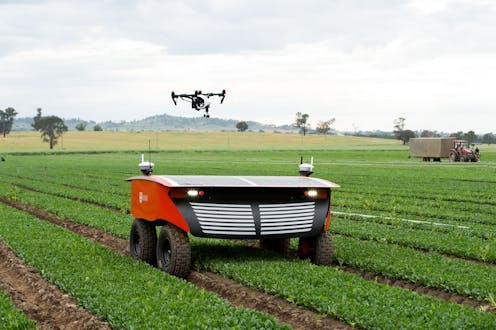
ARENA, CC BY Read more: Australia's clean hydrogen revolution is a path to prosperity – but it must be powered by renewable energy Federal support for developing a green fuel export industry is growing slowly. However, industry and financial consortia have been investing rapidly in green technologies and plants. Scale of challenge demands collaboration Tackling climate change requires a collective approach. That’s because it affects every sector and part of society. Universities were once considered somewhat siloed. Now they are working more closely with other institutions. Formerly disparate areas of expertise are being connected to develop research and technology to tackle and adapt to climate change. Examples of collaboration range from historians and engineers working together to better understand how climate change led to the demise of Angkor through to using data analytics to better understand the impacts of the resource sector on the environment. Increased collaboration between disciplines and institutes makes universities an attractive resource and “one-stop shop” for companies looking to decarbonise or expand their offerings to compete in the green economy. Read more: How universities and professions are preparing to meet the climate challenge Campuses too are being transformed into high-impact, industrial research hubs. They are gearing up for greater industry collaboration, testing and rapid prototyping. These campus facilities include state-of-the-art infrastructure, ranging from nano technology and foundries to advanced manufacturing and microanalysis. They are helping to develop scalable and translatable research for both large existing companies and start-ups. Research is already paying off Universities are also increasingly commercialising their research and technology. In the process, they are developing companies with the potential to rewrite Australia’s climate change fate. One such company is agri-robotics start-up Agerris. It’s commercialising technology developed over the past 15 years from the University of Sydney’s Australian Centre for Field Robotics, a source of several successful start-ups. Agerris’s robotics solutions to optimise farming have the potential to control emissions in agriculture and related areas including forestation and oceanography. Another example is zinc-bromide battery developer Gelion. This spin-off from the University of Sydney Nano Institute is disrupting the solar energy industry with its safe, cost-effective products. Researchers at work in Gelion's laboratory where a zinc-bromine battery is being developed. Gelion’s zinc-bromine battery is an example of how R&D can pave the way for manufacturing jobs to be created in the transition to a low-emissions economy. Gelion/University of Sydney Snowy Mountains Hydro, while one of the most ambitious feats of engineering ever achieved, should not remain our nation’s industrial magnum opus. It’s vital Australia embarks on an ambitious plan to lower emissions and decarbonise our economy. If we want the next big thing, we can bet universities are already developing the thinking and technology behind it. Read more: Climate change is the most important mission for universities of the 21st century All academics know that often the best students are the ones who work diligently and consistently over a long period. Others may wait until the last minute, with some bright, creative minds somehow always pulling through with distinction. We are now at the 11th hour. Let’s hope Australia is that precocious student who can pull it all off in the nick of time. Authors: Kim Rasmussen, Deputy Dean and Associate Dean, Research, Faculty of Engineering, University of Sydney

Read more https://theconversation.com/how-can-australia-get-cracking-on-emissions-the-know-how-we-need-is-in-our-universities-170374

7 Benefits of Professional Gutter Cleaning for Australian Homeowners

Gutters aren't exactly glamorous. They sit up there on the edge of your roof, doing their job quietly - until they stop working. Clogged, overflowing ...

Pipe Floats Strengthening Pipeline Performance In Demanding Environments

Pipelines often travel through environments that are anything but predictable, water currents shift, terrain changes, and materials keep moving unde...

Why Ceiling Fans Are Essential For Comfort, Efficiency, And Modern Living

Creating a comfortable indoor environment is not just about temperature; it is about how air moves, how a room feels, and how efficiently energy is ...

Why Duct Cleaning In Melbourne Is A Smart Investment For Healthier Living Spaces

Behind your walls, ceilings, and vents lies a network quietly working every day to keep your home comfortable. Yet over time, this system can become...

Disability Service Providers Supporting Inclusive And Independent Living

Finding the right support system can feel like assembling a puzzle where every piece must fit just right. For individuals and families navigating di...

A Beginner's Guide to Owning a Caravan in Australia

Owning a caravan opens up a style of travel that's hard to match for freedom and flexibility. However, for those just starting out, the process of c...

Preparing Your Air Conditioner for Summer: What Most Homeowners Overlook

As temperatures rise, many homeowners switch on their air conditioning for the first time in months — only to find it’s not performing the way i...

What Actually Adds Value to Properties in Newcastle

Newcastle has seen steady growth over the past few years, with more buyers looking beyond Sydney for lifestyle, space, and long-term value. As dema...

What is Design and Build in Construction?

Imagine you’re about to start a new construction project, maybe it’s a custom home or a commercial building. You’ve got the idea, the land, an...

Commercial roof leak detection: why early action protects your building

Water ingress is one of the most disruptive and costly issues facing commercial properties. For property managers and facilities teams, even a minor...

Custom Photo Frames: Turning Everyday Moments into Lasting Displays

Photos capture moments, but how you display them determines how they’re experienced every day. A meaningful photograph deserves more than a generi...

Managed IT Services: A Smarter, More Predictable Way to Run Your Business Technology

If you’ve ever had your systems go down in the middle of a busy day, you’ll know how quickly things can unravel. Phones stop ringing, emails sto...

Landscaping Geelong — Coastal Elegance Meets Practical Design

A Landscape Shaped by Location Geelong occupies a unique position within Victoria’s broader landscape. It carries the energy of a growing city, y...

Electric Adjustable Beds: A Simpler Way To Sleep Better

Sleep should feel natural. It should come easily, without discomfort, without constant repositioning, and without waking up feeling sore. But for ma...

Healthy Snacking Sorted: Premium Beef Jerky

In today's fast-paced world, finding a snack that's both satisfying and genuinely good for you can feel like a mission. Many readily available optio...

What to Know Before Getting Dental Implants: A Guide for First-Time Patients

Dental implants Perth patients often look for a long-term solution for missing teeth without the hassle of dentures or bridges. If you are thinking ...

Why Protective Packaging Matters More Than Ever In Modern Shipping

In today’s fast-paced world of logistics and eCommerce, ensuring that products reach customers safely is a top priority. This is where a bubble wrap...

Pest Control Albury: Protecting Your Property From Hidden Damage And Health Risks

Pests rarely announce their arrival. They creep into spaces quietly, turning small, unnoticed corners into breeding grounds for bigger problems. Tha...
















