

Google AI


Modern Australian

How can Australia get cracking on emissions? The know-how we need is in our universities

  • Written by: Kim Rasmussen, Deputy Dean and Associate Dean, Research, Faculty of Engineering, University of Sydney
How can Australia get cracking on emissions? The know-how we need is in our universities

Australia has been slow to join the global shift towards decarbonisation and lower emissions. Now, ready or not, the world is on the verge of a climate action crescendo. Australia can choose what to do next: act meaningfully and with determination; dither and have its hand forced; or, at worst, face punishing measures such as tariffs.

Despite our lumbering start, we are in a fortunate position. We do not need to start from scratch to green our economy and participate wholly in the decarbonisation revolution. While Australia debates “where to from here” as world leaders come together for COP26 in Glasgow, university researchers have long been heads down developing the very research, talent and technology we’ll need for this transformation.

Read more: Scott Morrison is hiding behind future technologies, when we should just deploy what already exists

With the right mix of industry and government support, these university-developed resources will allow us to pivot to a decarbonised economy. Australia can emerge as a green export and research and development leader.

Across engineering and science, we’re witnessing a research and technology explosion. The once unimaginable is being made possible. We are seeing advances in many fields, including:

  • renewable and low-emission technologies

  • energy generation, utilisation and storage

  • electrification and network hybridisation

  • power fuels, including hydrogen.

With our abundant natural and mineral resources and agricultural industry, these are all areas in which Australia can and should lead to become a research and development exporter. Aside from helping to transition our economy and lower emissions, this would attract further overseas talent and investment.

Australia has an untapped opportunity to switch from being an exporter of carbon fuels to an exporter of green fuels. We can do this by converting solar and wind energy to stored energy like hydrogen. For domestic consumption, there is a wider range of energy-storage options including batteries and Snowy 2.0.

Infographic showing renewables-powered production of hydrogen as an export fuel
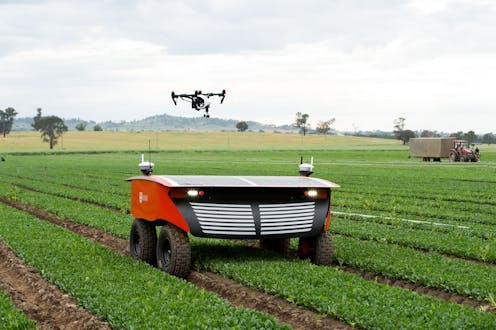
ARENA, CC BY Read more: Australia's clean hydrogen revolution is a path to prosperity – but it must be powered by renewable energy Federal support for developing a green fuel export industry is growing slowly. However, industry and financial consortia have been investing rapidly in green technologies and plants. Scale of challenge demands collaboration Tackling climate change requires a collective approach. That’s because it affects every sector and part of society. Universities were once considered somewhat siloed. Now they are working more closely with other institutions. Formerly disparate areas of expertise are being connected to develop research and technology to tackle and adapt to climate change. Examples of collaboration range from historians and engineers working together to better understand how climate change led to the demise of Angkor through to using data analytics to better understand the impacts of the resource sector on the environment. Increased collaboration between disciplines and institutes makes universities an attractive resource and “one-stop shop” for companies looking to decarbonise or expand their offerings to compete in the green economy. Read more: How universities and professions are preparing to meet the climate challenge Campuses too are being transformed into high-impact, industrial research hubs. They are gearing up for greater industry collaboration, testing and rapid prototyping. These campus facilities include state-of-the-art infrastructure, ranging from nano technology and foundries to advanced manufacturing and microanalysis. They are helping to develop scalable and translatable research for both large existing companies and start-ups. Research is already paying off Universities are also increasingly commercialising their research and technology. In the process, they are developing companies with the potential to rewrite Australia’s climate change fate. One such company is agri-robotics start-up Agerris. It’s commercialising technology developed over the past 15 years from the University of Sydney’s Australian Centre for Field Robotics, a source of several successful start-ups. Agerris’s robotics solutions to optimise farming have the potential to control emissions in agriculture and related areas including forestation and oceanography. Another example is zinc-bromide battery developer Gelion. This spin-off from the University of Sydney Nano Institute is disrupting the solar energy industry with its safe, cost-effective products. Researchers at work in Gelion's laboratory where a zinc-bromine battery is being developed. Gelion’s zinc-bromine battery is an example of how R&D can pave the way for manufacturing jobs to be created in the transition to a low-emissions economy. Gelion/University of Sydney Snowy Mountains Hydro, while one of the most ambitious feats of engineering ever achieved, should not remain our nation’s industrial magnum opus. It’s vital Australia embarks on an ambitious plan to lower emissions and decarbonise our economy. If we want the next big thing, we can bet universities are already developing the thinking and technology behind it. Read more: Climate change is the most important mission for universities of the 21st century All academics know that often the best students are the ones who work diligently and consistently over a long period. Others may wait until the last minute, with some bright, creative minds somehow always pulling through with distinction. We are now at the 11th hour. Let’s hope Australia is that precocious student who can pull it all off in the nick of time. Authors: Kim Rasmussen, Deputy Dean and Associate Dean, Research, Faculty of Engineering, University of Sydney

Read more https://theconversation.com/how-can-australia-get-cracking-on-emissions-the-know-how-we-need-is-in-our-universities-170374

Breach of Contract in Business: What Are Your Options?

Contracts are essential to business relationships. They establish expectations, allocate responsibilities and provide a framework for delivering goods...

How Pest Control Companies Can Rank for the Problems Customers Search First

Introduction SEO for Pest Control needs to start with the customer’s problem. Most people do not search for pest services in a neat or technical wa...

What Are the Benefits of Renovating an Older Home in Sydney?

Sydney has plenty of character homes, from Federation cottages to mid-century brick homes. Renovating rather than rebuilding can preserve what makes t...

Pool and Deck Design: How to Plan the Perfect Outdoor Living Space for Your Sydney Home

For many Australians, the backyard is where life happens. Summer barbecues, weekend swims and long evenings outdoors are all part of the lifestyle, ...

Is Solar Pool Heating Worth It? What Sydney Homeowners Should Know

There's nothing quite like a backyard pool on a hot Sydney day. But once autumn rolls in, many pools sit unused for months because the water is simp...

Planning a Luxury House Move: A Week-by-Week Timeline for Prestige Sydney Homes

Selling or buying a prestige home is a major milestone. Whether it's a waterfront residence in Birchgrove, a grand Federation home in Haberfield or ...

Downsizing or Upgrading Your Caravan? Here's How to Sell It Without the Hassle

Selling a caravan can feel like a major task, especially when you are unsure about its value, paperwork, or how to find a buyer. Whether you are dow...

The Best Overseas Adventure Holidays for Australians Who Love the Outdoors

Australia offers no shortage of incredible outdoor experiences, but sometimes the best way to satisfy your sense of adventure is to head overseas. A...

Cape Town Wine Shuttle: Winelands Tasting & Tours

Embark on an unforgettable journey through the picturesque Cape Winelands, where world-class wines and breathtaking scenery await. Our Cape Town Win...

Metal Fabrication: Choosing Metal Fabrication Melbourne Services for Custom Projects

What Modern Metal Fabrication Involves From individual components to complete structures, metal fabrication brings together processes such as desig...

Why Giant Rats Tail Grass Keeps Coming Back After Spraying

Giant Rats Tail Grass (GRT) is one of the most frustrating pasture weeds for farmers and lifestyle property owners. You spray an infested area, see th...

When Custom Cardboard Boxes Make Sense for Your Business

Custom cardboard boxes can be useful when a standard carton does not fit a product, packing method or presentation requirement particularly well. A ...

Full-Height vs. Pop-Top Caravan: Which Is Better for Family Travel across WA?

A pop-top caravan is an excellent choice for travellers who want the comfort of a caravan without committing to a larger, bulkier setup. With a lowe...

Bottle Label Printing: Key Factors for a Professional Finish

Why the Printing Method Matters When businesses need packaging or printed containers developed for a particular application, the right supplier can m...

Virtual Livestock Fencing and GPS Tracking: Improving Visibility Across Cattle Properties

What Virtual Livestock Fencing Means for Modern Cattle Management Managing cattle across extensive properties requires more than knowing where anim...

Sydney Pawnbrokers Explained: How Hocking Your Car Actually Works

Sometimes you need cash, and you need it soon. If you own a car, you may already have a way to get it. That's what people mean when they say they've...

Moving Interstate from the Gold Coast to Brisbane (or Back)? What Removalists Wish You Knew First

Have you talked to anyone who’s done the move? They say the same thing: the drive up the M1 is the easy part. It's everything around it that catches...

Why the Spring School Holidays Are a Great Time to Visit Coffs Harbour

The spring school holidays are a good time to spend a few days on the Coffs Coast. The weather is starting to warm up, there is plenty to do outdoor...

















