

I'm an expert in what makes good policy, and the Morrison government's net-zero plan fails on 6 crucial counts
- Written by: Dr Nadeem Samnakay, Research fellow, Australian National University
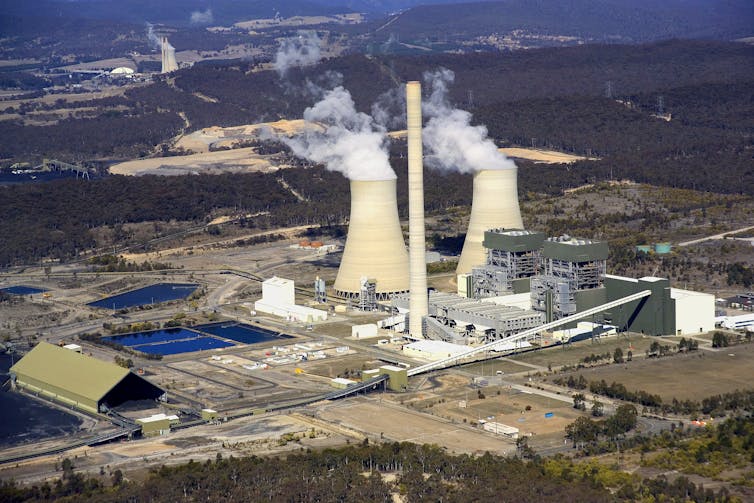
The Morrison government’s recent plan to reach net-zero emissions by 2050 has been widely criticised by scientists, environmental organisations, journalists, politicians and more.
Critics say the plan fails to deliver on its ambitions, including weaknesses in cuts to fossil fuel extraction and an absence of legislation to drive reforms.
But does it deserve such widespread condemnation?
Released just days before the international climate change summit in Glasgow, the plan sees Australia adopt a target of net-zero emissions by 2050, with a focus on technological solutions and only voluntary efforts by emissions-heavy sectors such as manufacturing and mining.
We can evaluate the plan’s sincerity through a lens of good practice policy making. In my recently published paper, I developed a policy evaluation framework, based on an extensive review of past national environment and sustainability policies over the last 30 years. This includes in national water, forest, biodiversity, fisheries and land use policies.
Good practice policy making is more likely to achieve tangible outcomes than bad policy processes. So how does the government’s net-zero plan rate?
If we assess the plan against six high-level policy design criteria, we can understand why the plan, as a document, is superficial and will fail to deliver on the emission reductions outcomes it promises.
1. Is there a legitimate reason for the federal government to be involved?
This is not well argued.
Under Australia’s constitution, powers to manage natural resource use and extraction are largely vested in the states. The federal government’s powers lie predominantly in giving effect to international agreements (which climate change is squarely in scope) and in regulating international trade.
The export of fossil fuels could certainly be an area the government can exercise restrictions on, should it choose to take a strong stance on emissions reduction – but it isn’t. It has used such powers in the past to manage logging of native forests, for example.
That the plan is marketed as being “uniquely Australian” is, in itself, damning because climate change requires cooperative global effort. Doing things “the Australian way” isn’t credible because if the Australian way was truly effective, it would soon become the “global way”.
Read more: View from The Hill: Morrison's net-zero plan is built more on politics than detailed policy
2. Was there a concerted effort to engage with stakeholders?
No.
On face value, it seems the plan was drafted by a single government department and released once the National Party was appeased.
Good policy processes should include widespread consultation with state and federal government representatives (including opposition parties and independents), and industry stakeholders (including the renewables sector and environment groups). This would deliver a clearer understanding of what the problem is, and promote buy-in from stakeholders to solve the problem.
Clear objectives and principles can help drive collaborative effort, while a lack of broad consensus on the plan will inevitably see it fail.
3. Are the policy objectives clear and achievable?
No.
A good plan should outline what success would look like and how it will be achieved. But a significant failing of the plan is the lack of well-defined objectives. While net zero by 2050 is a clear goal, we need more detail about how we’d get there, including timelines and targets.
A national plan should also identify meaningful principles. An example of a principle could be “incentivise investments in renewables and eliminate subsidies for fossil fuels”. This would guide the action of the plan’s signatories.
Most importantly, the plan should outline a clear case for change, but it does the opposite – it largely assumes business as usual can prevail.
4. How will implementation occur?
If the objective is to reduce emissions, there should be a clear pathway to the end point with clearly identifiable actions, responsibilities and timelines. But these are lacking.
The plan should identify who is responsible for delivering which actions and by when. The absence of a climate change lead agency (or agencies) at the national level, for example, means effective implementation Australia-wide cannot occur.
An effective plan would build partnerships with states as a bare minimum. This would include new commitments of shared funding, long timeframes for implementation given the scale and nature of the problem, and permit subsidiary plans and policies to be developed.
In fact, in absence of real leadership from the federal government, the states are leading by example by forging their own inter-governmental agreements to reach net zero.
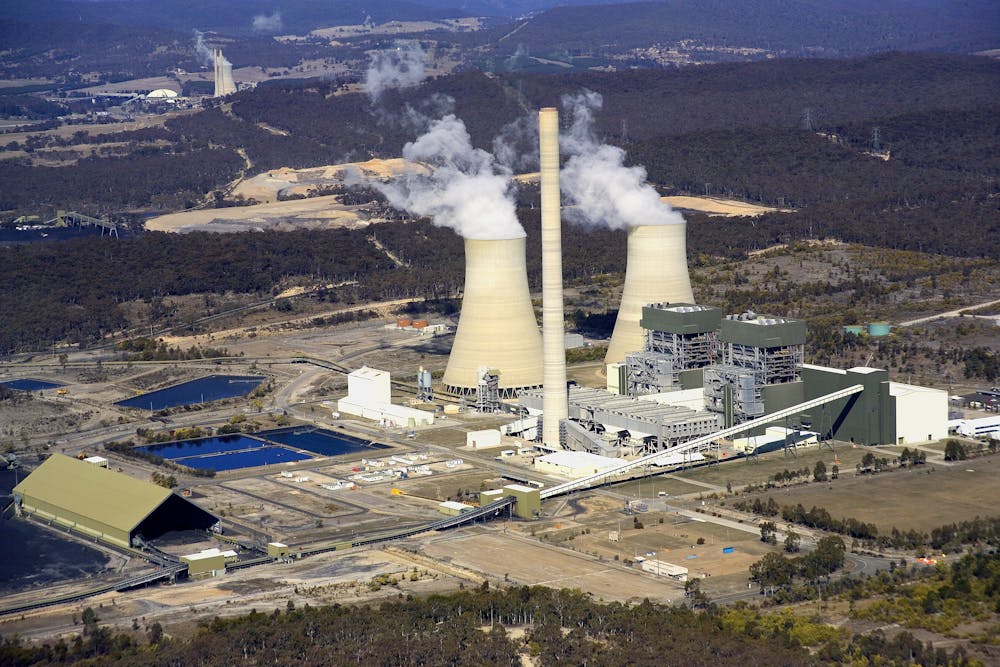 The plan makes it clear the government will not mandate any actions.
Shutterstock
The plan makes it clear the government will not mandate any actions.
Shutterstock
5. Does the plan incorporate diverse policy instruments?
No.
The plan makes it clear the government will not mandate any actions to reduce emissions – Australian households and businesses can choose whether they engage with the policy. But change doesn’t occur merely because a document gets published.
Good policy outcomes require a combination of incentives (subsidies, grants), penalties (taxes, fines) and soft powers (education campaigns), as has occurred with the management of Australian marine fisheries , for example.
The federal government can contribute substantial funds to drive change. While it allocates A$20 billion, presumably to 2030, this is woefully inadequate given the scale of the problem. After all, the government is prepared to spend at least A$90 billion on submarines which won’t be fully delivered until well after 2050.
Surely addressing an existential crisis deserves large and ongoing investments in reform? The lack of funding commitment will inevitably lead to ineffective implementation.
Read more: The government's net-zero modelling shows winners, we've found losers as well
6. Can the policy be evaluated to measure its effectiveness?
No.
The plan involves a review of its progress every five years. But the lack of well-specified objectives means there are no clear metrics to measure policy effectiveness.
And the absence of a clear agency (or agencies) to put the plan into practice increases the likelihood that reporting will be ad hoc, unstructured and inconsistent between reporting schedules.
What’s more, an over-reliance on technological advancements, some yet to be conceived and with no obligations for uptake, suggests data sources will be vague and unlikely to inform progress.
The government should make at least some elements of emissions reduction mandatory, as it would require compliance measures to be in place. It should also identify signposts of what success would look like to offer reference points from which to evaluate the policy’s effectiveness.
 The government should make at least some elements of emissions reduction mandatory.
Shutterstock
The government should make at least some elements of emissions reduction mandatory.
Shutterstock
More hot air in a warming climate
A rudimentary evaluation of the plan shows the governments intentions are spin. The plan assumes emissions reduction will occur while we continue with business as usual.
The many critiques of the plan are well justified, and the absence of good policy processes substantiate these.
After years of dismissing climate science and global warming, it would be quite a rapid awakening for the Coalition government to be truly responsive to its citizens’ concerns on climate change. Adopting good practice policy-making processes would show it’s now taking the matter seriously.
Read more: COP26: experts react to the UN climate summit and Glasgow Pact
Authors: Dr Nadeem Samnakay, Research fellow, Australian National University


















