

The debate about religious discrimination is back, so why do we keep hearing about religious 'freedom'?
- Written by: Louise Richardson-Self, Lecturer in Philosophy & Gender Studies, University of Tasmania
The debate about religious discrimination in Australia is back.
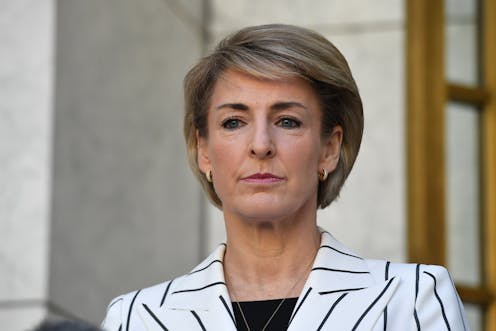
Attorney-General Michaelia Cash is planning to bring the latest version of the bill to parliament in the last two sitting weeks of the year, beginning next week.
We are yet to see the most current draft, but the bill seeks to prohibit discrimination “on the ground of religious belief or activity in key areas of public life”, including employment and education.
Once again, religious groups and LGBT+ advocates are raising what look to be competing concerns about the legislation’s impact on their rights and freedoms.
It is notable that the federal bill is ostensibly about religious discrimination, but in public discourse we discuss “religious freedom”. This confusion isn’t helped by their labelling on the attorney-general’s department website as “the religious freedom bills”.
Why the conflation between these terms?
What is at stake with the new bill very much depends on how discrimination is conceptualised – to be free from it, or to exercise it – and by whom it is claimed.
Context is important
This conflation between discrimination and freedom in the contemporary Australian context has been about ten years in the making. In 2011, there was a shift from religious freedom being about the right to be free from discrimination because of one’s religion, to being about the “right” to discriminate against others in the name of one’s religion.
Read more: New research shows religious discrimination is on the rise around the world, including in Australia
Context is crucial here. Around this time, the campaign for marriage equality began to gain increasing traction in public debate. For example, this was the year GetUp’s “It’s Time” video in favour of same-sex marriage went viral, with more than two million views in five days.
GetUp! released a video clip in 2011, promoting marriage equality. It quickly went viral.It was also the year that the Australian Human Rights Commission released its first report on LGBT+ discrimination, finding
significant gaps in the legal protection from discrimination on the basis of sexual orientation and sex and/or gender identity at the state and territory level and almost no protections at the federal level.
A backlash after the postal vote
But as the rights of LGBT+ people gained more prominence, so too did fears religious freedoms would be harmed. While legislation for marriage equality in 2017 was a huge milestone for the LGBT+ community, there was a backlash among some religious groups.
Following the postal vote, then-treasurer Scott Morrison said:
There are almost five million Australians who voted no in this [postal] survey who are now coming to terms with the fact that they are in the minority. That did not used to be the case […] They have concerns that their broader views and beliefs are […] therefore under threat.
To appease opponents of same-sex marriage, former Prime Minister Malcolm Turnbull set up a Religious Freedom Review. The review, headed up by Liberal MP Philip Ruddock, “did not accept the argument, put by some, that religious freedom is in imminent peril”. But it nevertheless recommended new legislative protections:
to render it unlawful to discriminate on the basis of a person’s ‘religious belief or activity’, including on the basis that a person does not hold any religious belief.
The Morrison government took a religious discrimination bill to the 2019 federal election and regards it as a key election commitment.
A (very) heated debate over the bill
The federal government has been consulting with the community and experts, but it has been a rocky road - with criticism from almost all interested parties (saying the bill either went too far or not far enough).
The bill has already been through multiple iterations. Indeed, it was initially supposed to be passed before the May 2019 federal election and an attempt to introduce it to parliament at the end of 2019 failed, amid pressure from some religious leaders to strengthen protections for Australians of faith.
For example, some conservative Christian groups want to be able to maintain the “right to discriminate” based on their beliefs. For example, the Presbyterian Church of Queensland is concerned with
whether Christian institutions such as schools can [still] assert a traditional view that God made people male and female, gender not being fluid, but corresponding with their biological sex.
Other Christian groups, such as the Christian Medical and Dental Fellowship, want to be able to continue gay conversion therapies.
[Religious texts] promote the stability of gender identity in accordance with chromosomal directive and would encourage psychological support for the confused […].
A ‘Folau clause’
Meanwhile, religious groups continue to raise “freedom of speech” concerns – in part, linked to the treatment of Israel Folau. In 2019, Folau lost his contract with Rugby Australia for social media posts about LGBT+ people. An undisclosed settlement was reached later that year.
Legal academic Patrick Emerton highlights the ongoing conflict this incident raised:
No doubt Folau’s views are sincerely held, and his adherence to his conception of the good is deep and genuine. But the lives of gay and lesbian people are lived sincerely and genuinely also.
At this point, it is important to emphasise Christians and the LGBT+ community are not locked in a zero-sum human rights game.
There was explicit Christian community support for marriage equality, for instance. And, of course, some LGBT+ people are religious.
What’s more, the Ruddock panel found “limited evidence that the fears of religious groups expressed during that [marriage equality] debate had come to pass in Australia”.
What happens now?
Where does this leave the debate as it heads towards the floor of parliament?
Read more: The Coalition's approach to religious discrimination risks being an inconclusive, wasteful exercise
It is possible for a tightly-worded bill to protect against religious discrimination and maintain the hard-won rights of LGBT+ Australians. As the Australian GLBTIQ Multicultural Council notes, they support legislation which prevents discrimination against Australians “on the basis of faith and religion, or for not holding those beliefs”, with this caution:
Any new law should be a simple anti-discrimination bill without conferring the numerous special privileges and rights that the current proposed legislation provides for.
Such legislation could ensure religious Australians - including members of minority religions - have avenues of protection if they are targets of discrimination.
Ultimately, we need to ask whether the bill is about stopping discrimination, or maintaining privilege to act beyond ordinary standards of accountability.
Authors: Louise Richardson-Self, Lecturer in Philosophy & Gender Studies, University of Tasmania

















