

In Australian media, women's voices are still not heard
- Written by Blair Williams, Research Fellow, Global Institute for Women's Leadership (GIWL), Australian National University
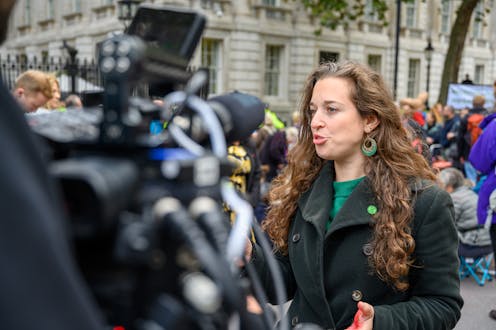
The Women’s Leadership Institute Australia (WLIA) recently released its 2021 Women for Media Report, which I co-authored with academic and journalist Jenna Price.
We analysed just over 60,000 print and online news articles published in May 2021. We also interviewed leading figures in news organisations. We found that, despite the presence of more women in journalism, men’s voices continue to dominate the media landscape.
This is visible, for example, in the much greater frequency with which men’s words appear in print as quoted testimony. Of the quotes cited in the articles we analysed, 69% were attributed to men compared to 31% from women.
Men also provided the bulk of the quotes within each category of coverage, from 54% in arts and entertainment to 84% in sports. In politics, women provided only 30% of the quotes cited.
The story isn’t much better when it comes to the authorship of opinion pieces. Of the 1,800 opinion pieces analysed, women penned only 35%. This ranged from a low of 11% in the NT Times to a high of 54% in The Sydney Morning Herald.
Men once again dominated in every category, from 59% in law to 82% in disasters. The only category in which women were the majority was arts and entertainment, at 51%. Areas of national importance and influence, such as politics, business, science and law, were largely framed by the opinions of men.
The lack of women’s voices in these pages normalises a masculine perspective and implies that what women have to say is less legitimate and important.
Read more: I studied 31 Australian political biographies published in the past decade — only 4 were about women
Women’s opinions are not heard
Opinion pieces remain a key cultural symbol of power and influence, providing a space for columnists, academics, experts and political actors to influence public debate and shape policy. Yet women remain largely unheard in this space.
Numerous editors we interviewed noted that women just aren’t submitting as many op-ed pitches. Jennifer Campbell, opinion editor for The Australian, said over 80% of pitches she receives are from men:
I get a lot of emails from MPs, senior executives, think tanks, academics. These groups are male-dominated […] That [proportion] makes it challenging to get a [gender balance].
Likewise, Canberra Times opinion editor Andrew Thorpe disclosed:
Of the 130 pitches we received in May, just 23 were from women […] and sadly May was actually a pretty good month on that front.
This is not a problem isolated to Australia. Similar findings have been published in the UK and US.
So, why are women less likely to submit a pitch? Perhaps it’s because, as Catherine Orenstein, founder of the Op-Ed Project, suggests, women
discount themselves and their knowledge. If you think about it, what it means is that there’s a disconnect between what we know and our sense that it actually matters.
Or perhaps women are fearful of the backlash and online abuse they might receive.
Many women might also feel more self-doubt, while men may be more inclined toward confidence and may even overestimate their intelligence. As Gay Alcorn, editor of The Age, told us:
Men, mostly, put themselves forward more as ‘experts’ or assume they have something worthwhile to say in an opinion piece. Not all women by any means, but some women can lack that kind of confidence, and women in the public eye are also trolled far more often than men, and that makes women wary.
Or maybe women just don’t have as much disposable time. The OECD How’s Life 2020 report found that, when combining paid and unpaid labour, men tend to enjoy more leisure time than women. Women also disproportionately have to deal with the additional “mental load” of organising and planning needed to manage daily life.
So, women might just have too much stuff already on their plates to sit down and write an oped.
Read more: Now for some better news: 9 Australians fighting for gender equality and making a difference
Journalists need to actively seek women experts
But where are all the women experts? Are they less visible because they’re reluctant to speak with journalists?
Price knows this problem all too well, noting she has struggled to find women experts to interview throughout her career, but has never had the same problem with men. In the launch of the report, she disclosed: “In 40 years of reporting I don’t think I’ve ever had a man say, ‘I don’t want to talk to you, it’s too scary’.”
We interviewed Kathryn Shine, a senior lecturer of journalism, about her research exploring women academic experts and the media. Shine found that her participants were nearly all willing to be interviewed by journalists and understood the benefits of sharing their research with a broader community.
However, many factors continued to act as deterrents for these women experts: lack of confidence, time constraints, reluctance to appear on camera, and a lack of understanding of how news media operate.
These problems aren’t the fault of women – there are larger institutional factors at play. One opinion editor pointed to the “structural incentives pushing you to get the pages sorted quickly and move on”, which leads to an over-reliance on the mostly male pitches in their inbox.
The Sydney Morning Herald topped our list with the most opinion pieces penned by women because its editors consciously chose to change. Opinion editor Julie Lewis told us having gender targets is key, and the masthead has been actively encouraging women. So, news organisations need to follow this example and do more.
When it comes to experts, Shine argues journalists must be proactive in seeking out and promoting diverse voices. She offers the following tips:
be clear and upfront about how much time this will take
give people as much notice as you can and negotiate a time where possible
ask them before the interview to think about the points that really matter to them
recognise that no-one owes you their time (except for politicians)
explain that you think their research or expertise is relevant and give a reason why
be interested in what they want to talk about, not just your specific focus
give courteous feedback at the end of the interview – was it what you were looking for?
We desperately need a range of women’s voices in Australian news media, both as experts and opinion writers. Without it, the media cannot truly reflect and represent the views and experiences of our society.
Authors: Blair Williams, Research Fellow, Global Institute for Women's Leadership (GIWL), Australian National University
Read more https://theconversation.com/in-australian-media-womens-voices-are-still-not-heard-172060

















