

Modern Australian
Men's Weekly

.

How to make roads with recycled waste, and pave the way to a circular economy

  • Written by Salman Shooshtarian, Research Fellow, RMIT University
How to make roads with recycled waste, and pave the way to a circular economy

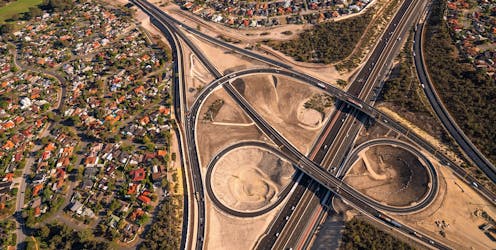
It cost A$49 million to add 12.5 kilometres of extra lanes to Western Australia’s Kwinana Highway, south of Perth’s CBD. That’s not unusual. On average, building a single lane of road costs about about A$5 million per kilometre.

What is unusual about this stretch of extra freeway is not the money but the materials beneath the bitumen: two stabilising layers comprised of 25,000 tonnes of crushed recycled concrete, about 90% of which came from the demolition of Subiaco Oval (once Perth’s premier football ground).

Recycling building and construction materials remains the exception to the rule in Australia. The National Waste Policy agreed to by federal, state and territory governments has a target of 80% resource recovery by 2030. It’s currently about 40%.

Of the 74 million tonnes of waste generated in Australia in 2020, masonry materials comprised about 22.9 million tonnes. Plastics, by comparison, comprised about 2.5 million tonnes. Of the 61.5 million tonnes of “core waste” managed by the waste and resource recovery sector, 44% (27 million tonnes) came from the construction and demolition sector, compared with 20% (12.6 million tonnes) from households and local government activities.

Most of this waste – concrete, brick, steel, timber, asphalt and plasterboard or cement sheeting – could be reused or recycled. It ends up in landfill due to simple economics. It’s cheaper to buy new materials and throw them away rather than reuse and recycle.

Changing this equation and moving to a circular economy, in which materials are reused and recycled rather than discarded in landfill, is a key goal to reduce the impact of building and construction on the environment, including its contribution to climate change.

Read more: A third of our waste comes from buildings. This one's designed for reuse and cuts emissions by 88%

The economics of ‘externalities’

The fact it is more “economic” to throw materials away than reuse them is what economists call a market failure, driven by the problem of “externalities”. That is, the social and environmental costs of producing, consuming and throwing away materials is not reflected in the prices charged. Those costs are instead externalised – borne by others.

In such cases there is a legitimate – and necessary – role for governments to intervene and correct the market failure. For an externality such as carbon emissions (imposing costs on future generations) the market-based solution favoured by most economists is a carbon price.

Read more: COP26: cities create over 70% of energy-related emissions. Here's what must change

For construction material waste, governments have a few more policy levers to help create a viable market for more recycling.

Using procurement policies

One way to make recycling more attractive to businesses would be to increase the cost of sending waste materials to landfill. But this would likely have unintended consequences, such as illegal dumping.

The more obvious and effective approach is to help create more demand for recycled materials through government procurement, adopting policies that require suppliers to, for example, use a minimum amount of recycled materials.

With enough demand, recyclers will invest in further waste recovery, reducing the costs. Lower costs in turn create the possibility of greater demand, creating a virtuous circle that leads to a circular economy.
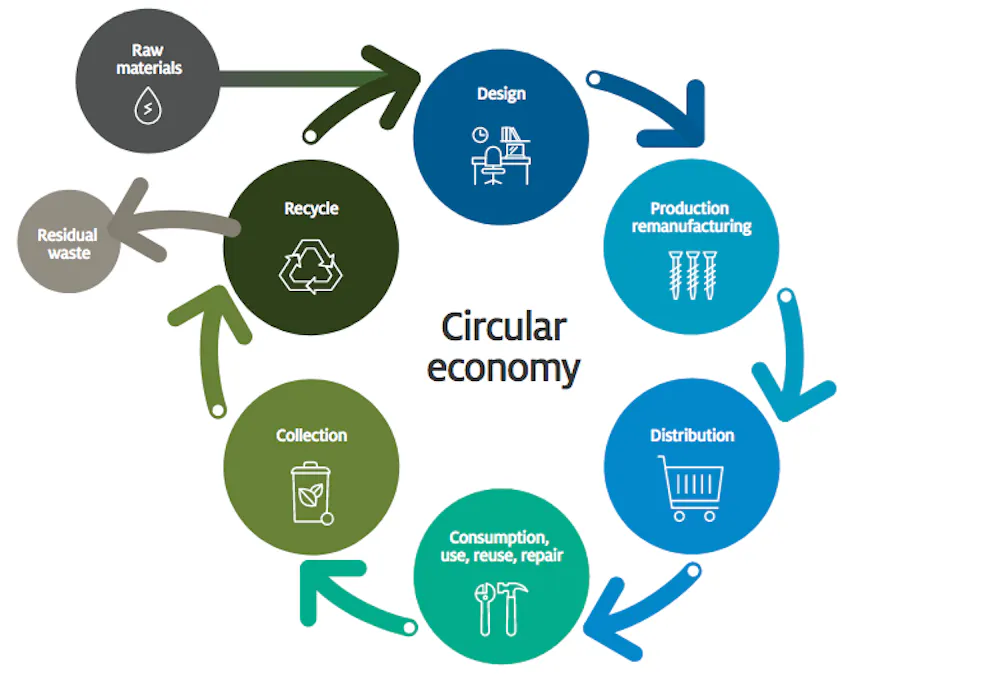

Diagram of the circular economy
Australian Government, Sustainable Procurement Guide: A practical guide for Commonwealth entities, 2021 Australia’s federal, state and territory governments all have sustainable procurement policies. The federal Sustainable Procurement Guide states the Australian government “is committed to transforming Australia’s waste into a resource, where most goods and services can be continually used, reused, recycled and reprocessed as part of a circular economy”. But these policies lack some basic elements. Three key market-making reforms Our research suggests three important reforms could make a big difference to waste market operations. This is based on interviewing 27 stakeholders from the private sector and government about how to improve sustainable procurement. First, government waste policies that set aspirational goals are not supported by procurement policies setting mandatory minimum recycled content targets. All contractors on government-funded construction projects should be required to use a percentage of recycled waste materials. Second, the nature of salvaging construction materials means quality can vary significantly. Cement recycled from a demolition site, for example, could contain contaminants that reduce its durability. Read more: Australia needs construction waste recycling plants — but locals first need to be won over Governments can help the market through regularly auditing the quality of recycler’s processes, to increase buyer confidence and motivate suppliers to invest in production technologies. Third, in some states (such as Western Australia) the testing regimes for recycled construction products are more complex than that what applies to raw materials. More reasonable specifications would reduce compliance costs and thereby the cost of using recycled materials. Authors: Salman Shooshtarian, Research Fellow, RMIT University

Read more https://theconversation.com/how-to-make-roads-with-recycled-waste-and-pave-the-way-to-a-circular-economy-164997

Short Term Loans in Australia: Practical Insights for Borrowers and Finance Professionals

Short term loans play a crucial role in Australia’s personal finance landscape. They are designed to cover short-term expenses, unexpected bills, ...

Best EPD Consultants in Australia

Environmental Product Declarations (EPDs) play an increasingly important role in the Australian construction, manufacturing, and infrastructure sect...

I/O Controller And Its Role In Modern Industrial Automation

Industrial automation relies on a range of advanced technologies to ensure precision, speed, and reliability in day-to-day operations. Among these t...

Hydraulic Systems And Their Importance In Modern Industry

A hydraulic system plays a vital role in powering machinery, controlling movement, and delivering high-force performance across countless industrial...

Why Australian Businesses Are Having a Second Think About Digital Growth

Running a business these days is a whole lot different to how it was even a few short years ago. Customers are better informed, there's more competi...

Restaurants Risk Compliance Issues Amid Commercial Plumber Shortage

As demand for housing, roads and facilities increases, so does the demand for trade workers. According to Infrastructure Australia, the construction i...

The Importance Of A Professional Medical Fitout Melbourne For Modern Healthcare Facilities

Healthcare environments must operate with precision, efficiency, and a strong focus on patient comfort. A well-planned medical fitout Melbourne hel...

Top Safety and Comfort Features to Consider in Family Off Road Caravans

Exploring Australia’s coastline, bush tracks or outback locations is far more enjoyable when travelling in a caravan designed for both comfort and...

“Logistical Nightmare” – Rural and Remote Communities Supply Chain Nightmares

Australia’s road logistics need major reform to counteract the supply chain issues that are hitting rural and regional communities hard. With 80% of...

The Importance Of Quality Bait Boards For Boats To Enhance Fishing Efficiency And Comfort

Fishing enthusiasts understand that having the right equipment on board makes every trip smoother and more enjoyable. One essential accessory for an...

The Essential Safety Gear Every Tradesman Needs

Across industries like construction, electrical work, plumbing, carpentry, and welding, workers face hazards every single day. For tradesmen, having...

Best POS System Features That Boost Customer Experience

Source: Unsplash Starting and scaling a retail business is unlikely possible without an effective Point of Sale (POS) system. It is the tech heartbe...

Understanding SMSF Setup Online and Why More Australians Are Choosing Digital Fund Establishment

liManaging your own superannuation gives you greater control over investments, retirement planning, and long-term financial decision-making. As inte...

Double Carport: Complete Guide to Design, Cost, and Installation

A double carport provides practical, cost-effective protection for two vehicles whilst adding value and functionality to your property. Whether you're...

How External Blinds and Awnings Improve Comfort, Privacy, and Energy Efficiency

Outdoor comfort and protection are essential for homes and commercial properties, especially in regions with strong sunlight, high UV exposure, and ...

Worksite Comfort Upgrades That Boost Team Productivity

Jobsite productivity doesn’t depend solely on tools, training, or scheduling. It also hinges on something often overlooked: worker comfort. When e...

NDIS Occupational Therapy: Your Complete Guide to Accessing Support and Services

Occupational therapy plays a crucial role in helping NDIS participants achieve their goals and improve their daily living skills. For people with disa...

How to Start Trading Futures in Australia: Markets, Margin and Regulation

Futures trading has become increasingly popular among Australian traders seeking opportunities across global commodities, indices, currencies and ener...
















