

Google AI


Modern Australian

Over 300,000 New Zealanders owe more than they own – is this a problem?

  • Written by: Max Rashbrooke, Research Associate, Institute for Governance and Policy Studies, Te Herenga Waka — Victoria University of Wellington

Over 300,000 New Zealanders owe more than they own – is this a problem?

New Zealanders, like many of their developed country counterparts, have built up significant debts in recent decades. There are differing views, however, on whether this constitutes a problem.

For some, indebtedness indicates a precarious situation – often described as being “underwater” – in which a person is unable to match their expenses to their income. For others, it represents investment: a temporary borrowing in order to be able to earn more in future.

To investigate this, we used data from the net worth module attached to the Household Economic Survey in 2014–15 and 2017–18. This provides information about individuals in “negative net wealth” – that is, those whose liabilities (debts) exceed their assets (wealth).

What is clear is that the number of New Zealanders with negative net wealth is both large and growing. In 2014–15, there were 314,000 indebted New Zealanders out of an adult (15+) population of 3.55 million, or 8.8%.

Just three years later, that number had increased to 363,000 out of 3.81 million, or 9.5%, despite the absence of a major economic shock – along the lines of the global financial crisis – in that time.

Where the debt sits

To establish whether this constituted a serious policy problem, however, we had to look more closely at these individuals’ characteristics.

Most of them have low incomes: 32% report incomes under NZ$13,240, and 68% under $36,596 (the median individual income at that time). Just 4% are in the highest tenth of income earners. Clearly, most of those in negative net wealth are not lavish-spending high-rollers.

Read more: NZ's unemployment insurance scheme will be the biggest welfare shakeup in generations – is it justified?

This might ring alarm bells: having a low income suggests an inability to repay debts. But that depends on a couple of further characteristics, including age and the nature of the liability.

Those in negative net wealth are disproportionately young: 58% are under 29, and a further 25% are aged 30 to 44. Just 3% or so are over 65.

Nearly two-thirds of the debts are in mortgages, whether for owner-occupied homes or investment properties (51.3% and 13.7%, respectively). This is followed by student loans (21.9%), “other” debts (11.7%), credit cards (1%) and hire purchase (0.4%).

Are debts backed by assets?

Combining the above two forms of analysis, we found that for people in negative net wealth aged 15 to 24, nearly three-quarters of their debts (73.4%) are in student loans, whereas for people aged 55 to 64, 80.6% are in mortgages on their own homes.

This suggests the problems of indebtedness may not be as great as they appear. The major forms of debt – mortgages and student loans – are both backed, at least in theory, by assets: housing, in the case of mortgages, and “human capital” (marketable skills and education) in the case of student loans.

This indicates that many of those in negative net wealth have the ability to repay their debts or, at the very least, are accumulating some kind of asset.

Read more: NZ's government plans to switch to a circular economy to cut waste and emissions, but it's going around in the wrong circles

But there are still several reasons to be concerned. Firstly, the assets mentioned above may not be entirely solid. Although house prices generally rise, and have recently been soaring, they have also been known to fall (in New Zealand as elsewhere). And the long-expected correction in the housing market may finally be about to happen, if bank predictions are to be believed.

Human capital is also somewhat notional: while graduates do on average earn two-thirds more than those with no tertiary qualification, not all degrees lead to high incomes, especially in a labour market characterised by high levels of precarious, insecure and casual work.

Many young people will be burdened by both large student loan debts and significant mortgages (assuming home ownership is attainable at all).

Debt and poverty

It is also not difficult to imagine negative net wealth becoming a problem for, say, a mid-level office worker who suddenly loses their job at the same time that their home – which they borrowed heavily to buy – falls sharply in value.

One of the principal concerns about debt, after all, is that it often represents a vulnerability – in other words, a probable lack of resilience in the face of major economic shocks.

Secondly, even if the forms of debt more generally considered problematic – such as those incurred on credit cards and via hire purchase – are relatively marginal, they are also most likely to affect those in the most difficult financial situations.

Read more: COVID-19 is predicted to make child poverty worse. Should NZ's next government make temporary safety nets permanent?

Charities and NGOs have repeatedly warned about the problems faced by families forced to turn to payday lenders and finance companies charging high interest rates. Research has also highlighted debt as one of the central factors keeping families in poverty.

Thirdly, the burden of negative net wealth is not evenly distributed. Of the 363,000 individuals in that situation, 195,000 are women, against 168,000 men. Just 8.1% of people of European descent are indebted, compared to 11.5% of Asian New Zealanders, 13.3% of Māori and 14.5% of Pasifika.

Read more: NZ's second 'Well-being Budget' must deliver for the families that sacrificed most during the pandemic

The wealth gap

These inequalities then overlap, such that the proportion of Pākehā men in negative net wealth (7.5%) is less than half that for Pasifika women (17.5%). This reflects – and exacerbates – other economic disparities, such as ethnic and gender pay gaps.
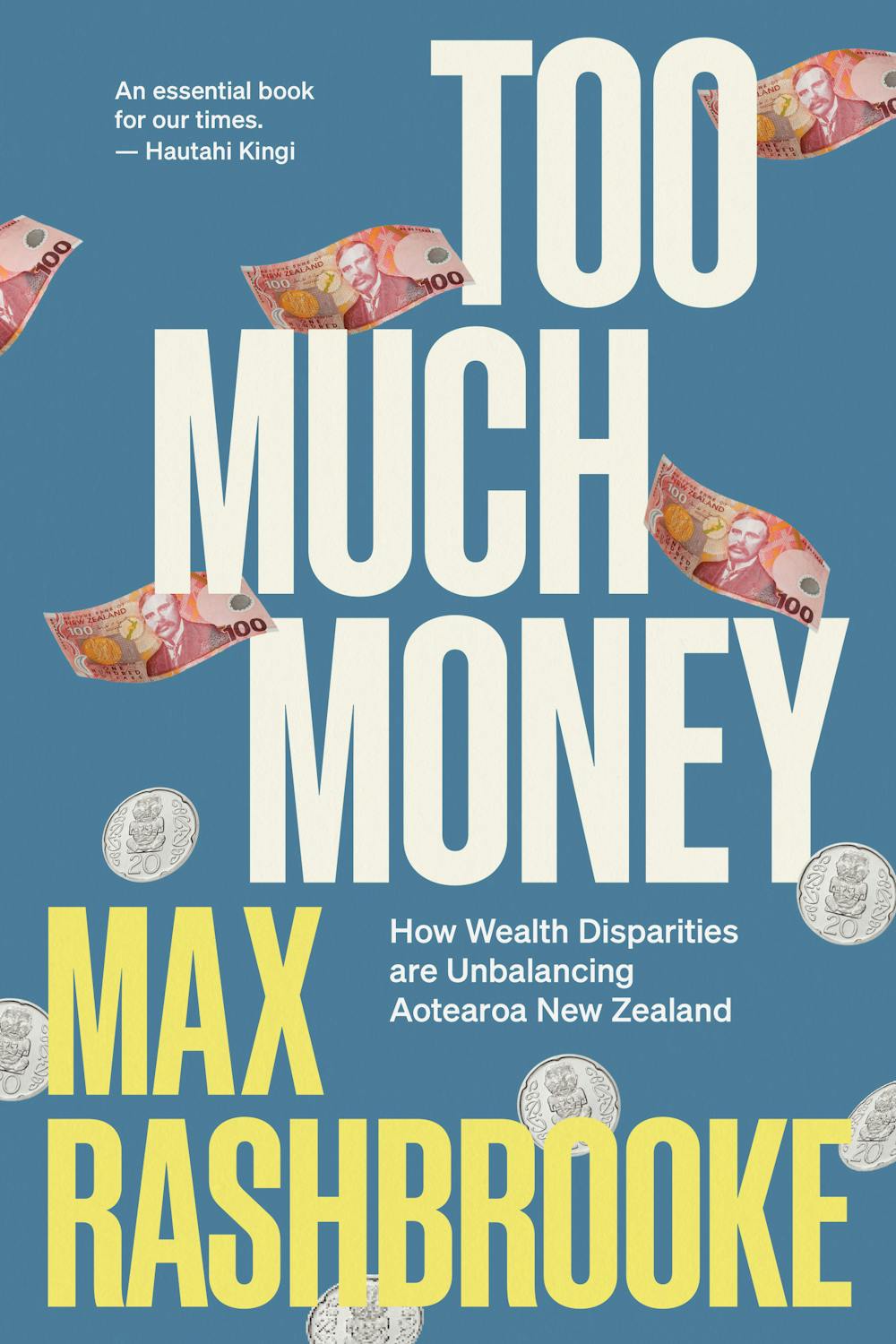
Negative net wealth also has to be viewed against its counterpart, large wealth concentrations at the upper end of the spectrum. As discussed in my recent book, the wealthiest 1% of individuals hold 25% of all assets, once members of the “Rich List” are included. Such large surpluses and deficits contribute to financial instability. One of the dynamics that caused the GFC, for instance, was the significant surpluses owned by wealthy Americans being lent to low-income families whose wages had been suppressed for several decades. Negative net wealth, then, is part of the much larger story of economic inequality – one that is now centre stage in political debates, in New Zealand as elsewhere. The author gratefully acknowledges Geoff Rashbrooke, of the Institute for Governance and Policy Studies, and Albert Chin, of Statistics New Zealand, who collaborated on this research. Authors: Max Rashbrooke, Research Associate, Institute for Governance and Policy Studies, Te Herenga Waka — Victoria University of Wellington

Read more https://theconversation.com/over-300-000-new-zealanders-owe-more-than-they-own-is-this-a-problem-173497

Breach of Contract in Business: What Are Your Options?

Contracts are essential to business relationships. They establish expectations, allocate responsibilities and provide a framework for delivering goods...

How Pest Control Companies Can Rank for the Problems Customers Search First

Introduction SEO for Pest Control needs to start with the customer’s problem. Most people do not search for pest services in a neat or technical wa...

What Are the Benefits of Renovating an Older Home in Sydney?

Sydney has plenty of character homes, from Federation cottages to mid-century brick homes. Renovating rather than rebuilding can preserve what makes t...

Pool and Deck Design: How to Plan the Perfect Outdoor Living Space for Your Sydney Home

For many Australians, the backyard is where life happens. Summer barbecues, weekend swims and long evenings outdoors are all part of the lifestyle, ...

Is Solar Pool Heating Worth It? What Sydney Homeowners Should Know

There's nothing quite like a backyard pool on a hot Sydney day. But once autumn rolls in, many pools sit unused for months because the water is simp...

Planning a Luxury House Move: A Week-by-Week Timeline for Prestige Sydney Homes

Selling or buying a prestige home is a major milestone. Whether it's a waterfront residence in Birchgrove, a grand Federation home in Haberfield or ...

Downsizing or Upgrading Your Caravan? Here's How to Sell It Without the Hassle

Selling a caravan can feel like a major task, especially when you are unsure about its value, paperwork, or how to find a buyer. Whether you are dow...

The Best Overseas Adventure Holidays for Australians Who Love the Outdoors

Australia offers no shortage of incredible outdoor experiences, but sometimes the best way to satisfy your sense of adventure is to head overseas. A...

Cape Town Wine Shuttle: Winelands Tasting & Tours

Embark on an unforgettable journey through the picturesque Cape Winelands, where world-class wines and breathtaking scenery await. Our Cape Town Win...

Metal Fabrication: Choosing Metal Fabrication Melbourne Services for Custom Projects

What Modern Metal Fabrication Involves From individual components to complete structures, metal fabrication brings together processes such as desig...

Why Giant Rats Tail Grass Keeps Coming Back After Spraying

Giant Rats Tail Grass (GRT) is one of the most frustrating pasture weeds for farmers and lifestyle property owners. You spray an infested area, see th...

When Custom Cardboard Boxes Make Sense for Your Business

Custom cardboard boxes can be useful when a standard carton does not fit a product, packing method or presentation requirement particularly well. A ...

Full-Height vs. Pop-Top Caravan: Which Is Better for Family Travel across WA?

A pop-top caravan is an excellent choice for travellers who want the comfort of a caravan without committing to a larger, bulkier setup. With a lowe...

Bottle Label Printing: Key Factors for a Professional Finish

Why the Printing Method Matters When businesses need packaging or printed containers developed for a particular application, the right supplier can m...

Virtual Livestock Fencing and GPS Tracking: Improving Visibility Across Cattle Properties

What Virtual Livestock Fencing Means for Modern Cattle Management Managing cattle across extensive properties requires more than knowing where anim...

Sydney Pawnbrokers Explained: How Hocking Your Car Actually Works

Sometimes you need cash, and you need it soon. If you own a car, you may already have a way to get it. That's what people mean when they say they've...

Moving Interstate from the Gold Coast to Brisbane (or Back)? What Removalists Wish You Knew First

Have you talked to anyone who’s done the move? They say the same thing: the drive up the M1 is the easy part. It's everything around it that catches...

Why the Spring School Holidays Are a Great Time to Visit Coffs Harbour

The spring school holidays are a good time to spend a few days on the Coffs Coast. The weather is starting to warm up, there is plenty to do outdoor...

















