Information is key to public support for police use of facial recognition technology
- Written by Kelly Hine, Lecturer in Criminology, University of the Sunshine Coast
Last week, it was announced police in South Wales and Gwent would be the first in the UK to deploy real-time facial recognition technology (FRT) in a mobile app.
The app allows police officers to rapidly identify a person of interest – even if the individual provides false or misleading information. This in turn reduces the risk of mistaken identity and unnecessary trips to the police station to confirm an individual’s identity.
Read more: Facial recognition technology is expanding rapidly across Australia. Are our laws keeping pace?
Police around the world are using FRT
Globally, police agencies are either adopting or trialling various forms of FRT to assist in law enforcement.
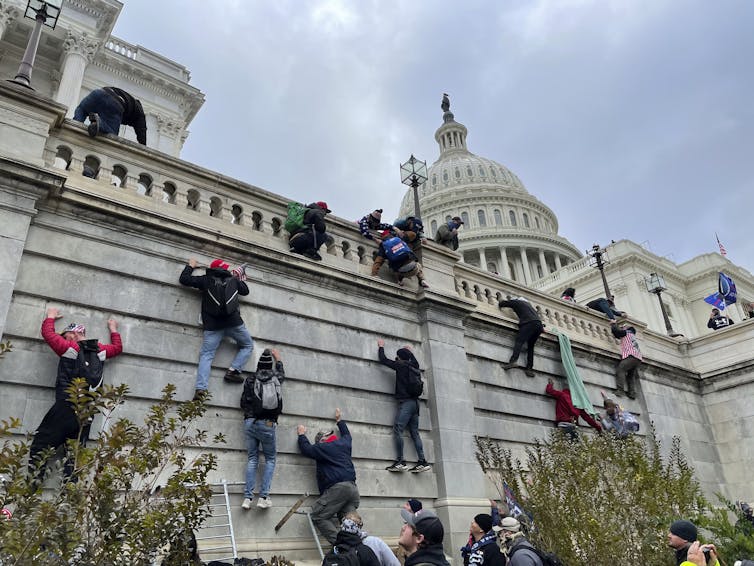
In the US, the FBI has used facial recognition technologies to identify individuals involved in the 2021 Capitol riots. In the UK, London’s Metropolitan Police are using FRT in real-time (or live) CCTV cameras to identify people on police “wanted” lists.
In Australia, there has been a lack of transparency about which agencies are using facial recognition technologies and how these are being used. While all Australian policing agencies are reportedly using or trialling these technologies, New South Wales Police officially acknowledge it on their web page. They have reportedly used the technology to help identify lawbreaking protesters.
The Northern Territory Police have even won an award for their face recognition project, which reportedly identifies suspects in under ten seconds at their watchhouse.
Why do police need this technology?
Facial recognition technology offers police a quick, efficient and less subjective way of identifying persons of interest. Police capture a person’s image using devices such as CCTV cameras, body-worn cameras, or smart glasses.
Once your image is captured, the unique biometric features of your face can be matched to an existing police database. These databases are usually created from mug shots and publicly available data (such as social media posts).
The technology allows for individuals to be tracked across multiple locations and times. Interestingly, the technology can also correctly identify a single person in a large crowd.
Taking the human perspective out of the equation also helps to reduce the potential for inaccuracies in memory and misidentification that can occur in more traditional ways of identifying persons of interest.
However, the technology is not always accurate. Indeed, an independent study found the FRT used in a trial by Metropolitan Police was inaccurate 81% of the time.
The police use of FRT also raises consent and privacy issues. One study found over 60% of the public valued being able to go about their business and run errands without always being photographed.
Read more: Why the government's proposed facial recognition database is causing such alarm
What do Australians think about police use of FRT?
Most Australians do not often come into direct contact with police and, therefore, have little first-hand knowledge of policing practices. Consequently, the main source of information about police comes from the media, and social media in particular. How the media frame a story can shape our opinions of the topic.
Our study of 203 YouTube videos examined how YouTubers were discussing police use of facial recognition technology and the emotions evoked by the language being used in the posts.
It found the majority (61%) of posts were positive about both the technology and the police.
When the sentiment was negative, it was focused on corporations supplying the technology to police, rather than the police themselves.
In our other study, we dug deeper to examine the public commentary posted to the YouTube videos. Despite the positive message being delivered, we found viewers were raising a number of concerns.
They tended to be sceptical of police using the technology before a crime has been committed (for example, surveilling crowds in public spaces). More specifically, they worried this could lead to police overreaching into private citizens’ rights and freedoms.
On the other hand, viewers were mostly supportive of police using facial recognition technology after a crime has occurred (for example, to identify offenders in the Capitol riots or to find missing persons). They talked about this in terms of the technology’s ability to protect public safety.
Overall, the public tend to be wary of any new technology introduced by the police, and facial recognition is no exception.
However, police and authorities can easily address some of these concerns by being transparent and accountable when using facial recognition technologies and communicate policing practices to the public as part of this transparency.
Authors: Kelly Hine, Lecturer in Criminology, University of the Sunshine Coast