a magnificent timber and a tough, towering wattle that can survive landslides
- Written by Gregory Moore, Doctor of Botany, The University of Melbourne
After the long COVID-induced lockdowns of 2021, I’m more excited than usual for a joyous gathering at Christmas, where four generations of our family will sit around our much-used dining table for dinner.
The table is large, heavy, with parts made of blackwood and once belonged to my great grandparents in the 1880s. It’s been part of many family celebrations and is accompanied by a grand old sideboard, also made of blackwood and decorated for the festive season.
Blackwood’s main claim to fame is its magnificent dark and durable timber. It has been prized since colonial times and is still widely used for high quality, bespoke furniture that often becomes family heirlooms. It has also been used for making boats, musical instruments, inlaid boxes and high value veneers.
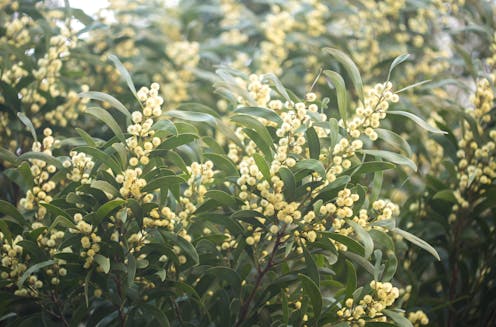
But today, I’ll introduce you to the tree – a stunning native wattle with large Christmas-green, leaf-like phyllodes (modified leaf stalks) and masses of showy pale lemon flowers that bloom from late winter to late summer.
Versatile and mighty
Blackwood (Acacia melanoxylon) can live for over 150 years, and its range extends from South Australia and Tasmania through to northern Queensland. It’s often found in the understorey of giant eucalypts in Australia’s east-coast forests, though the tree is hardy and adapts well to diverse conditions, making it popular in urban gardens.
Depending on soil type and rainfall, it can become an imposing tree 40 metres tall, with a trunk diameter of up to 1.5m. Under tougher conditions, it may grow to only 10m in height, often with a spreading canopy. While it’s not drought resistant, blackwood can be quite tough and tolerates wet soils, even salty coastal winds.

Blackwood is also resistant to fungal pathogens, such as Phytophthora and Fusarium species, which decimate many other native plants such as banksias and many eucalypts. The reasons for its resistance are unclear, but it’s possible that like some other acacias, chemicals released from the roots can reduce pathogen growth.
One reason Blackwood timber is so dark is because it contains high levels (up to 20%) of tannins, the dark staining chemicals you see after you’ve drained your daily dose of tea and coffee.
These tannins were also useful to Indigenous people. Tannins are toxic to fish and wood and bark with high tannin content was, and is, used for fishing. Blackwood extract can also be used as a painkiller.
Read more: The daily dance of flowers tracking the sun is more fascinating than most of us realise
Withstanding landslides and bushfires
Blackwood’s spreading root system is another reason the tree is so tough. In mountainous habitats, its roots often help consolidate soil on steep slopes, preventing landslides. I’ve seen large blackwood trees carried downhill by a landslide, but the roots held the soil together and the trees continued growing when the soil settled.
But the same, strong root system can cause problems in the urban environment, by cracking paths and blocking old leaky pipes.
Like many native trees, the tree is adapted to bushfires. The tough leathery phyllodes can slow the movement of bushfires, providing a barrier which might help stop fires from spreading in a fire smart garden. The phyllodes remain green and have a low flammability all year round, so while the tree is usually killed by fire, it may still have a place in gardens where fire is a risk.
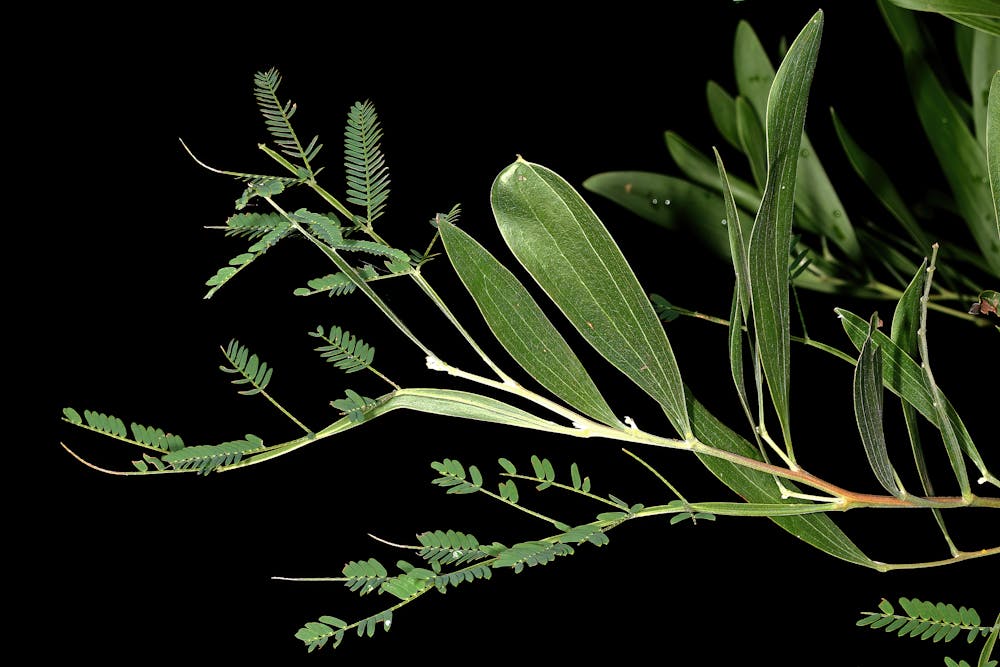 A curious feature of blackwood is how its young, feathery foliage can grow alongside the mature, harder ones, as shown in this picture.
SAplants/Wikimedia, CC BY-SA
A curious feature of blackwood is how its young, feathery foliage can grow alongside the mature, harder ones, as shown in this picture.
SAplants/Wikimedia, CC BY-SA
The seed of blackwood can persist in the soil and leaf litter of a forest for many years and, after a bushfire strikes, may regenerate even if few trees were present beforehand.
Read more: Cockatoos and rainbow lorikeets battle for nest space as the best old trees disappear
Benefits for gardeners
Blackwood has been widely planted across Australia and in many other parts of the world for its timber and has become a weed in parts of Africa, South America and California, as well as Western Australia.
And it spreads easily. When blackwood seeds are harvested by birds and insects, they don’t digest the seed, giving it free transport and dispersal.
Blackwood can also develop suckers – new growth that sprouts from the roots; aptly named because they exploit a plant’s root system. These tend to develop if roots are damaged or disturbed, and can be difficult to control.
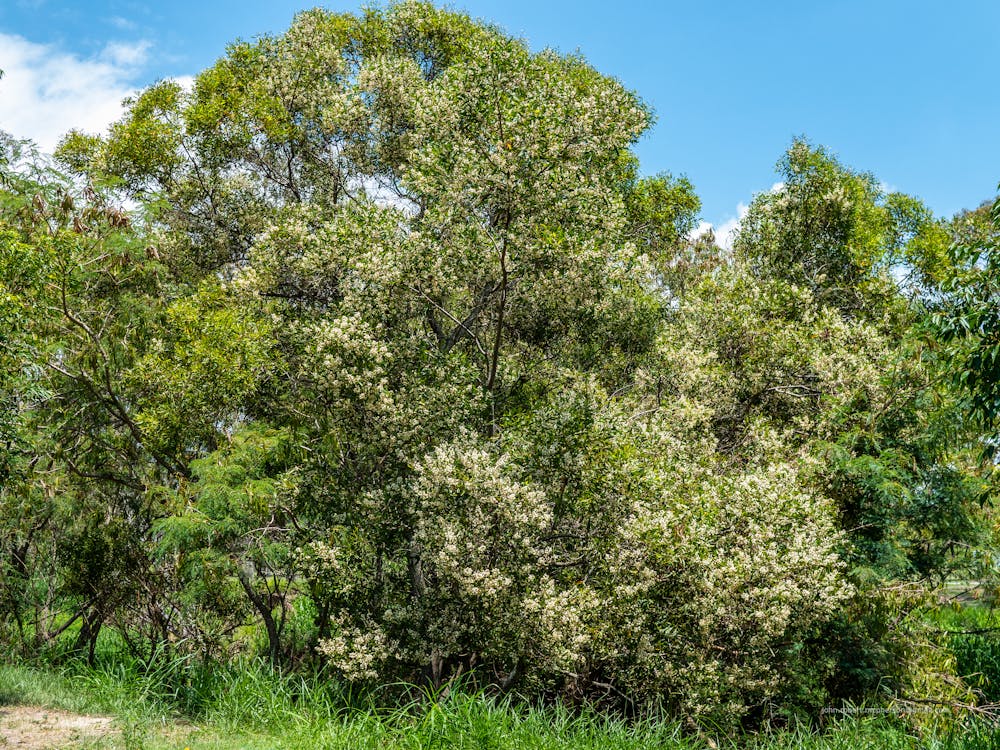 Blackwood is popular in gardens and parks all over the world.
John Robert McPherson/Wikimedia, CC BY-SA
Blackwood is popular in gardens and parks all over the world.
John Robert McPherson/Wikimedia, CC BY-SA
But for those planting it in gardens or parks, there are many benefits. Like all wattles, blackwood is a nitrogen fixer thanks to its root bacteria, which take in nitrogen from the atmosphere and add it to depleted soils.
Its discarded flowers, phyllodes and fruits can help create a thick mulch, which is often weed free. Alongside the benefit of added nitrogen, it can really improve the quality of soils on a local scale in gardens, windbreaks or plantations over time.
Blackwood is highly recommended as an agroforestry tree. It’s still actively logged in Tasmania, and my agroforestry colleague Rowan Reid warns that with the lack of research and incentives for growing blackwood on farms in Australia, we might soon be in the sad position of importing our blackwood timber from more innovative overseas growers.
Read more: Once again, wattles are out in bloom: here's what makes our iconic flowers so special
At the end of our family dinner, the table will be cleared and the cutlery and crockery returned to the blackwood-veneered and polished sideboard – our own family heirloom.
I wonder about its future, and who might be using it to share Christmases. Just as I wonder about the future of Australian blackwood, and its role in future climates, fires and agroforestry. It will undoubtedly persist, but will it be significant and appreciated?
Authors: Gregory Moore, Doctor of Botany, The University of Melbourne