

the community-run repair workshops that help build a culture of cycling
- Written by: Simon Batterbury, Associate Professor, The University of Melbourne
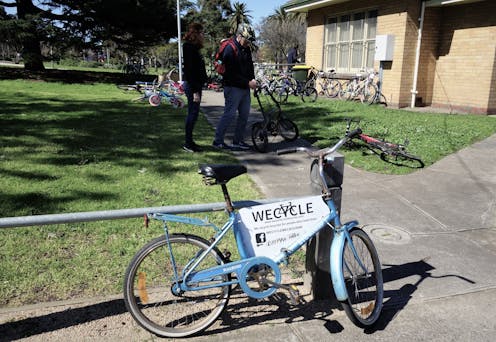
Cycling reduces greenhouse gas emissions, brings myriad health benefits and reduces traffic. But urban planners and policymakers often struggle to get more people on bikes.
To increase urban cycling, we need more than extra cycling infrastructure; we need a culture change. A worldwide movement of community bike workshops, also known as bike kitchens, can help.
Bike kitchens offer tools, second hand parts and bikes, and convivial help with repairs. They are also hubs for community development.
Since 2014 we have visited over 50 bike kitchens around the world – in the US, Australia, NZ, UK, France, Germany, Austria, Switzerland, Portugal, Mexico and Belgium to research how they operate. We have also volunteered and led student projects at several workshops.
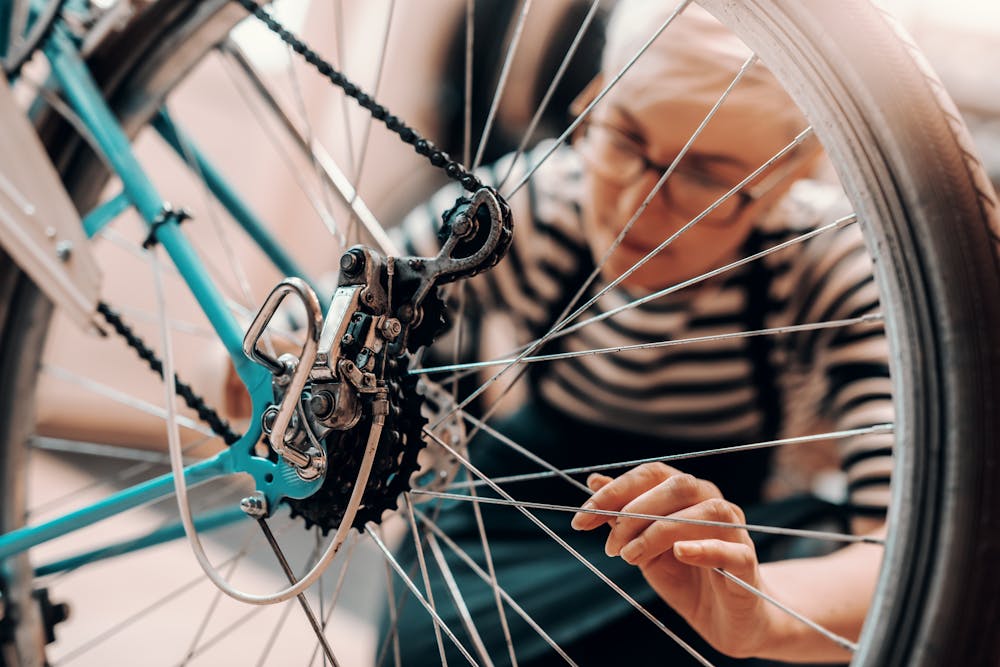
Building a culture of cycling
Dedicated bike lanes, road treatments and bike parking are relatively cheap to build and maintain compared to roads, car parks, and major public transport schemes. There is some correlation between better bike infrastructure and more riders.
But better infrastructure alone does not solve the problem. In Paris, with its pro-bike mayor and traffic calming initiatives, a recent explosion in bike use has led to accidents and clashes, suggesting other factors like social acceptance and up-skilling need attention.
In lockdown this year, Sydney experienced a 78% increase in cycling injuries when more people took to their bikes.
Cycling in cities is a social practice, and building a culture of cycling is essential – especially where bike use has traditionally been low.
It’s essential to cycling culture that a critical mass of people have riding and bike maintenance skills, and the activity is more socially accepted.
That’s where bike kitchens come in.
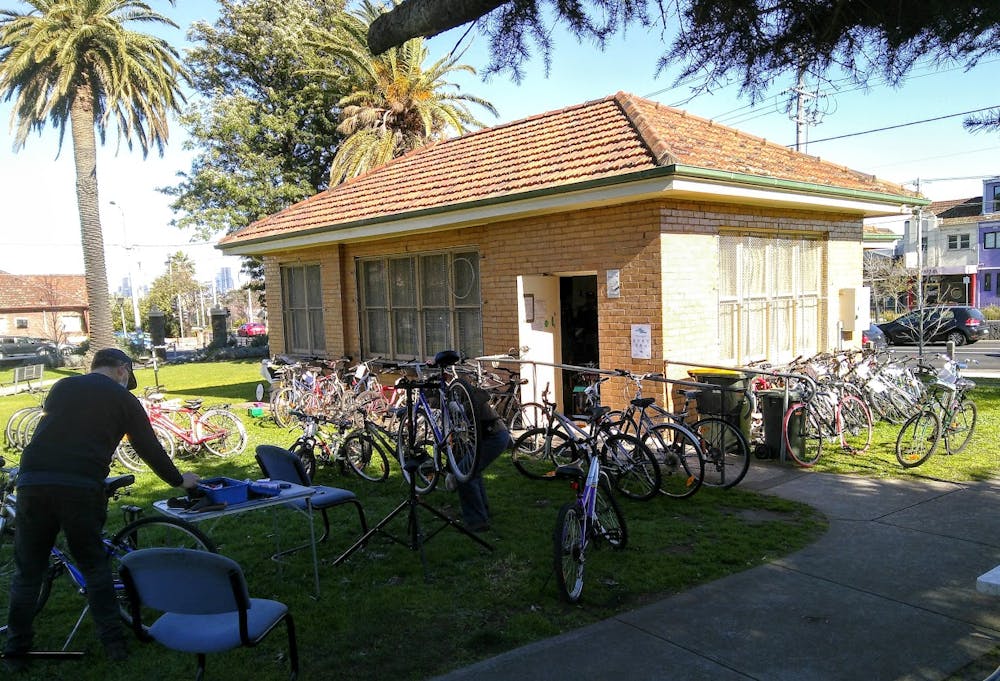 WeCycle, a workshop in Gumbri Park, Melbourne gives free bikes to asylum seekers, refugees, and people in need.
Simon Batterbury, Author provided
WeCycle, a workshop in Gumbri Park, Melbourne gives free bikes to asylum seekers, refugees, and people in need.
Simon Batterbury, Author provided
Convivial places to build and repair a bike
Bike kitchen workshops are initiated and run by activists and socially-minded cyclists. Most teach hands-on self-repair and maintenance skills to people who want to learn. Others give away free bikes to those who need them.
Workshops extend the use life of bicycles and components. They are part of the community economy and interrupt the waste stream; most parts come from donated or scavenged bikes and are re-used creatively and cheaply with a DIY ethos, avoiding new consumption.
Some bikes may be sold to support ongoing workshop costs, but rarely for high prices.
Workshops numbers have grown since the 1990s, and are widespread across Europe, the Americas, Australasia and the rest of the world.
The largest concentration is in France. Most are networked through l'Heureux Cyclage, which coordinates events, logistics, and learning between 250 workshops, assisting well over 110,000 people yearly.
Brussels has at least 18, like Cycloperativa, spread across the city’s arrondissements.
Ten bike workshops operate in Austria, with at least four in Vienna. They include Flickerei and WUK which, established in 1983, is probably the world’s oldest.
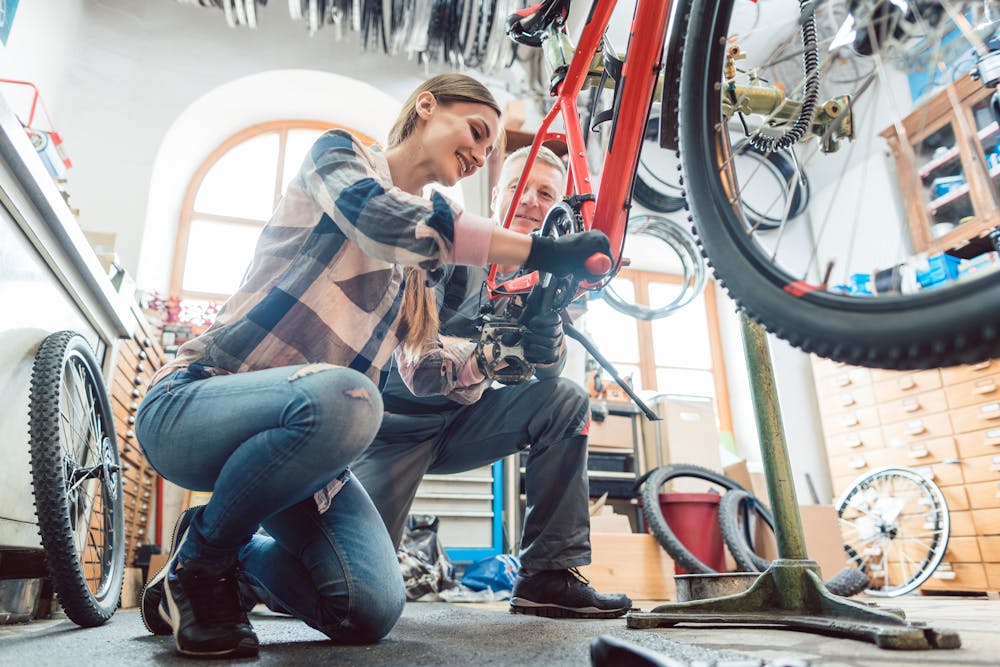 Workshops extend the use life of bicycles and components.
Shutterstock
Workshops extend the use life of bicycles and components.
Shutterstock
How bike kitchens work
There are two main types of bike kitchens:
1) places where tools, parts and bike stands are offered for anybody to use, assisted by workshop volunteers and sometimes by paid mechanics. Most are social enterprises or non-profits, promoting what’s known in French as vélonomie: the ability of a cyclist to maintain a bicycle and ride safely and with confidence.
2) those that fix bikes for others – often for the disadvantaged – such as WeCycle in Melbourne which offers bikes to refugees and asylum seekers. Working Bikes in Chicago sends bikes to the Global South.
Read more: What Australia can learn from bicycle-friendly cities overseas
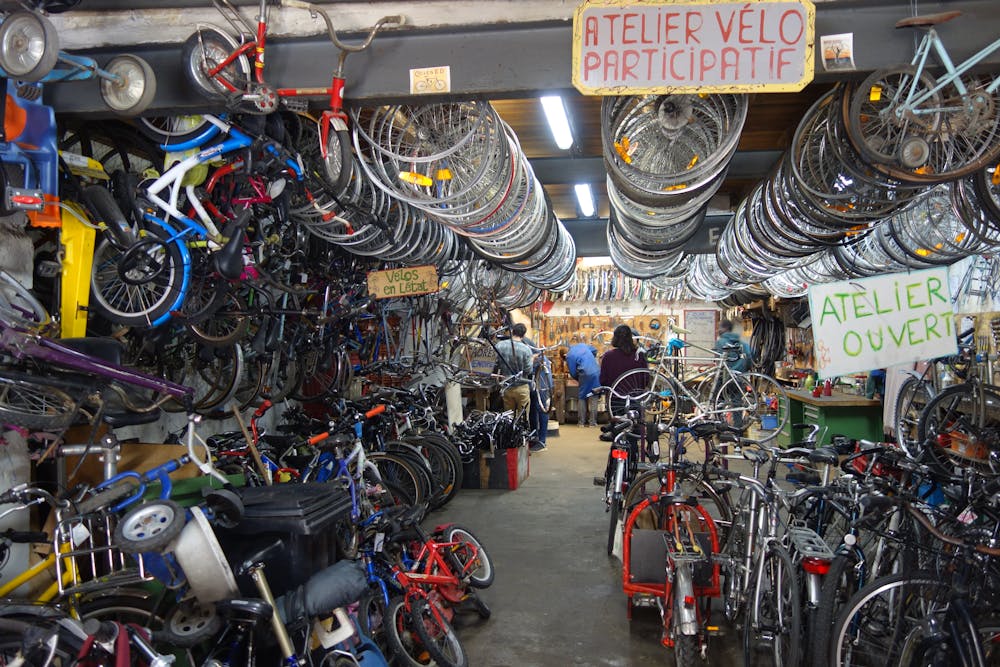 Récup'R in its former premises in Bordeaux, France.
Simon Batterbury
Récup'R in its former premises in Bordeaux, France.
Simon Batterbury
There are often fixing sessions and other activities for specific ages, genders and groups. At one of the oldest French bike workshops, Un p'tit vélo dans la tête in Grenoble, one volunteer told us some fixing sessions are women-only.
For members of the public without money, earn-a-bike programs convert volunteer hours into eventual bike ownership.
Workshop rules vary, but almost all forbid racist and sexist behaviour and support conviviality, diversity and respect. The main goal is “integrating a community”, the same volunteer told us.
Over time, a few diversify to become big social enterprises, like Cyclo in Brussels. Fees from memberships or workshop time, bike sales or government employment schemes allow some workshops to take on paid staff.
Others like Atelier Vélorutionaire in Paris reject commercial or government support entirely, championing a more militant stance against cars and capitalism.
Bike kitchens in Australia
Australia has had many community bike projects dating back over 30 years, with The Bike Shed in Melbourne being one of the first. Workshops come and go, but there are at least 18, with seven in Melbourne and four in Sydney.
Many smaller initiatives work in schools, churches, or at recycling centres. They are networked through BiCANZ.
WeCycle in Melbourne is a workshop focused on fixing bikes for others. Founders Gayle Potts and Craig Jackson have supplied refurbished bikes to asylum seekers, refugees and people in need since 2016.
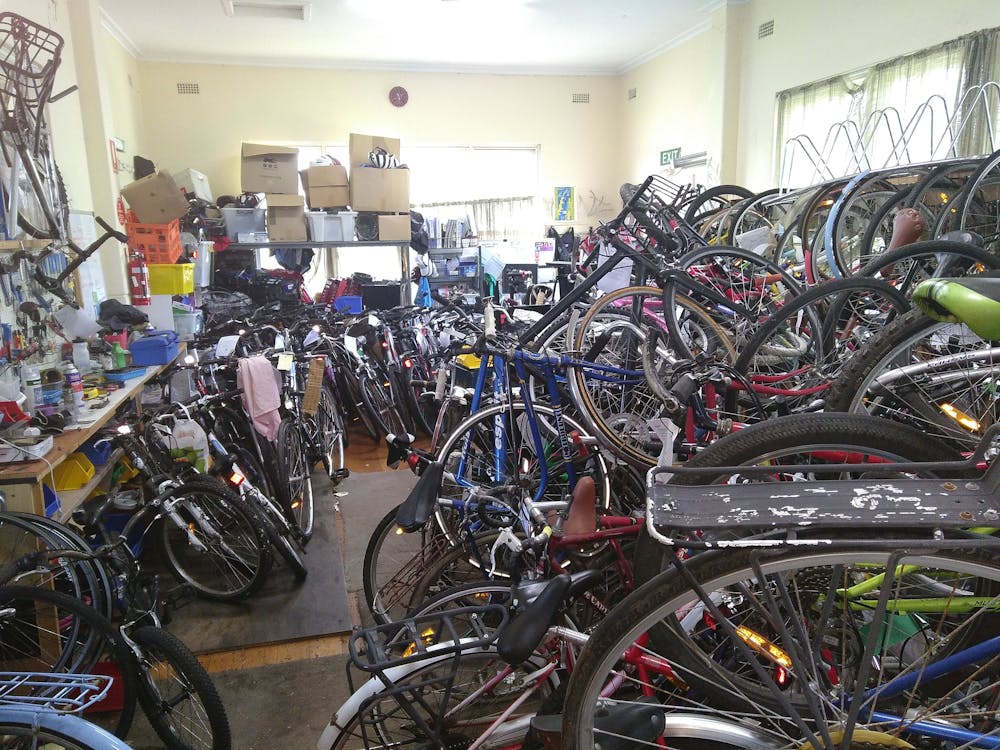 Donated bikes accumulate in a workshop, ready for repair and re-homing.
Simon Batterbury, Author provided
Donated bikes accumulate in a workshop, ready for repair and re-homing.
Simon Batterbury, Author provided
A community approach to sustainable transport
Workshops need volunteers and secure premises with power and light, on or off-grid. Limited budgets make this a challenge.
While workshops can be co-housed, secure premises is the key area where support from government and bike-friendly donors is welcome. Tools, racks and spares are also needed.
Community bike workshops extend bicycle lifespans and promote a community approach to sustainable transport – all while promoting conviviality and making our cities more liveable.
Read more: Do the sums: bicycle-friendly changes are good business
Authors: Simon Batterbury, Associate Professor, The University of Melbourne


















