If my child or I have COVID, when can we get our vaccine or booster shot?
- Written by Margie Danchin, Paediatrician at the Royal Childrens Hospital and Associate Professor and Clinician Scientist, University of Melbourne and MCRI, Murdoch Children's Research Institute
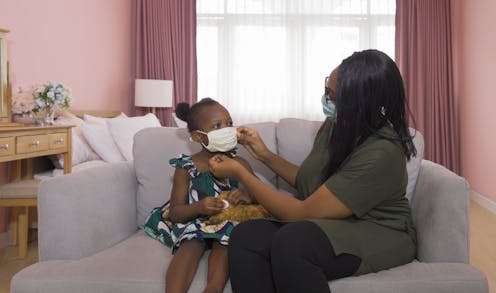
As Omicron cases soar along Australia’s east coast, many people are faced with having to re-book their vaccination appointments.
If you or your child test positive for COVID, you clearly can’t go to the vaccination or booster appointment you had this week. So, when can you go?
There are no hard and fast answers on this; although there is some guidance, this question is still under current consideration by Australian Technical Advisory Group on Immunisation (ATAGI).
But here are some general principles to help guide your decision-making.
Read more: How to talk to your child about a COVID diagnosis ... and share the news with others
1. I’m an adult with COVID, and have had to postpone my booster appointment. So when can I get it?
The current ATAGI advice is that you can have your booster once you have recovered from the acute infection.
But based on vaccinology principles, it would be reasonable to consider waiting at least three months after you’re well to get your booster dose. A COVID infection stimulates the immune system like a vaccine, meaning you will produce antibodies that help increase your protection against COVID.
Vaccination can also be deferred for up to six months if preferred, as past infection does reduce the chance of reinfection for at least this amount of time, but there is still much we don’t know about the Omicron variant.
Currently, the booster dose is recommended four months after the primary course of two doses (meaning four months after you get your second dose).
By end of January, that will be changed to three months.
With Omicron, the duration of protection from natural immunity is unclear. So you should still get your booster shot and make sure you end up getting the required number of doses.
That’s because we can’t exactly quantify to what extent COVID infection stimulates your immune system.
People’s bodies respond differently to infection depending on age, underlying medical risk factors, the particular strain they’re infected with and a range of other factors.
That’s why, even if you get COVID, we still recommend vaccination and the required number of doses to ensure you get the best long-lasting protection.
So, after COVID, you could consider getting your booster 3-6 months later. But you may choose to bring your booster dose forward if:
you have underlying health conditions that place you at higher medical risk
you work in a workplace where you have higher risk of COVID exposure or
you are required to have a booster dose to go to work.
In those circumstances, you might consider having the booster a few weeks after you have recovered from the acute illness.
2. My child has COVID and will miss their vaccination appointment. So when can they get vaccinated?
Again, the current ATAGI advice is your child can have their vaccine once they have recovered from the acute infection but I would recommend waiting a minimum of four weeks before the first vaccine dose. This is also currently stated in the UK Joint Committee on Vaccination and Immunisation (JCVI) guidelines.
This is because we develop what’s known as “mucosal immunity” in the nose and throat from natural infection. Then, we can provide a boost to systemic immunity with the first dose of vaccine. The combination of both natural infection and vaccination gives longer and stronger protection.
This also provides a window for the child to recover, bearing in mind the risk of a rare but severe post-infectious inflammatory condition called paediatric multisystem inflammatory syndrome after SARS-CoV-2 or PIMS-TS (also known as multisystem inflammatory syndrome in children or MIS-C).
It occurs in about one in 3,000 children and can happen between 2-6 weeks after the acute infection. Waiting at least four weeks gives you more confidence your child has fully recovered.
If your child has persistent symptoms at a month, I would recommend waiting another month until getting them vaccinated. Then, wait eight weeks until the second dose.

In general, a COVID infection is going to stimulate an immune response and the child will develop antibodies. But, as described above, we don’t yet know how much protection you get from natural infection versus vaccination in children. So, to get the best protection, they will still need to be vaccinated.
That said, we need to be pragmatic. Some parents may worry that if they cancel an upcoming appointment, they may not get another until much later.
So if a parent has an appointment coming up and their child has completely recovered, and has no symptoms, then – knowing the pressures on the system and approaching new school year – I wouldn’t decline that appointment. It’s about making a judgement call at the time of the appointment.
Hopefully, parents can use this information to make an informed decision. If they have concerns, they can speak to their GP or other healthcare provider.
To sum up: in general, I’d say wait four weeks after the initial infection and ensure the child has completely recovered – but if you have a slightly earlier appointment, then it’s reasonable to keep that as well.
Read more: From faith leaders to office workers: 5 ways we can all be COVID vaccine champions
3. Anything else I need to know?
I think it’s worth highlighting an update to the CDC guidelines stating people are most infectious in the 1-2 days before they develop symptoms and 2-3 days after.
So the clear guidance is to adhere to the rules and isolate as a positive case or a close contact for seven days, but please check the guidelines in your state or territory.
I know there’s so much changing advice on that – for example in relation to critical workers – but the best advice is to stay isolated for at least five days if you’re a positive case or a close contact.
Authors: Margie Danchin, Paediatrician at the Royal Childrens Hospital and Associate Professor and Clinician Scientist, University of Melbourne and MCRI, Murdoch Children's Research Institute