

the unsung heroes of estuaries are disappearing, and we know almost nothing about them
- Written by Kirsten Benkendorff, Associate Professor in Marine Biology, Southern Cross University
Am I not pretty enough? This article is part of The Conversation’s series introducing you to Australia’s unloved animals that need our help.
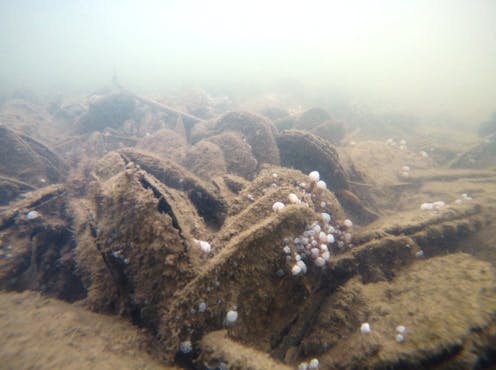
Camouflaged by a layer of silty mud, most people probably wouldn’t notice the large flat oysters lurking beneath shallow water in Australia’s coastal estuaries. These are remarkable “leaf oysters”, and they can form reefs, produce mauve pearls, and reach the size of a dinner plate.
Of the 14 species of reef-forming oysters and mussels in Australia, leaf oysters (Isognomon ephippium) are the least well known. Our review, published last year, found only 30 publications globally that mention leaf oysters. Half of those were only incidental recordings.
This is a huge problem because there is widespread evidence of significant declines in the number and condition of shellfish reefs. In Australia, 99% of shellfish reefs have been described as “functionally extinct”, meaning the habitat these reefs previously provided has now been lost.
This has led to serious efforts in shellfish reef restoration. Leaf oysters are crucial members of these ecosystems, and we need substantially more information about them to ensure they’re not left out of these programs. Let’s delve into what we do know.
Meet the leaf oyster
Oysters are often associated with summer feasts and intensive aquaculture. While leaf oysters are edible, they have a large shell to meat ratio and so aren’t particularly attractive as a source of food for humans.
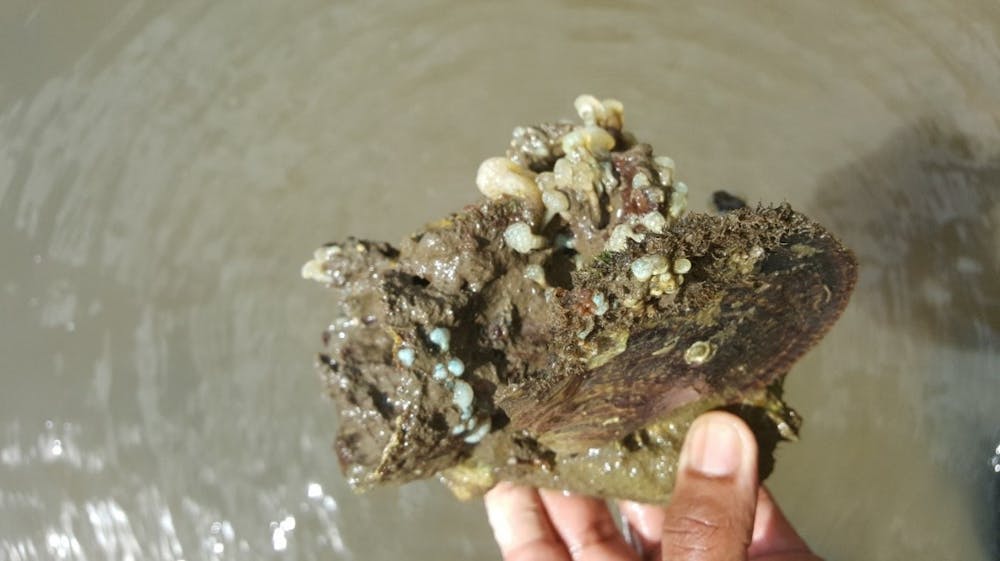
But like the iconic pearl oysters, leaf oysters are members of the Pteridine family of bivalve molluscs and have an inner nacre layer. This means they can produce pearls mainly mauve in colour, or sometimes purple, bronze, cream or silver.
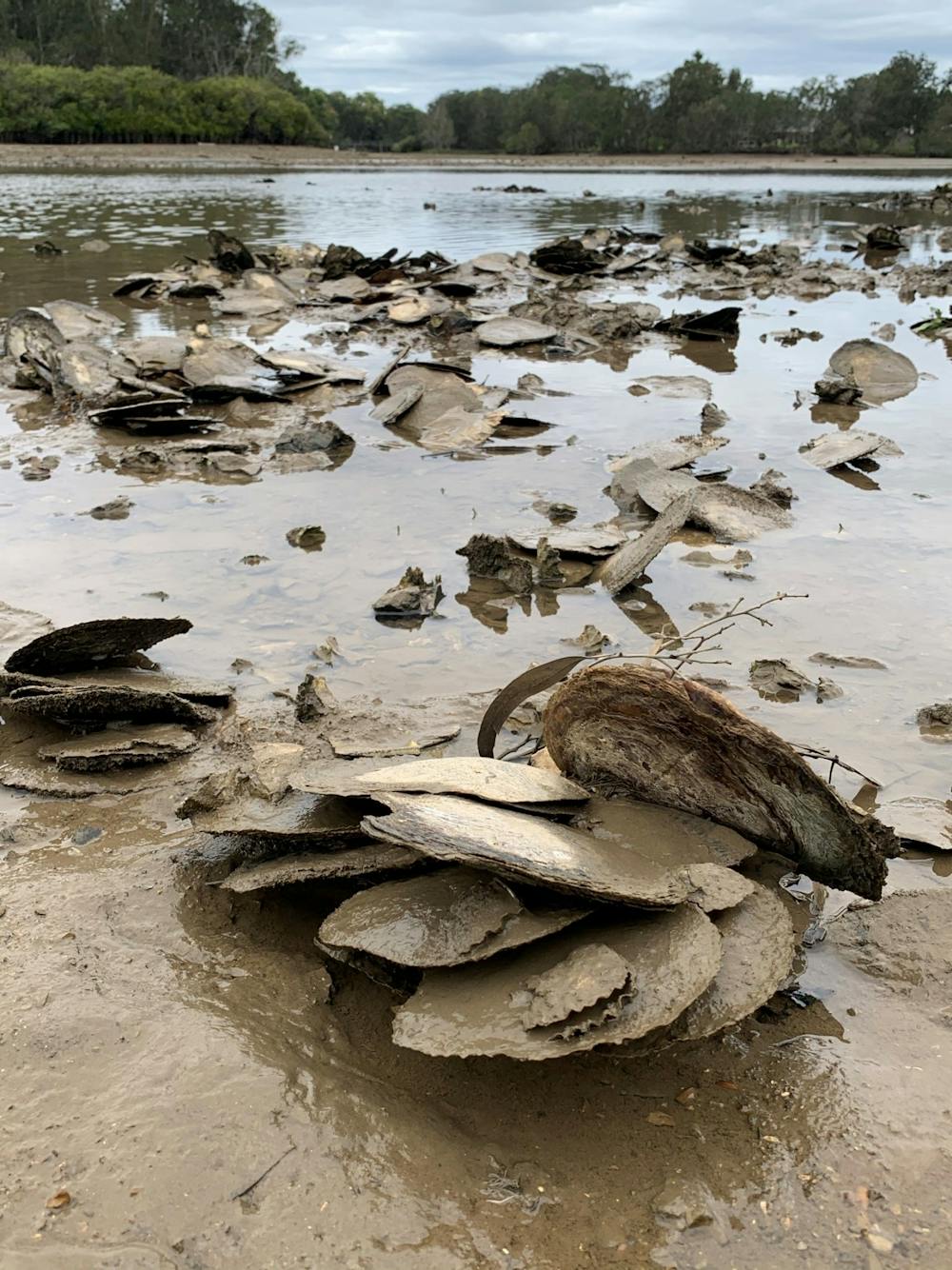
Although not much is known about the life history of leaf oysters, we do know they reproduce by spawning. Thousands of eggs and sperm are released into the water and develop into swimming larvae after fertilisation. Only a fraction of these survive and settle onto the substrate, where they develop into juvenile oysters.
Like other reef-forming oysters such as the Sydney rock oyster and the Pacific oyster, leaf oyster larvae appear to be attracted to the shells of the adult oysters. They attach to the surface via “byssus” – a matt of strong hair-like threads. This enables shell clusters to form, which can develop into leaf oyster reefs.
Leaf oysters are ecosystem engineers. When they live in dense clumps, they support an entire ecosystem of fish and other invertebrates.
 Leaf oysters are crucial members of shellfish reef ecosystems.
Kirsten Benkendorff, Author provided
Leaf oysters are crucial members of shellfish reef ecosystems.
Kirsten Benkendorff, Author provided
The flat, plate-like shape of the leaf oysters provides a complex three-dimensional habitat, with many nooks and crannies for species to seek shelter from drying out at low tide, and to hide from predators at high tide. Their shells provide a hard surface for other invertebrates to attach to, and form biofilms grazed by snails and fish.
Our preliminary studies on leaf oyster beds have detected a high diversity of fish species. Using underwater videos, we recorded a number of important fishing species, including yellowfin bream, dusky flathead, sand whiting, sand mullet, leatherjacket and black spotted snapper.
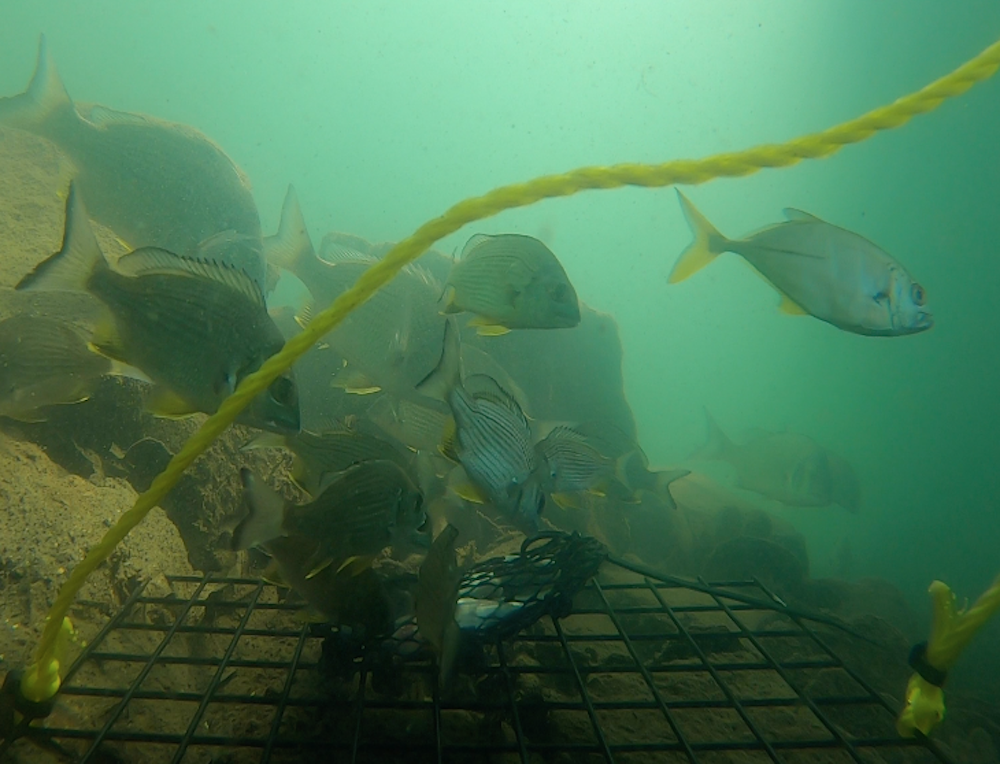 A screenshot from our undersea survey videos.
Kirsten Benkendorff, Author provided
A screenshot from our undersea survey videos.
Kirsten Benkendorff, Author provided
Keeping estuaries clean
Leaf oyster reefs are found on soft sediment in estuaries, on sand, mud and among mangroves, in tropical and subtropical regions around the world. In Australia, they’re found from Exmouth in Western Australia to the Macleay River on the mid-north coast of New South Wales.
We’ve also seen leaf oysters on artificial rock walls and in shallow water along the edge of small boat harbours. Some of these are likely to be remnant populations of larger clusters or reefs, but given they’re often partially buried, there’s little information available about their past distribution.
Like other oyster reefs, we expect leaf oysters play a significant role in maintaining water quality and nutrient cycling in estuaries.
Read more: The surprising benefits of oysters (and no, it's not what you're thinking)
Coastal lakes and estuaries are a major repository of run-off from agriculture and urban development, leading to poor water quality. Shellfish reefs in healthy estuaries can buffer this effect by removing particles and bacteria from the water, and reducing dissolved nutrients and algal blooms.
As animals that eat food suspended in water, leaf oysters can filter vast volumes of water each day. With their large gills and extremely flat shape, their filtration abilities are highly effective in slow-moving tidal waters.
Oyster reefs more generally also trap and stabilise sediment, which can provide an important buffer against coastal erosion.
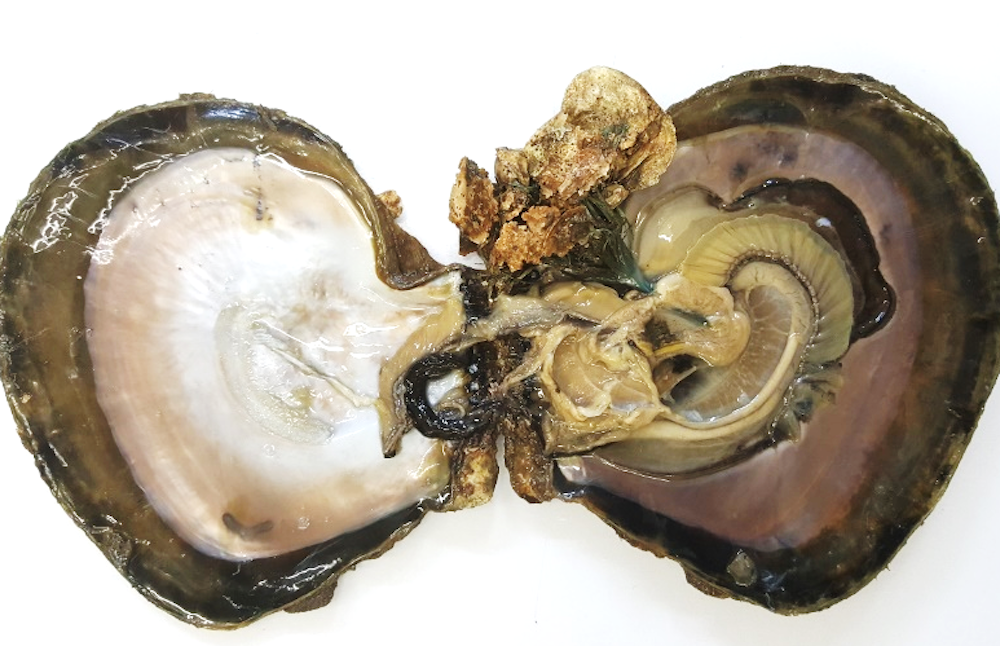 The inside of a leaf oyster.
Chamara Benthotage, Author provided
The inside of a leaf oyster.
Chamara Benthotage, Author provided
Threats to leaf oyster reefs
The current condition of shellfish reefs in Australia is dire. Declining water quality is recognised as one of the most serious threats to estuaries, with excessive nutrients leading to algal blooms, which can be harmful.
High amounts of sediment can clog up the gills of filter-feeding oysters and can lead to the complete burial of historical oyster reefs. In the past, dredging for oysters, boat harbours and breakwaters has also directly damaged oyster reefs.
Our recent surveys (which aren’t yet published) of leaf oyster beds across four estuaries in northern NSW suggest leaf oysters have disappeared from some locations where they were previously known to live. In the remaining beds, we found 30-67% of the shells to be dead.
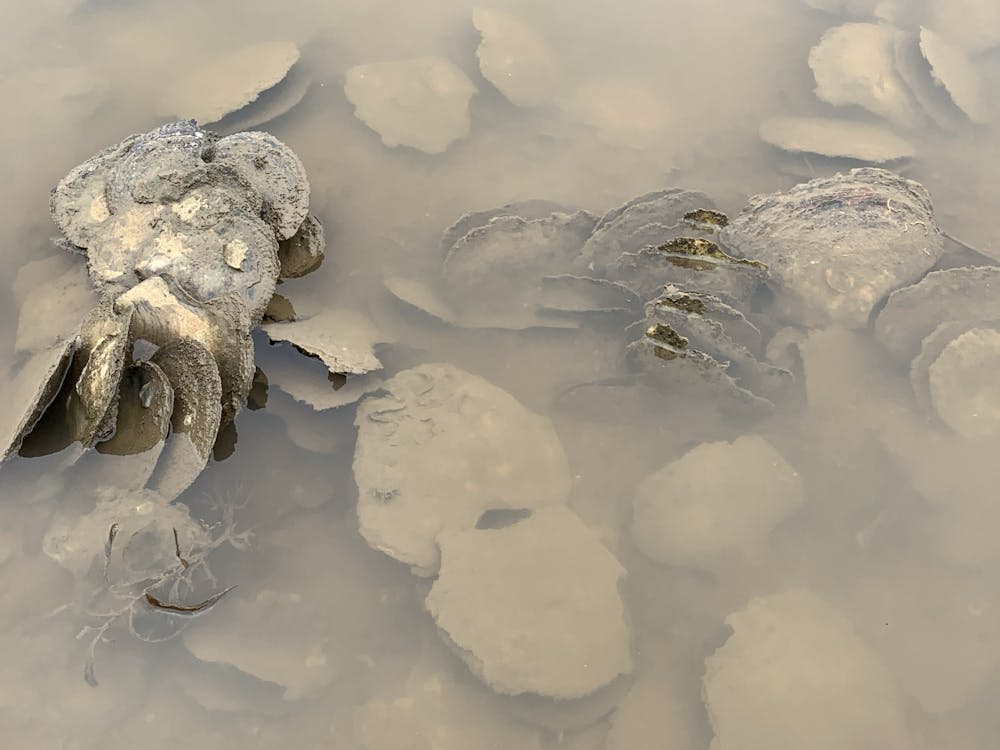 Fewer leaf oysters lead to poorer water quality.
Kirsten Benkendorff, Author provided
Fewer leaf oysters lead to poorer water quality.
Kirsten Benkendorff, Author provided
Their deaths have terrible knock-on effects and are correlated with poor water quality after rain, high acidity, low dissolved oxygen, high nutrients and higher rates of sedimentation.
But one of biggest threats to leaf oyster populations is the lack of knowledge on the species. In particular, the lack of historical information on where they live and how many there are makes it difficult to document how they’ve declined. And this is necessary for listing them as threatened species.
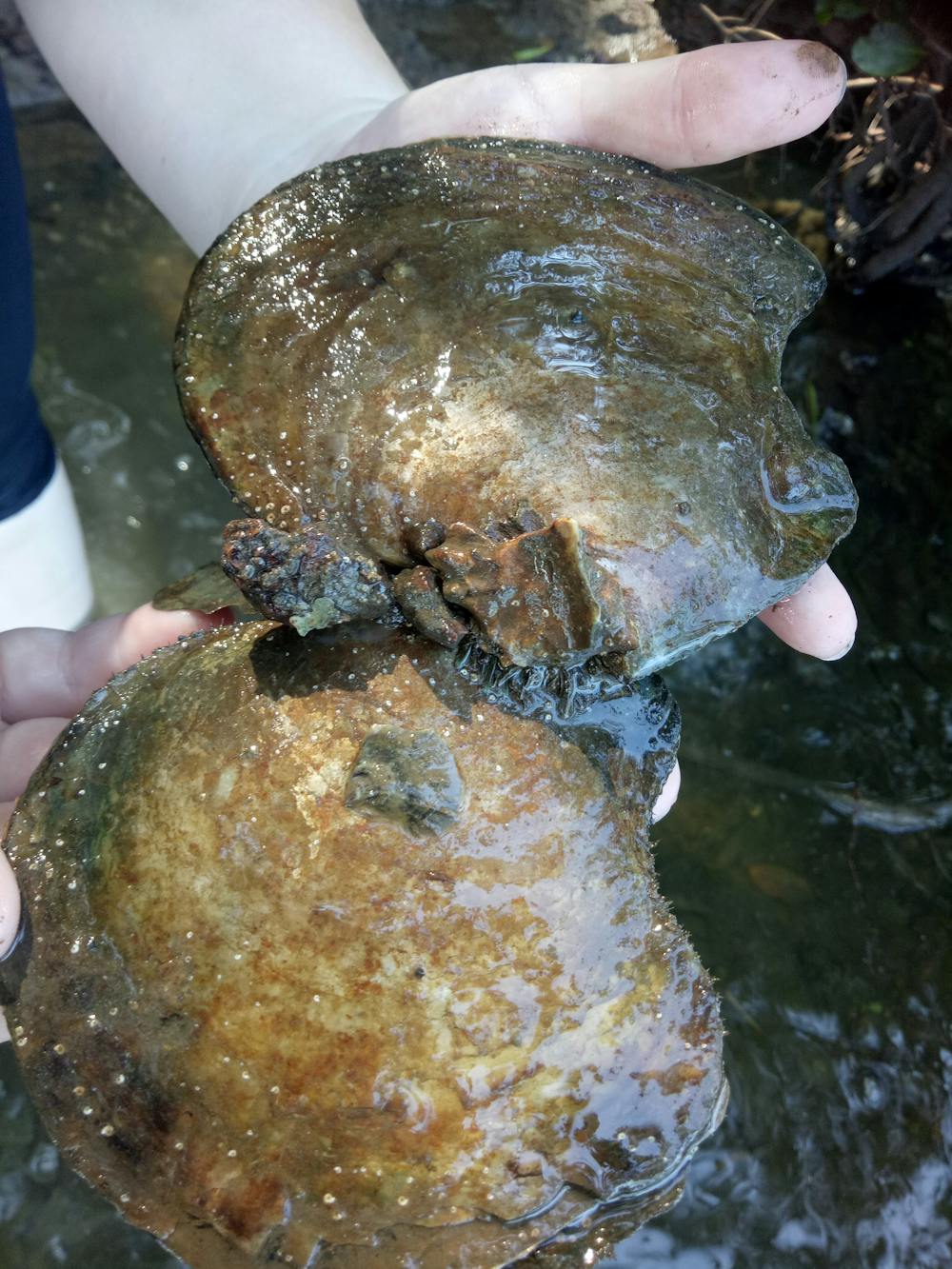 We need more comprehensive maps of leaf oyster distribution.
Chamara Benthotage, Author provided
We need more comprehensive maps of leaf oyster distribution.
Chamara Benthotage, Author provided
Our concern extends beyond the survival and protection of the single species, to the entire ecosystem the leaf oysters underpin.
Improving our understanding of leaf oyster reefs requires more comprehensive mapping of the remaining populations and gaining a better understanding of their life cycle. This includes when they breed, how the larvae develop and where they settle, their age at sexual maturity and how long they live.
This will help us include them in reef restoration and estuarine management plans, protecting Australia’s precious, fragile wildlife in the face of a difficult future.
Read more: Ah shucks, how bushfires can harm and even kill our delicious oysters
Authors: Kirsten Benkendorff, Associate Professor in Marine Biology, Southern Cross University

















