

Despite Omicron arriving, keeping schools open as safely as possible should be the goal
- Written by: Jin Russell, Community and Developmental Paediatrician, University of Auckland
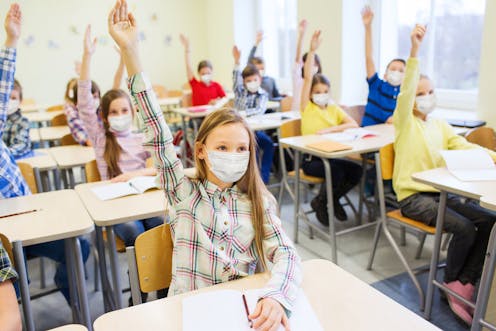
The Omicron variant has caused serious disruption to schooling overseas. As Aotearoa New Zealand prepares for an Omicron outbreak, we expect calls to close schools as case numbers rise.
In our research report, we assess the impacts of school closures on children and young people and make policy recommendations.
From a child-centred perspective, the goal should be to protect children from both direct and indirect harms from the pandemic. Direct harms refer to COVID-19 illness among children and their whānau. Indirect harms include educational impacts, social isolation and loneliness, financial strain and family stress – all of which children can experience during isolation or school closures.
It’s important to protect children from both types of harm.
It’s helpful to understand that children have consistently experienced less severe illness compared to older age groups. Infection in children typically resembles a cold, with cough, fever, sore throat and gastrointestinal symptoms that can be managed at home.
Many children have no symptoms at all. Of the 4,960 children who had COVID-19 in the Auckland Delta outbreak in August, between 1% to 2% were hospitalised. One child was admitted to an intensive care unit.
Hospitalisations will be much less common with vaccinations now available for all school-aged children. More than 90% of 12-18 year olds have already had two Pfizer doses.
Read more: Should my child have a COVID vaccine? Here's what can happen when parents disagree
The Omicron variant appears to cause less severe illness, including for children, than previous variants. Vaccinations are effective at protecting children from serious illness and are very safe.
In adolescents, two doses of the Pfizer vaccine are 94% protective against hospitalisation, 98% against ICU admission and 91% against the rarer complication of multisystem inflammatory syndrome. It is reasonable to expect similar vaccine protection for 5-11-year-olds.
Vaccines for primary school children need to be rolled out rapidly and equitably, especially for Māori and Pacific children who have borne a larger burden of illness and hospitalisation.
As vaccination coverage for 5-11-year-olds rises and adults are increasingly vaccinated and boosted, it’s time to pay more attention to protecting children from the indirect harms of the pandemic.
Prolonged closures are not a sustainable strategy
During the first 18 months of the pandemic, Aotearoa New Zealand topped the OECD for the number of days schools remained fully open. The successful elimination strategy used lockdowns, including school closures, to stamp out community transmission. This resulted in schools being fully open for long periods.
In a post-elimination context, with a highly vaccinated population and vaccines available for all school children, prolonged school closures are not an optimal or sustainable strategy.
Schools have not been major drivers of community transmission, compared to churches, gyms, restaurants and bars, probably due to protective measures in schools to prevent transmission. A systematic review was inconclusive as to whether school closures significantly affected community transmission.
It does not make sense to close schools while allowing other higher-risk indoor venues to stay open. School closures should be a last resort to control community transmission.
Schools should be considered as “essential services” for children and young people. Beyond formal education, they provide friendships, meals, social support, and therapists for children with disabilities.
Due to educational disadvantages, Māori and Pacific children are more affected by school closures and have the most to gain from ongoing in-person learning.
Lost learning from school closures can be considerable. While catch-up learning can occur, students from disadvantaged backgrounds can continue to lag behind, exacerbating existing inequities, with potentially life-long occupational impacts.
Children’s mental health
School closures also affect children’s emotional and mental health. Many children are resilient, but a substantial proportion experience poorer mental health and behavioural problems.
Social isolation, financial stress and divided attention at home can also contribute to worsening parental mental health and family violence. One in ten New Zealanders surveyed during the 2020 national lockdown reported directly experiencing some form of family violence. In all of these, disadvantaged children are disproportionately affected.
These indirect impacts are harder to quantify than case counts and hospitalisations but they are very real. Toxic stress – prolonged, stressful experiences in childhood – can lead to permanent changes in the architecture of the developing brain and stress-hormone systems, with life-long impacts on health and development.
Ventilation, masks and outdoor learning
We need to optimise the multi-layered approach to reducing COVID-19 transmission in schools in light of Omicron’s increased transmissibility.
Improving natural ventilation, maximising outdoor learning, using well-fitted masks and avoiding high-risk activities such as singing indoors are all known to reduce transmission within schools, particularly when these preventative measures are layered.
Natural ventilation is easier in summer through opening windows and doors. Carbon dioxide monitors can identify where ventilation needs to be improved and portable HEPA air cleaners for hard-to-ventilate rooms will be part of a clean-air strategy for schools.
Schools also need a robust mask strategy and teachers would benefit from access to strong mask protection. Booster vaccines for teachers are mandated and provide another strong layer of protection.
We also need to understand whether using rapid antigen tests to reduce the number of infected children attending schools is workable, as using these can be difficult to implement successfully. Surveillance testing, where students and staff are tested at home regularly, and test-to-stay policies, where students and staff who are close contacts test daily and only attend school if they test negative, are based on sound public health principles and deserve careful consideration.
Read more: How to help your child get the most protection out of their face mask
We are calling for school closures to be a last resort to control community transmission. But this does not mean we believe schools should remain open for onsite learning at all costs.
Despite best efforts, schools may need to close temporarily during significant outbreaks or if large numbers of staff fall ill or isolate. But even if a school needs to revert to online learning, this doesn’t mean all in-person learning has to end.
Regular outdoor sessions could continue for all students even if indoor learning pauses, such as physical education classes, games for primary schoolers, and small group learning sessions. Such opportunities for interacting with friends and teachers would maintain relationships and bring many benefits for children at very low risk.
Doing our best for children and young people in 2022 means thinking about their health holistically. As vaccination coverage rises, keeping schools open as safely as possible is the most equitable plan for children.
This article was co-authored by public health physicians Dr Subha Rajanaidu (Auckland and Waitemata District Health Boards) and Dr Philippa Anderson (Counties Manukau DHB), and paediatricians Dr Danny de Lore (Ngāti Tuwharetoa, chair Royal Australasian College of Physicians’ Indigenous Child Health working group), Dr Emma Best, Dr Alison Leversha and Dr Rachel Webb (all at the University of Auckland).
Authors: Jin Russell, Community and Developmental Paediatrician, University of Auckland


















