

How snowboarding became a marquee event at the Winter Olympics – but lost some of its cool factor in the process
- Written by Holly Thorpe, Professor in Sociology of Sport and Physical Culture, University of Waikato
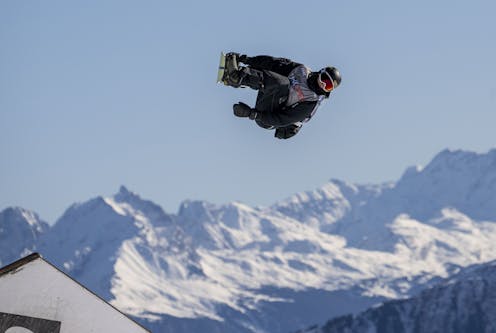
The mass appeal of creative, youth-oriented events such as snowboarding and freestyle skiing at the Winter Olympics is a virtual case study of how the once radical can go mainstream.
And while audiences have come to love these relatively new sports, the story of snowboarding’s inclusion in the Olympics also reveals the unintended consequences of “success” for the image of the sport itself.
When snowboarding first emerged in the late 1960s and ’70s in North America, most of its early pioneers were young people who rejected competitive, organised sport. Inspired by surfing and skateboarding rather than skiing, they were seeking something that offered fun, self-expression and an alternative identity.
Despite some initial resistance from skiers and resorts, snowboarding’s popularity grew during the 1990s. Television and corporate sponsors identified its huge potential to attract the elusive young male market. Increasingly, transnational media corporations and events likes the X-Games and Gravity Games controlled and defined snowboarding.
While some snowboarders initially resisted “selling out”, many embraced the opportunities to develop the sport and carve out new careers for themselves as “extreme sport” athletes.
Early resistance
Meanwhile, the Winter Olympics (always a more niche event compared with its summer counterpart) recognised snowboarding’s potential to attract younger viewers and international sponsors.
The International Olympic Committee (IOC) first included snowboarding in the 1998 Winter Olympics, but under the governance of the International Ski Federation (FIS) rather than the International Snowboard Federation. The loss of autonomy and control infuriated many snowboarders.
The world’s best halfpipe rider at the time, Norwegian Terje Haakonsen, was particularly vocal, refusing to be turned into a “uniform-wearing, flag-bearing, walking logo”. Many other snowboarders echoed his sentiments.
Read more: How the Winter Olympics expanded – and brought growing pains with them
And while snowboarding’s assimilation continued, the four events that debuted in 1998 – men’s and women’s halfpipe and giant slalom – were largely treated as a sideshow. The athletes were perceived and portrayed as interlopers in the Olympic program. As The Washington Post put it:
Snowboarders are the official curiosity of the Nagano Winter Games. They’re totally new to the Olympics. They look different, they sound different, they are different.
When Canadian Ross Rebagliati tested positive for marijuana after winning the first snowboarding gold medal, the IOC revoked his medal, only to return it a few days later when Rebagliati’s lawyers found a loophole in the IOC/FIS drug policies. The scandal confirmed the view – of snowboarders as well as mainstream commentators – that snowboarding was not ready to become an Olympic sport.
Acceptance and growth
By the 2002 Winter Olympics in Salt Lake City, however, the packaging of snowboarding had evolved and the sport’s second mainstream outing was deemed a resounding success. Nearly 32% of the US population (92 million people) watched the halfpipe competition in which Americans won gold, silver and bronze in the men’s event and gold in the women’s event.
Official broadcaster NBC reported a 23% ratings increase among 18-to-34-year-olds. For the IOC, the inclusion of snowboarding had become a game-changer, showcasing cool new sports celebrities for Olympic audiences, especially in the lucrative US market.
Read more: Get caught up in the Olympic spirit, but keep your (political) eyes wide open
By the 2010 Winter Olympics in Vancouver, snowboarders were front and centre, with Shaun White from the US deemed the most “recognisable athlete”.
When White won his third gold in the halfpipe at the 2018 Olympics in Pyeongchang it attracted a record 22.6 million viewers in the US alone. Having qualified for his fifth Olympics, White will bring his star power to Beijing this year.
Women on board
Women snowboarders have competed in all Olympic events since 1998, expanding opportunities for women in the sport and industry.
Olympic snowboarders such as Kelly Clark, Hannah Tetter, Torah Bright and Chloe Kim build on the efforts of previous generations of female snowboarders, carving out new space for girls and women in the sport.
In the process of wowing audiences, they’ve also inspired the next generation of stars like New Zealand’s Zoi Sadowski-Synnott and Japan’s Ono Mitsuki.
It’s estimated women will make up 45% of the athletes competing in Beijing this year, including in the new mixed team snowboard cross event, added as part of a broader IOC initiative to achieve gender parity.
Victim of its own success?
While the IOC held the line with certain rules and regulations (no stickers on snowboards, no large corporate logos on clothing or equipment), it has been increasingly willing to accommodate snowboarders’ individuality – allowing more clothing choices and athletes to select their own music for halfpipe runs.
Snowboarding’s success has also helped open up the Winter Olympics to other youth-focused sports, particularly free-skiing disciplines, as well as influencing the Summer Olympics’ embrace of BMX, surfing, skateboarding, sport climbing and breaking.
Read more: Alt goes mainstream: how surfing, skateboarding, BMX and sport climbing became Olympic events
But there’s an irony to snowboarding’s mainstream success, too. While it has become popular with broader audiences, and companies and athletes have done very well from Olympic exposure, it appears to have lost its appeal among younger people.
Participation has been declining steadily in recent years – to the point where former pro snowboarder and action sports agent Circe Wallace has said the sport’s commodification and institutionalisation have been “the death knell of the unique culture and beauty of snowboarding”.
It’s a familiar story – youth-culture cool incorporated by mainstream businesses and organisations for profit. As the IOC continues to search out the latest youth-oriented sports to help it stay relevant, bring back younger viewers and attract corporate sponsors, we would do well to ask who, ultimately, are the real winners and the losers.
Authors: Holly Thorpe, Professor in Sociology of Sport and Physical Culture, University of Waikato

















