

Google AI


Modern Australian

Why do we love the great outdoors? New research shows part of the answer is in our genes

  • Written by: Richard Fuller, Professor in Biodiversity and Conservation, The University of Queensland
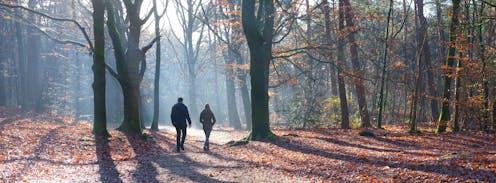
Why do we love the great outdoors? New research shows part of the answer is in our genes

Do you love spending time in nature? Or are you a city slicker, happier in the concrete jungle than the great outdoors? Back in 1986, the US biologist EO Wilson proposed that humans have an innate connection with the natural world, an idea known as biophilia.

Almost every aspect of our lives depends on nature, from food and shelter to fuel and clothing. Yet some of us are much more “into” spending time in nature than others.

To try to understand why, we studied more than 1,100 pairs of twins to find out how much of our connection to nature might depend on our DNA. We found almost half the variation in people’s connection to nature can be put down to genetics.

Nature is good for you

There is strong evidence even a wander in the local park can be beneficial for our mental and physical health. Yet with work and family responsibilities and packed social schedules, most of us do not regularly spend time in nature.

We wondered why some people spend more time in nature than others, and what underpins the fact some of us feel more strongly connected to nature.

Read more: Why daily doses of nature in the city matter for people and the planet

Perhaps our affinity for nature is inherited. Or perhaps we get it from environmental factors – such as beautiful forests – in the places we live. Or again it might come from our cultural milieu such as the books we read or the TV programs we watch.

Finding answers to these questions might help us work out how to get some nature back into people’s lives.

Studying twins

We studied more than 1,100 pairs of twins to understand the origin of affinity for nature, and report the results in a study published today in PLoS Biology. It turns out identical twins are much more similar to each other in the strength of their connection to nature than non-identical twins.

Statistical analysis of the results showed 46% of the variation in connection to nature, as measured on a psychological scale, can be explained by genetic factors. Even the amount of time we spend in our own backyards and visiting local parks seems to have a strong genetic basis.

Studies of twins show 46% of the variation in connection to nature as measured on a psychological scale can be explained by genetic factors. Shutterstock

Why the strong genetic influence on our love for nature? Well, one can imagine a strong affinity with nature conferring a significant survival advantage for early humans. This might have led to the formation of complex networks of genes that govern how we relate to nature, and how we behave in it.

Despite the clear role of genetics, our results show other factors actually shape most of our affinity to nature. These might include childhood holiday destinations, the examples set by our parents, friends and other family members, educational experiences, and whether we live in a biodiverse area.

This is good news, because many of these things are under our own control.

Nature and health

Nature–based health interventions such as green gyms or environmental volunteering can improve physical, mental and social health and well-being. Nature-play initiatives such as the Green Passport for Queensland kids can give children powerful experiences of nature that could benefit their health over the long term.

Read more: Being in nature is good for learning, here's how to get kids off screens and outside

A deeper question, and one we don’t yet have a clear answer to, is whether spending time in nature fosters our sense of environmental concern, and in turn, support for nature conservation.

The US ecologist James Miller has argued interactions with nature are crucial in sparking support for protecting nature. Yet an Australian study led by environmentalist Jessica Pinder showed conservation concern among Australian undergraduates was more strongly associated with social and cultural experiences in childhood than with the amount of time a person spends in nature. Clearly, there is much more to learn in this area.

Ultimately, we now know despite a genetic basis for our affinity to nature, much of it also depends on other factors that are decidedly under our own control. So make a resolution today to rekindle your connection to the great outdoors!

Authors: Richard Fuller, Professor in Biodiversity and Conservation, The University of Queensland


Read more https://theconversation.com/why-do-we-love-the-great-outdoors-new-research-shows-part-of-the-answer-is-in-our-genes-175995

Better Business Photos Without Misleading Customers: An Australian Guide

A timber dining set looks inviting against a sunny deck, with cushions, lanterns and enough chairs for the whole family. But imagine the retailer sell...

Understanding a dental implant Melbourne Treatment Plan

A dental implant Melbourne patients may consider is one option for replacing a missing tooth, but suitability depends on oral health, bone support a...

How 3PL Logistics Australia Supports Faster and More Efficient Supply Chains

Why Has 3PL Logistics Become Important for Growing Businesses?  Gone are the days when supply chains were simpler and in minimal quantity. Now, the...

Common Skin Concerns and Treatment Options Available in Melbourne

Skin concerns can develop gradually or become noticeable following changes in age, lifestyle, sun exposure or hormonal factors. Pigmentation, rednes...

Why a Code-Compliant Home Can Still Feel Uncomfortable

When people build or renovate a home, they usually expect that meeting current building requirements will also produce a comfortable place to live. ...

Breach of Contract in Business: What Are Your Options?

Contracts are essential to business relationships. They establish expectations, allocate responsibilities and provide a framework for delivering goods...

How Pest Control Companies Can Rank for the Problems Customers Search First

Introduction SEO for Pest Control needs to start with the customer’s problem. Most people do not search for pest services in a neat or technical wa...

What Are the Benefits of Renovating an Older Home in Sydney?

Sydney has plenty of character homes, from Federation cottages to mid-century brick homes. Renovating rather than rebuilding can preserve what makes t...

Pool and Deck Design: How to Plan the Perfect Outdoor Living Space for Your Sydney Home

For many Australians, the backyard is where life happens. Summer barbecues, weekend swims and long evenings outdoors are all part of the lifestyle, ...

Is Solar Pool Heating Worth It? What Sydney Homeowners Should Know

There's nothing quite like a backyard pool on a hot Sydney day. But once autumn rolls in, many pools sit unused for months because the water is simp...

Planning a Luxury House Move: A Week-by-Week Timeline for Prestige Sydney Homes

Selling or buying a prestige home is a major milestone. Whether it's a waterfront residence in Birchgrove, a grand Federation home in Haberfield or ...

Downsizing or Upgrading Your Caravan? Here's How to Sell It Without the Hassle

Selling a caravan can feel like a major task, especially when you are unsure about its value, paperwork, or how to find a buyer. Whether you are dow...

The Best Overseas Adventure Holidays for Australians Who Love the Outdoors

Australia offers no shortage of incredible outdoor experiences, but sometimes the best way to satisfy your sense of adventure is to head overseas. A...

Cape Town Wine Shuttle: Winelands Tasting & Tours

Embark on an unforgettable journey through the picturesque Cape Winelands, where world-class wines and breathtaking scenery await. Our Cape Town Win...

Metal Fabrication: Choosing Metal Fabrication Melbourne Services for Custom Projects

What Modern Metal Fabrication Involves From individual components to complete structures, metal fabrication brings together processes such as desig...

Why Giant Rats Tail Grass Keeps Coming Back After Spraying

Giant Rats Tail Grass (GRT) is one of the most frustrating pasture weeds for farmers and lifestyle property owners. You spray an infested area, see th...

When Custom Cardboard Boxes Make Sense for Your Business

Custom cardboard boxes can be useful when a standard carton does not fit a product, packing method or presentation requirement particularly well. A ...

Full-Height vs. Pop-Top Caravan: Which Is Better for Family Travel across WA?

A pop-top caravan is an excellent choice for travellers who want the comfort of a caravan without committing to a larger, bulkier setup. With a lowe...
















