

Return-to-school plans overlook chronic teacher shortages outside the big cities
- Written by Christopher Hudson, Sessional Instructor, Victoria University, and Doctor of Education candidate, The University of Melbourne
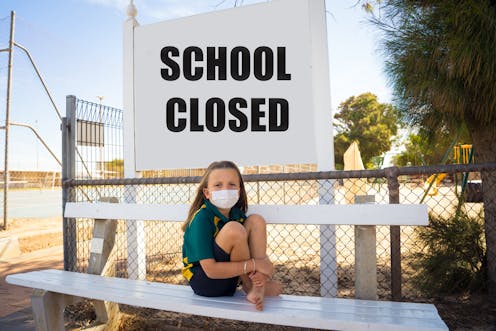
As students across Australia return to onsite learning, the possibility of Omicron disrupting schools remains high. Commonwealth Chief Medical Officer Paul Kelly has warned transmission of the virus will increase with schools reopening. This may lead to school closures and staff shortages across the country.
Education departments across Australia have developed plans to counter workforce disruptions. Schools can call on pools of retired teachers to help fill the gaps. The plans also include adjusted timetables and collapsed classes in response to staff shortages.
Although these measures may help to keep onsite learning going, they have been decided at a policymaker level through a metro-centric lens. The voices of rural and remote educators have largely been neglected. As a result, the plans fail to consider the existing challenges of staffing rural and remote schools.
The emphasis is on schools remaining open across Australia this year. But it isn’t clear how the national framework that guides the return-to-school plans of the states and territories will deal with the chronic teacher shortages outside the big cities.
For schools in rural and remote Australia, the challenge of teacher shortages is already daunting. If increased COVID-19 transmission through school communities affects their staffing, this will have big impacts on teaching and learning.
A metro-centric response isn’t always going to work for rural and remote schools.
The nearest retired teacher might be 200km away. Rural schools with limited resources can only manipulate timetables so much. Collapsing classes may not always be a reasonable and safe option in rural and remote schools with limited space and capability to do so.
And, in contrast to metropolitan school principals, many rural and remote principals already have a teaching load on top of their leadership role. Any added workload can’t be shifted to them.
Read more: We need a radical rethink of how to attract more teachers to rural schools
Isolation magnifies staffing challenges
Research shows the significant impact teachers have on student learning outcomes. Continuing to deliver high-impact teaching will be difficult if large numbers of teachers test positive for COVID-19.
The Australian Education Union believes recent changes to the isolation rules for teachers will compromise the safety of the entire school community. If transmission increases in schools, we can’t deny teachers – more than one in five are in the more vulnerable age groups over 55 – the right to focus on their health. Especially when they are overworked and considering leaving the profession in droves.
Read more: COVID and schools: Australia is about to feel the full brunt of its teacher shortage
Personal and professional isolation is an added challenge for teachers in rural and remote schools. This leads to even more staffing pressure and attrition than in metropolitan schools.
What is needed is an approach that supports all schools in Australia to safely tackle COVID-related staff shortages. It must be done in a way that also ensures high-quality teaching and learning.
City-rural gap threatens to widen
The Australian government-commissioned Independent Review into Regional, Rural and Remote Education (IRRRRE) highlighted the widening achievement gap between metropolitan students and rural and remote students in Australia. Rural and remote students score lower on NAPLAN and PISA tests, are less likely to finish secondary school and are less likely to go on to higher education than students in the major cities.
Read more: How to solve Australia's 'rural school challenge': focus on research and communities
The exodus of teachers from rural and remote schools restricts the ability of students and their communities to succeed in a globalised and technological world.
Action is now needed to ensure the achievement gap doesn’t widen further.
What needs to be done?

The IRRRRE report calls for a national focus on improving teaching and learning in rural and remote schools. The goal is to ensure, regardless of location or circumstances, that every young person in Australia has access to high-quality schooling and employment opportunities. One recommendation is targeted support for recruiting and retaining high-quality teachers for rural and remote schools that are struggling to do this.
Victoria, Queensland, New South Wales, South Australia, Western Australia and the Northern Territory all provide funding and incentives to recruit and retain teachers in rural and remote schools. However, despite 20 years of research into staffing non-metropolitan schools, Australia has not managed to achieve significant long-term improvements in this area.
Read more: The best way to boost the economy is to improve the lives of deprived students
The first step towards achieving lasting change is for governments to include the voices of rural and remote school educators when deciding how best to keep their schools open this year. Ongoing dialogue and reflection can lead to innovative problem-solving that matches the context in which rural and remote schools operate.
Next, differentiated support needs to be offered to rural and remote schools as part of the nation’s return-to-school plans. Providing additional targeted assistance and resources to keep these schools open is more valuable than the one-size-fits-all metro-centric guidance provided to date.
Authors: Christopher Hudson, Sessional Instructor, Victoria University, and Doctor of Education candidate, The University of Melbourne

















