

In heatwave conditions, Tasmania’s tall eucalypt forests no longer absorb carbon
- Written by Tim Wardlaw, Research Associate, University of Tasmania
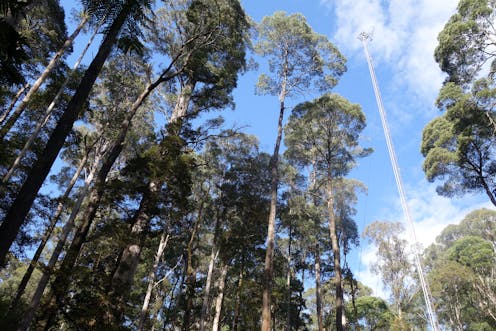
Southern Tasmania’s tall eucalyptus forests are exceptionally good at taking carbon dioxide from the atmosphere and converting it into wood.
For many years, we have believed these forests had a reasonable buffer of safety from climate change, due to the cool, moist environment.
Unfortunately, my research published today shows these forests are closer to the edge than we had hoped. I found during heatwaves, these forests switch from taking in carbon to pumping it back out.
That’s not good news, given heatwaves are only expected to increase as the world heats up. While we work to slash emissions, we need to explore ways to make these vital forests more resilient.
From carbon dioxide in to carbon out
It’s well established from forest sampling that moist, cool environments like southern Tasmania provide ideal growing conditions for tall eucalypt forests.
We had believed these types of forests would have a buffer against the worst effects of climate change to come, and perhaps even benefit from limited warming.
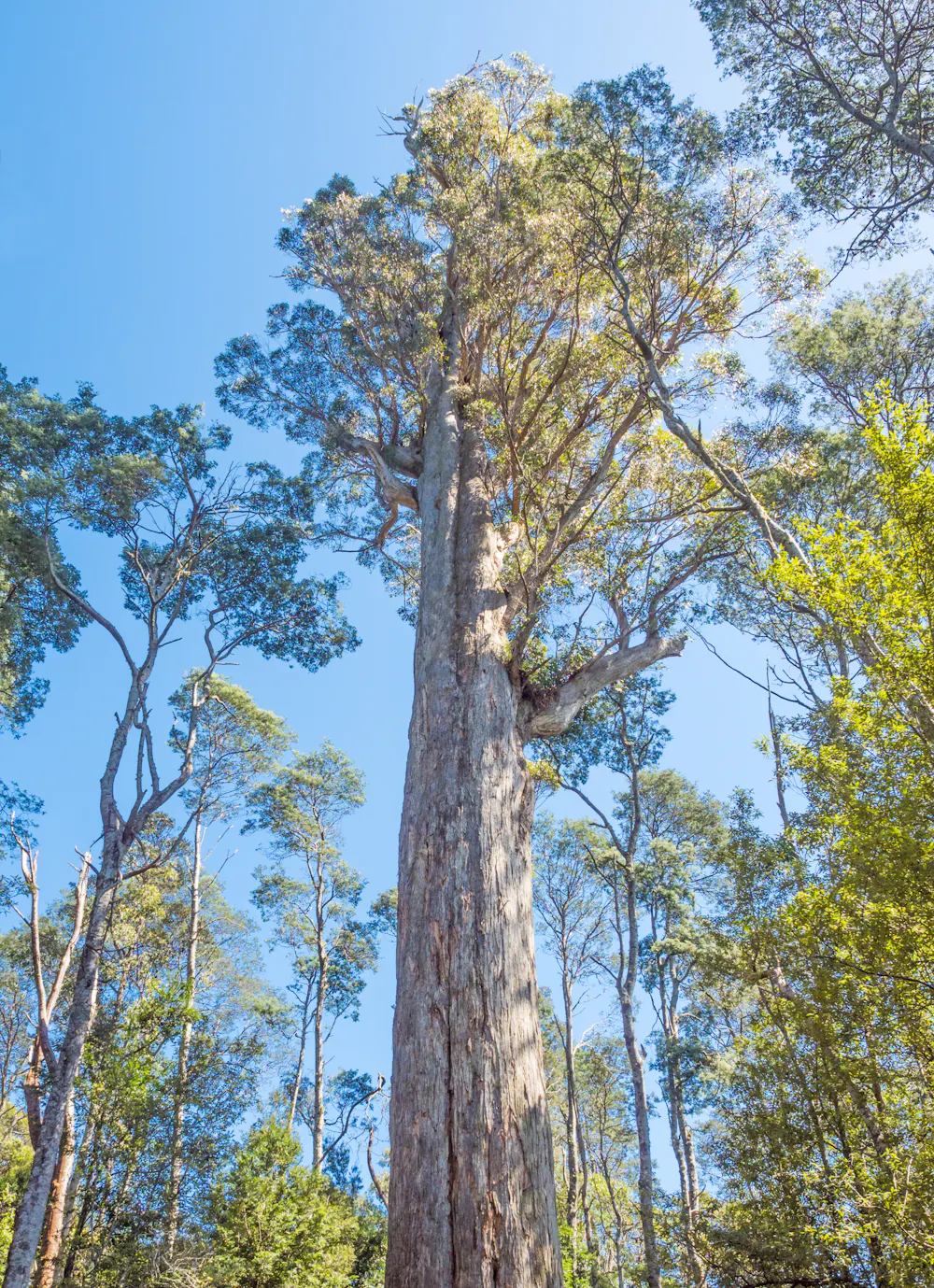
But this is no longer the case.
I monitored what happened to a messmate stringybark (Eucalyptus obliqua) forest during a three week heatwave in November 2017. Under these conditions, the forest became a net source of carbon dioxide, with each hectare releasing close to 10 tonnes of the greenhouse gas over that period.
A year earlier during more normal conditions, the forest was a net sink for carbon dioxide, taking in around 3.5 tonnes per hectare.
How can we know this? The forest I studied is at the Warra Supersite in the upper reaches of the Huon Valley, one of 16 intensive ecosystem monitoring field stations making up Australia’s Terrestrial Ecosystem Research Network.
Instruments mounted on an 80-metre-tall tower at Warra give us great insight into how the forest is behaving. We can measure how much, and how quickly, carbon dioxide, water and energy shuttle between the forest and the atmosphere.
So what actually happened in the forest during the hot spell? Two crucial things.
The first was that the forest breathed out more carbon dioxide. This was expected, because living cells in all air-breathing lifeforms (yes, this includes trees) respire more as temperatures warm.
But the second was very unexpected. The forest’s ability to photosynthesise fell, meaning less solar energy was converted to sugars. This took place while the trees were transpiring (releasing water vapour) rapidly.
Until now, we’ve seen falls in photosynthesis output in heatwaves because the trees are trying to limit their water loss. They can do this by closing their pores on their leaves (stomata). When a tree closes its stomata, it makes it harder for carbon dioxide in air to enter the leaves and fuel the photosynthesis process.
By contrast, this heatwave saw trees releasing water and producing less food at the same time.
So what’s going on? In short, the temperatures were simply too hot for the forests in southern Tasmania. Every forest has an ideal temperature to get the best results from photosynthesis. We now know this temperature in Australia is linked to the historic climate of the local area.
That means the trees at Warra require lower temperatures to optimally feed themselves, compared to most other Australian forests.
During the 2017 heatwave, the temperatures soared well outside the forest’s comfort zone. In the hottest part of the day, the forest was no longer able to make enough food to feed itself.
 For now, the forests at Warra remain intact.
Author provided
For now, the forests at Warra remain intact.
Author provided
Outside the forest’s comfort zone
For now, the forest at Warra is still intact. After the heatwave, the messmate stringybark forest quickly recovered its ability to feed itself, and became a carbon sink again.
But as the world warms, these forests will be pushed outside their comfort zones more and more. They can only endure so many of these kinds of heatwaves. If they keep coming, there will be a tipping point beyond which the forest can no longer recover.
What then? We can see a disturbing glimpse when we look at Tasmania’s oceans, which are a marine heatwave hotspot. Fully 95% of Tasmania’s giant kelp forests are now gone, killed off by temperatures beyond their ability to tolerate.
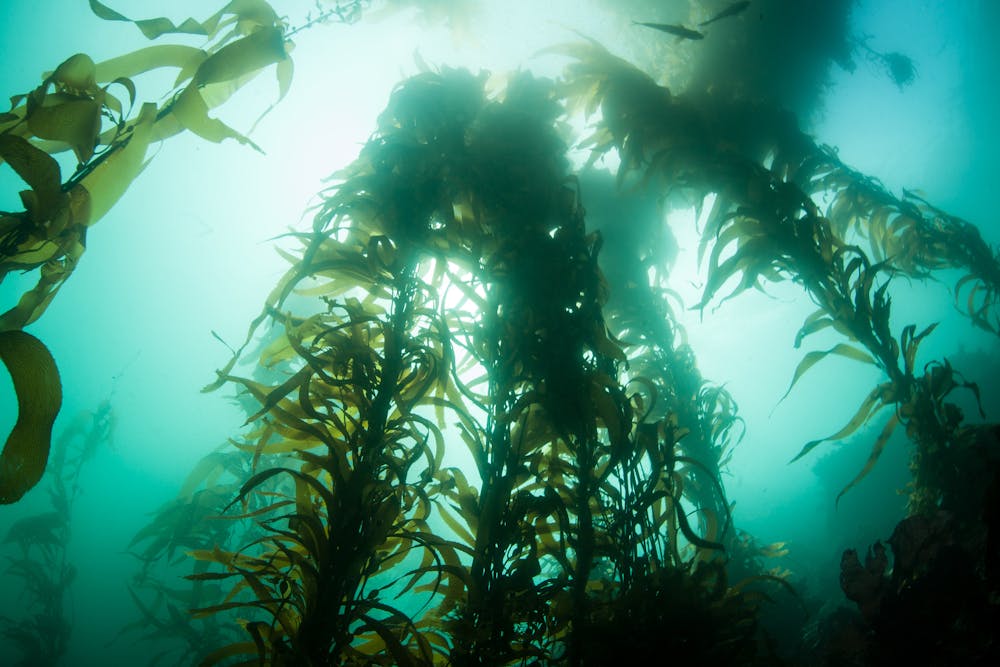 Giant kelp forests are all but gone from Tasmanian waters.
Shutterstock
Giant kelp forests are all but gone from Tasmanian waters.
Shutterstock
It is no exaggeration to say that the rapid increase in temperatures are the most serious threat to the health of tall eucalypt forests I’ve encountered during 40 years of studying forest health and threats in Tasmania.
Unlike the kelp forests, our tall eucalyptus forests have not yet hit their tipping point. We still have time to lessen the risk global heating poses.
Read more: Can selective breeding of 'super kelp' save our cold water reefs from hotter seas?
There is already work under way to test promising new methods for making future forests better able to cope with the new climate they find themselves in.
These techniques include climate adjusted provenancing, where forest managers sow seeds of local species collected from areas at the hotter end of their range. Another being tried for giant kelp is finding individual plants with better heat tolerance and breeding them.
Our eucalyptus forests will need our help, more and more. The better engaged and informed we are about the risks to forests we long thought were highly resilient, the likelier we will be to be able to preserve them.
One way we could do this is by making our monitoring data publicly accessible in real time, so we can grasp the strain our forests are under as the world warms.
Authors: Tim Wardlaw, Research Associate, University of Tasmania

















