

why the debate over compassionate conservation is worth having
- Written by Simon Coghlan, Senior Lecturer in Digital Ethics, Centre for AI and Digital Ethics, School of Computing and Information Systems, The University of Melbourne
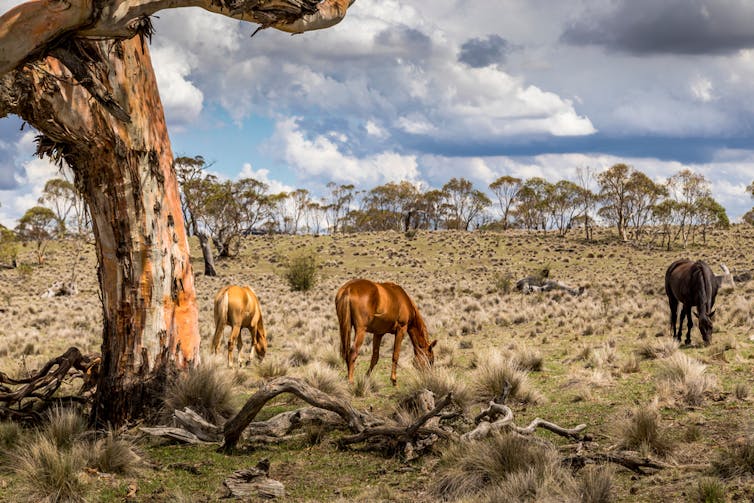
Wild horses roaming the Snowy Mountains have long been the subject of fierce debate. Some say they’re feral pests destroying Kosciuszko National Park’s fragile native ecosystem. Others argue they’re national icons and an important part of Australia’s colonial heritage.
This issue was the subject of last night’s ABC Four Corners episode. But the current debate misses one crucial perspective: that of the wild horses, whose fate is being decided.
This is a perfect example of why the new movement of compassionate conservation raises the question of the animals’ interests in debates about conservation.
Compassionate conservationists ask whether it’s ethical to harm and kill animals to preserve others. They believe ecosystems, species, and individual animals all have significant intrinsic value.
Traditional conservationists have reacted strongly to the criticism, and generally argue the movement is dangerous because it ignores certain bad consequences animals can cause. Some of the most outspoken critics even say it isn’t real conservation or science.
Our research in Conservation Biology probes this debate. We identified 52 criticisms from 11 papers directly arguing against compassionate conservation. We found most frequent criticisms are problematic, while some others have more substance.
Is the debate worth having? We believe it is. Conservation is an application of ethics to the world. When we set out to conserve, we must confront ethical questions. Should we intervene in nature at all? If so, should we prioritise some species? Can we kill and be kind?
What is compassionate conservation?
Many people experienced shock at the environmental devastation caused by Australia’s Black Summer, including the loss of old forests and an estimated three billion birds, reptiles, frogs, and mammals in the path of the fires.
Many observers felt compassion for individual suffering animals, captured in videos such as the distressing one below of a woman running through smoke and heat to rescue a badly burnt koala.
This 2019 video of a woman saving a koala during the Black Summer fires affected many viewers.What do we focus on? The environment, expressed broadly? Or individual animals in front of us? Or both? That’s the issue at the heart of this passionate debate.
Compassionate conservation recognises strong duties towards all sentient animals who can experience pain, distress, happiness or joy.
In Australia, that means both native and non-native animals – including predators such as foxes and cats – warrant our compassion. Through a compassionate conservationist lens, mainstream conservation often shows insufficient ethical regard for individual animals.
Compassionate conservationists say we can be too quick to harm sentient animals affecting ecosystems with methods such as poisoning and shooting. In compassionate conservation, individuals matter, even when they threaten biodiversity on a macro level, and even if their native range is overseas and they were brought here by humans.
How should we apply human values to nature?
Think of a rabbit in a hutch. Now think of a rabbit feeding on grass in the wild in Australia. Chances are, you mentally framed the same animal differently. The first, you will have thought of as “pet” and hence harmless. The second, you may well have thought of as “pest” or even “invader”.
Arguably, these terms lump species into value-laden categories that create barriers for considering the animal’s perspective.
Compassionate conservationists avoid demonising animals as “pests”, “ferals” and “invaders” because it frames animals only in relation to human interests and ignores the interests and agency of individual animals, potentially leading to cruelty or callousness. For example, New Zealand’s “war on possums” is associated with hatred of non-native species.
Read more: Non-native species should count in conservation – even in Australia
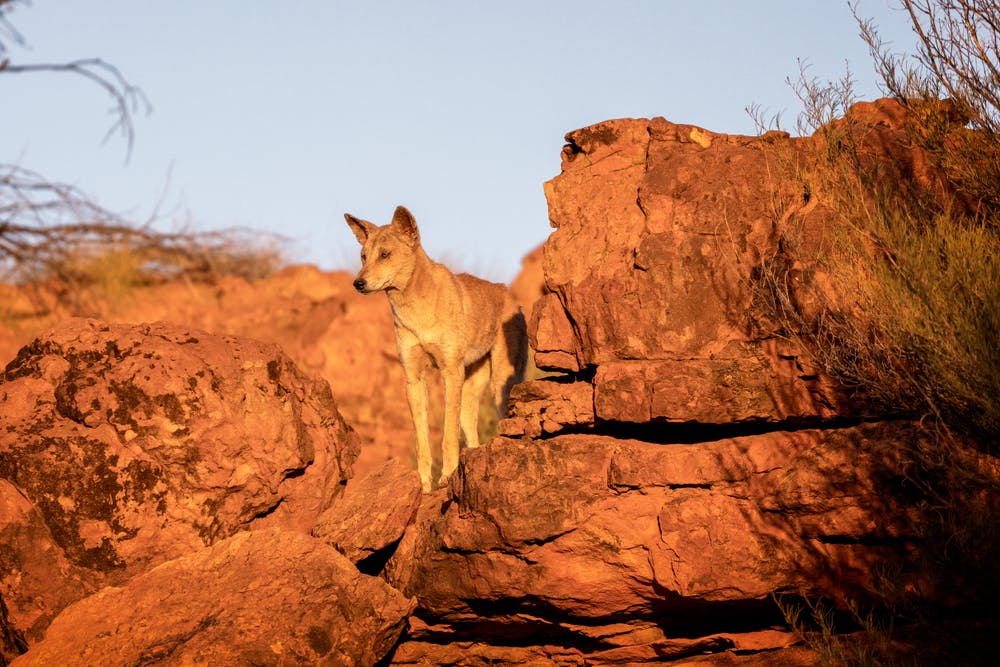
By contrast, compassionate conservationists advocate a broad “do no harm” approach and a creative search for peaceful alternatives to vital conservation. They say that approaches to non-native species like culling can often lack evidence of long-term effectiveness and can cause unintended consequences. For example, lethal control of dingoes can increase fox abundance and decrease small mammal numbers.
Moreover, compassionate conservationists stress the importance of recognising animals’ value, interests and agency. Particularly when making decisions that will impact them.
Is compassion a more ethical framework for conservation?
Critics against the movement argue against the role of compassion. Feelings, they say, can blind us to our responsibilities. But are these criticisms valid? Should we silence compassion to make decisions aimed at preserving ecosystems on a larger scale?
These critiques have important weaknesses. In human affairs, using compassion as a guide has arguably helped produce more just attitudes and policies towards marginalised and oppressed peoples.
Critics can fail to see that “compassion” is a complex response. While compassion and empathy can sometimes morally blind us, they can also be thoughtful and disciplined responses to issues. Compassion is frequently guided by a sense of justice toward both humans and nonhumans.
In our review, we noted critics often avoid questions about the value of animal lives and our responsibilities to them as sentient individuals, such as whether it’s unjust to cause them agonising deaths from poison.
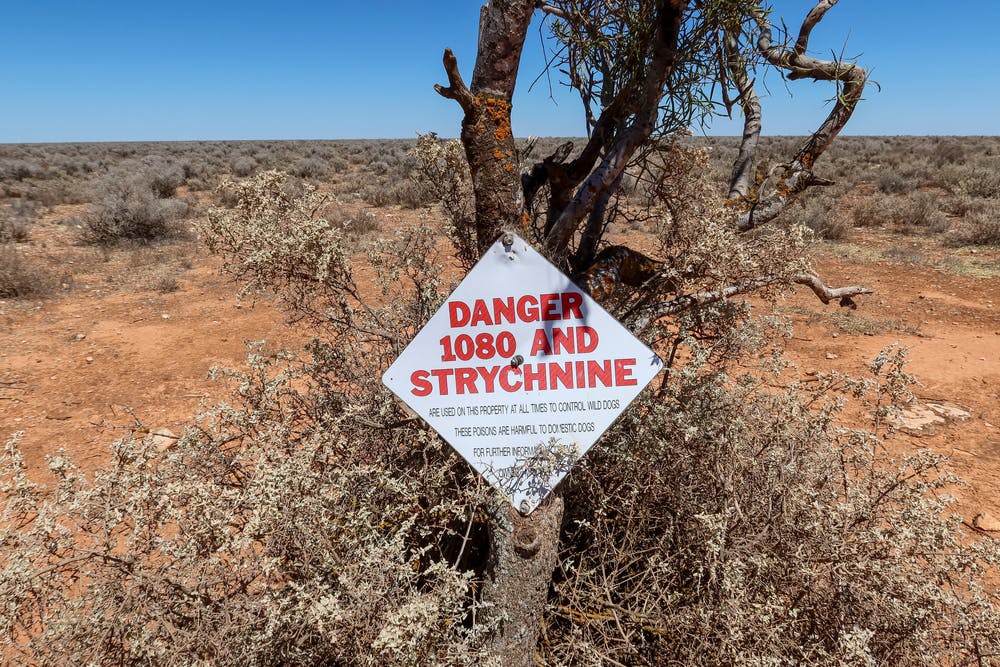 Is poisoning predators better than letting them run free?
Shutterstock
Is poisoning predators better than letting them run free?
Shutterstock
Criticism of compassionate conservation
Yet some criticisms of compassionate conservation have more substance.
Animals, like people, can harm other animals, ecosystems, and even humans. Compassionate conservationists strive to protect and respect all three. But one hard question is precisely how to weigh our general responsibility to do no harm against the survival of species and ecosystems. Is it always wrong to harm animals, even when great ecological havoc may otherwise result?
Some compassionate conservationists argue for the return of predators on a large scale, as a way to manage ecosystems without human intervention. But predators can cause great suffering to other animals, whether introduced or not. Is suffering acceptable as long as we don’t cause it or we cause it indirectly? Should compassion require us to intervene in nature to reduce suffering?
In parts of Southeast Asia, elephants and farmers often come into conflict. The elephants enter into the fields, seeking food. This can be because their original habitats have shrunk drastically. But from the farmer’s point of view, the elephants are stealing from them. How do we balance these competing interests?
A debate worth having
Understanding our ethical duties to animals can be difficult. For example, do we have stronger responsibilities to more sentient animals, like kangaroos and crows, than to animals with possibly less complex inner lives, like frogs and crayfish? What about insects?
While some mainstream conservationists regard compassionate conservation as irrelevant, we believe its provocations have value. Wrestling with the tough questions posed by compassionate conservation could improve how we understand our responsibilities to people, ecosystems and animals.
Authors: Simon Coghlan, Senior Lecturer in Digital Ethics, Centre for AI and Digital Ethics, School of Computing and Information Systems, The University of Melbourne

















