

Google AI


Modern Australian

Why insecure work is finally being recognised as a health hazard for some Australians

  • Written by: Alexis Vassiley, Research Associate, Centre for Work and Wellbeing, Edith Cowan University
Why insecure work is finally being recognised as a health hazard for some Australians

About 3 million Australian workers lack job security. An estimated 2.4 million – 20% to 25% of the total workforce – are casual workers, with no paid leave entitlements. A further 500,000 are on fixed-term contracts.

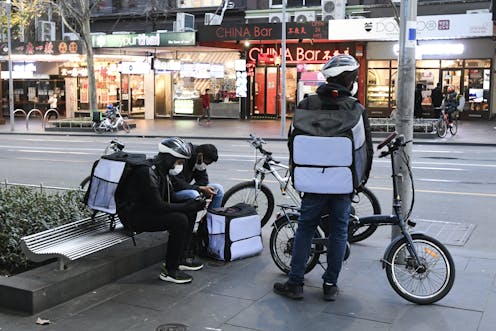
Whether you are labourer engaged by a labour hire company, a checkout operator, a ride-share driver or a university lecturer on a casual contract, job insecurity can harm both your physical and mental health.

In an Australian first, Western Australia has formally recognised this in its new Code of Practice on Psychosocial Hazards in the Workplace, which provides practical guidance on how WA workplaces can comply with their duties under the state’s Occupational Safety and Health Act 1984

A psychosocial hazard refers to any social and organisational factor with the potential to cause psychological or physical harm. In terms of work, it’s anything in the design or management of work that can cause stress.

Better recognition of such hazards was recommended in 2018 by the Boland Review into the “model” laws, regulations and codes that underpin uniformity between Australia’s state and territory work health and safety regimes.

Australia’s federal, state and territory ministers agreed to this recommendation in May 2021. Since then, most states and territories have updated their regulations or compliance codes.

Western Australia is the only one so far to include insecure work. It’s a step in the right direction. For real progress, though, all states and territories need to follow suit – and then follow up with laws to safeguard more secure work.

What are psychosocial hazards at work?

The World Health Organization lists ten psychosocial hazards at work. These cover issues including high uncertainty in job content, lack of control, lack of support and job uncertainty.

Exposure to such hazards over a prolonged time increases the risk of acute and severe mental or physical injury.
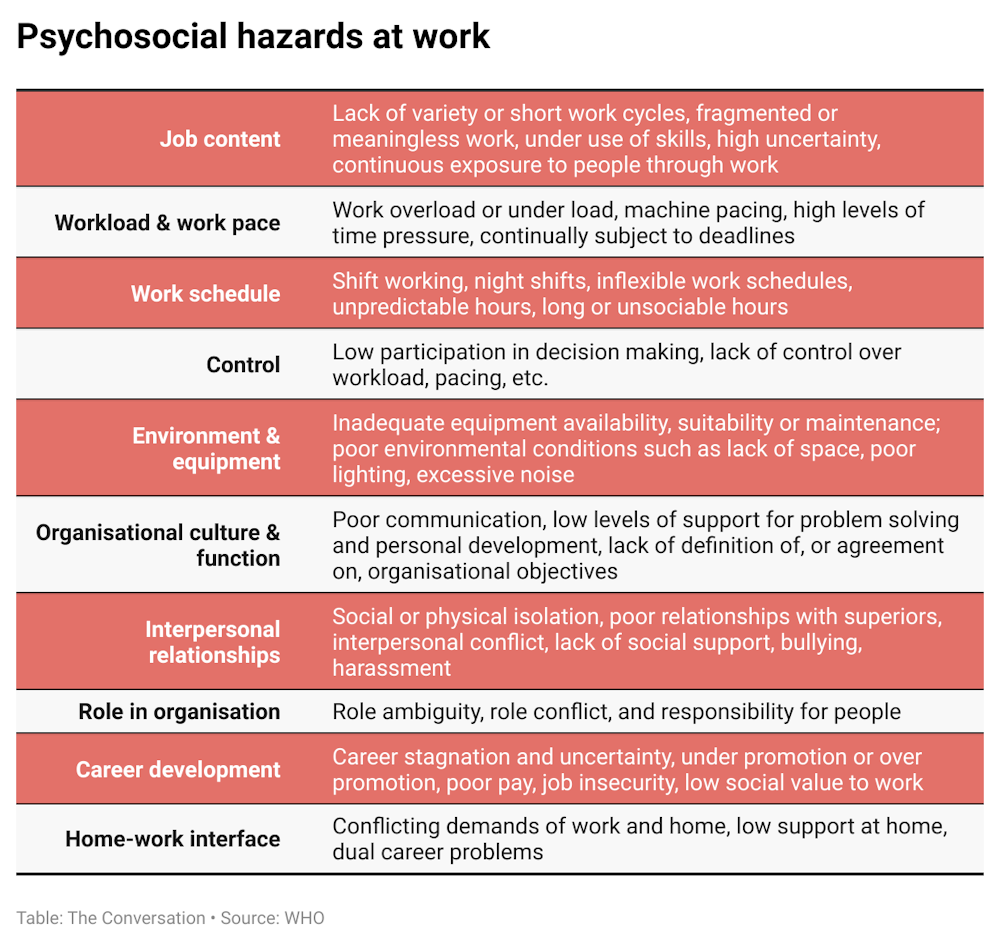
list of ten psychosocial hazards at work.
CC BY As noted in our centre’s submission to the WA government – in which we recommended including insecure work in the new code – most of the ten hazards listed above go hand in hand with insecure work. For example, hazard number three – work schedule, including unpredictable hours – applies to the majority of Australia’s casual workers, with 53% having work hours (and thus income) that fluctuate from one pay cycle to the next. Job insecurity exacerbates the hazards that also affect those in permanent employment, such as work load (hazard 1), lack of control over work (hazard 4) and lack of career opportunities (hazard 10). Worse health and safety outcomes A growing body of research shows insecure work is a health hazard. Two of Australia’s leading experts in this field, Michael Quinlan at UNSW Sydney and Elsa Underhill at Deakin University, have told the current Senate inquiry into job security there are three major negative outcomes: higher incidence/frequency of injuries, including fatalities poorer physical and mental health (such as from bullying) poorer knowledge of, and access to, employment rights and less willingness to raise concerns. Fear of losing work is a powerful disincentive against complaining or using rights available to them. For example, a 2021 survey of 1,540 workers by the Australian Council of Trade Unions found: 40% of all insecure workers said they had worked while unwell because they didn’t have access to paid leave 67% of those who worked through an ailment, rather than taking time off, said they feared taking leave would affect their job (compared with 55% of permanent workers) 50% of those who were sexually harassed took no action because they feared negative consequences (compared with 32% of permanent workers) Read more: The truth about much 'casual' work: it's really about permanent insecurity Are codes of practice legally enforceable? Codes of practice are part of the three-tier framework regulating employers’ obligations to maintain a safe workplace. At the top is legislation, which broadly defines responsibilities, then regulations, then codes of practice. These codes are practical guides for industries and businesses on how to achieve the standards required under the laws and regulations. Codes do not have the same legal force as a regulation, but can still be used by courts to assess if an organisation has taken the “reasonable steps” required by law to ensure a safe workplace. Some codes relate to specific types of work or hazards, such as handling dangerous chemicals. The new WA code on psychosocial hazards applies to all workplaces. From recognition to change Including insecure work in WA’s code is unlikely to change much in the short term. In theory it should mean organisations employing casual or contract workers undertake a risk-assessment process, then implement controls to manage those risks. There is a hierarchy of risk controls in work health and safety protocols. Hierarchy of  hazard controls Wikimedia Commons, CC BY At the top is eliminating the risk. This would see employers convert as many employees to permanent status. Lower down the hierarchy is reducing the risk. This could be done by giving casual workers as much notice of shifts as possible, ensuring more predictability with their schedule and more stability with their income, or higher pay rates to partly make up for some of these hazards. Will these things happen? Probably not. In practice, codes of practice alone don’t bring change. Provisions providing a pathway for casual or fixed-term employees to permanent status, for example, already exist in many enterprise agreements, but employers often find ways to avoid honouring them. Real change will require legislative reform or an increase in union strength. Some countries in Europe, for example, now have laws limiting the numbers of temporary agency workers and those on fixed term contracts. Such laws also need to be backed up by enforcement mechanisms – notably vastly increased resources for regulators. Read more: Uber might not take over the world, but it is still normalising job insecurity The WA government’s new code of practice represents an important first step within Australia’s industrial relations landscape. Formal recognition of insecure work as a health hazard should act as spur to further reform. Insecure work is widespread. We know what’s wrong with it. It’s time to do more about it. Authors: Alexis Vassiley, Research Associate, Centre for Work and Wellbeing, Edith Cowan University

Read more https://theconversation.com/why-insecure-work-is-finally-being-recognised-as-a-health-hazard-for-some-australians-177153

Downsizing or Upgrading Your Caravan? Here's How to Sell It Without the Hassle

Selling a caravan can feel like a major task, especially when you are unsure about its value, paperwork, or how to find a buyer. Whether you are dow...

The Best Overseas Adventure Holidays for Australians Who Love the Outdoors

Australia offers no shortage of incredible outdoor experiences, but sometimes the best way to satisfy your sense of adventure is to head overseas. A...

Cape Town Wine Shuttle: Winelands Tasting & Tours

Embark on an unforgettable journey through the picturesque Cape Winelands, where world-class wines and breathtaking scenery await. Our Cape Town Win...

Why Giant Rats Tail Grass Keeps Coming Back After Spraying

Giant Rats Tail Grass (GRT) is one of the most frustrating pasture weeds for farmers and lifestyle property owners. You spray an infested area, see th...

When Custom Cardboard Boxes Make Sense for Your Business

Custom cardboard boxes can be useful when a standard carton does not fit a product, packing method or presentation requirement particularly well. A ...

Virtual Livestock Fencing and GPS Tracking: Improving Visibility Across Cattle Properties

What Virtual Livestock Fencing Means for Modern Cattle Management Managing cattle across extensive properties requires more than knowing where anim...

Sydney Pawnbrokers Explained: How Hocking Your Car Actually Works

Sometimes you need cash, and you need it soon. If you own a car, you may already have a way to get it. That's what people mean when they say they've...

Moving Interstate from the Gold Coast to Brisbane (or Back)? What Removalists Wish You Knew First

Have you talked to anyone who’s done the move? They say the same thing: the drive up the M1 is the easy part. It's everything around it that catches...

Why the Spring School Holidays Are a Great Time to Visit Coffs Harbour

The spring school holidays are a good time to spend a few days on the Coffs Coast. The weather is starting to warm up, there is plenty to do outdoor...

What to Do When an Older Car Is No Longer Worth Keeping in Melbourne

Ever looked at another repair quote and wondered whether your old car is still worth the trouble? It is a common turning point for Melbourne motoris...

Your Baby's First Year: A Local Guide to Feeding, Sleep, and When to Get Extra Support

Ask ten parents in a Brisbane mothers' group how their baby is feeding or sleeping, and expect ten different answers.  Someone's baby sleeps throug...

Kitchen and Laundry Makeover Ideas That Don't Require a Full Renovation

Full kitchen renos are expensive — and most people don't actually need one.  They need the kitchen to stop looking like it's stuck in 2009, or they...

How Technology Is Reshaping the Modern Australian Commercial Kitchen

The commercial kitchen has always been shaped by technology. Refrigeration changed how ingredients could be stored, modern ventilation transformed k...

The Number on a Roller Blind Fabric That Nobody Explains

Somewhere in the fabric book, next to the colour name, there is a percentage. Three per cent. Five per cent. Ten per cent. Nobody explains it, most c...

What’s Trending in Men’s Jewellery This Father’s Day!

Finding a Father’s Day gift that feels personal, stylish and genuinely wearable is not always easy. While socks and novelty mugs have traditionally ...

Road Signs: Understanding Their Role in Clear and Effective Signage

Effective signage and display hardware can help businesses communicate information, promote products and organise customer or visitor movement. Road...

Bottle Label Printing: Key Factors to Consider Before Your Next Packaging Run

Effective packaging begins with understanding the product, bottle material, artwork and production requirements when planning bottle label printing. H...

Planning a Long-Distance Move With Interstate Movers Melbourne

Moving between states involves more planning than a typical local relocation. Along with packing and transporting household belongings, you need to...
















